
Table of Contents
AmatulHafeez is a beautiful and meaningful Arabic name that carries deep spiritual significance in Islamic tradition. As a compound name combining devotion with divine attributes, it represents a profound connection to faith. This name has been cherished across generations in Muslim communities worldwide, particularly in South Asia, the Middle East, and Africa. Understanding its linguistic roots reveals why it remains a popular choice for parents seeking names with religious depth.
Meaning of AmatulHafeez
AmatulHafeez is derived from classical Arabic and follows the traditional Islamic naming convention of ‘Amatu + [Name of Allah]’. The first component ‘Amatu’ (أمة) specifically means ‘female servant’ or ‘maidservant’, distinguishing it from the masculine ‘Abd’. The second component ‘Al-Hafeez’ (الحفيظ) is one of the 99 Beautiful Names of Allah (Asma ul-Husna), meaning ‘The Protector’, ‘The Guardian’, or ‘The Preserver’. Linguistically, ‘Hafeez’ comes from the Arabic root Ḥ-F-Ẓ (ح-ف-ظ), which conveys meanings of protection, preservation, and guardianship. When combined, the name literally translates to ‘female servant of the Protector’, expressing complete devotion to God as the ultimate guardian. This naming pattern reflects the Islamic tradition of humbling oneself before divine attributes while seeking their blessings.
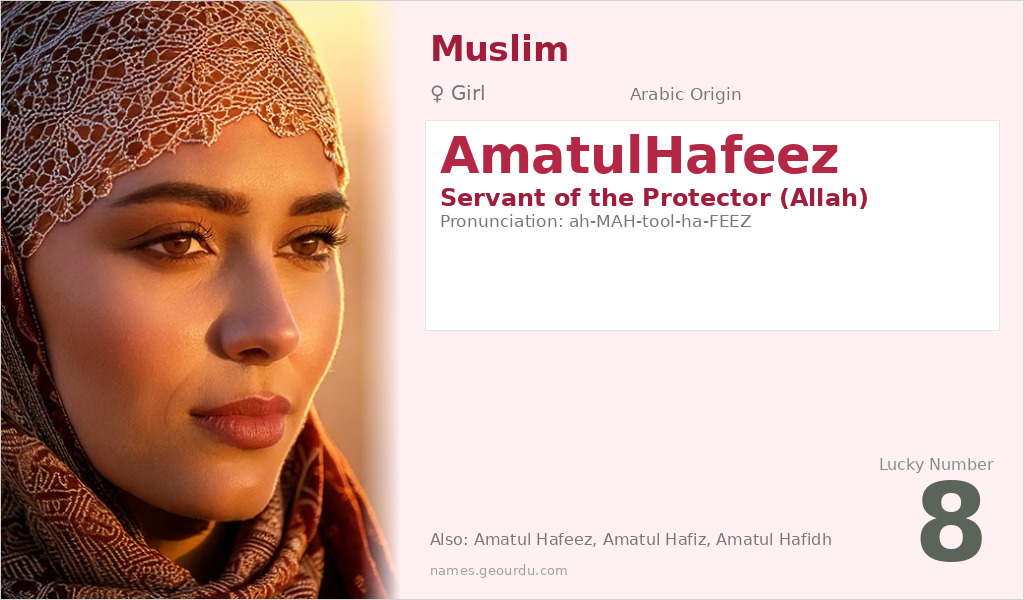
| 📛 Name | AmatulHafeez |
| 💎 Meaning | Servant of the Protector (Allah) |
| 👤 Gender | Girl |
| 🕌 Religion | Muslim |
| 🌍 Origin | Arabic |
| 🗣 Pronunciation | ah-MAH-tool-ha-FEEZ |
| ✍️ Urdu | امۃ الحفیظ |
| ✍️ Arabic | أمة الحفيظ |
| 🔢 Numerology | 8 |
| ✨ Spellings | Amatul Hafeez, Amatul Hafiz, Amatul Hafidh, Amatul Hafeeth |
Origin & Cultural Significance
The name AmatulHafeez originates from Arabic Islamic tradition and has been used for centuries across the Muslim world. It gained particular popularity in regions where Arabic naming conventions blended with local cultures, including South Asia (Pakistan, India, Bangladesh), the Middle East, and parts of Africa. The practice of using ‘Amatu’ with divine names became established during the early Islamic period as a feminine counterpart to the more common masculine ‘Abdullah’ and ‘Abdul’ names. While the name maintains its classical Arabic structure, regional variations in pronunciation and spelling have emerged, particularly in Urdu-speaking communities where it’s written as ‘امۃ الحفیظ’. The name continues to be chosen by Muslim parents who wish to express their child’s relationship with God through one of His protective attributes.
Personality Traits
Those named AmatulHafeez often embody qualities associated with protection and guardianship. They tend to be reliable individuals who take their responsibilities seriously, whether in family roles or community positions. The spiritual connection implied by their name frequently manifests as a strong moral compass and dedication to preserving traditions. Many with this name develop nurturing personalities, naturally assuming protective roles toward those they care about while maintaining a humble service-oriented attitude.
Similar Names
If you like AmatulHafeez, consider: Amatullah, Amatul Qayyum, Amatul Razzaq, Amatul Wadud, Amatul Ghaffar
Famous People Named AmatulHafeez
- No widely known public figures with this exact name found in historical records
- The name appears in Muslim communities across South Asia, Middle East, and Africa as a traditional religious name
Frequently Asked Questions About AmatulHafeez
What does AmatulHafeez mean?
AmatulHafeez means 'Servant of the Protector' in Arabic. It combines 'Amatu' (female servant) with 'Al-Hafeez' (The Protector), one of the 99 names of Allah.
Is AmatulHafeez a boy or girl name?
AmatulHafeez is exclusively a girl's name. The 'Amatu' prefix is the feminine form of 'Abd' (servant), making it specifically feminine in Arabic grammar.
What is the origin of AmatulHafeez?
AmatulHafeez originates from Arabic Islamic tradition. It follows the naming pattern of combining 'Amatu' with one of Allah's names, which has been practiced since early Islamic history across Muslim communities.





