Table of Contents
Gulinar is a beautifully poetic name with deep roots in Persian culture and language. Meaning ‘pomegranate flower’ or ‘pomegranate blossom’, this name evokes images of delicate beauty and natural abundance. Used across various cultures influenced by Persian traditions, Gulinar carries centuries of literary and cultural significance. Whether you’re considering this name for your child or exploring its rich history, discover why Gulinar remains a timeless choice.
Meaning of Gulinar
Gulinar is a compound Persian name with clear etymological roots. The first element ‘gul’ (گل) is a common Persian word meaning ‘flower’ or ‘rose’, appearing in countless Persian names and poetic expressions. The second element ‘anar’ (انار) means ‘pomegranate’, a fruit deeply symbolic in Persian culture representing fertility, life, and abundance. When combined, Gulinar literally translates to ‘pomegranate flower’ or ‘pomegranate blossom’. This name appears in classical Persian literature and poetry, often used metaphorically to describe delicate feminine beauty. The pomegranate flower itself is a small, vibrant red blossom that precedes the fruit, making the name particularly evocative of natural cycles and beauty.
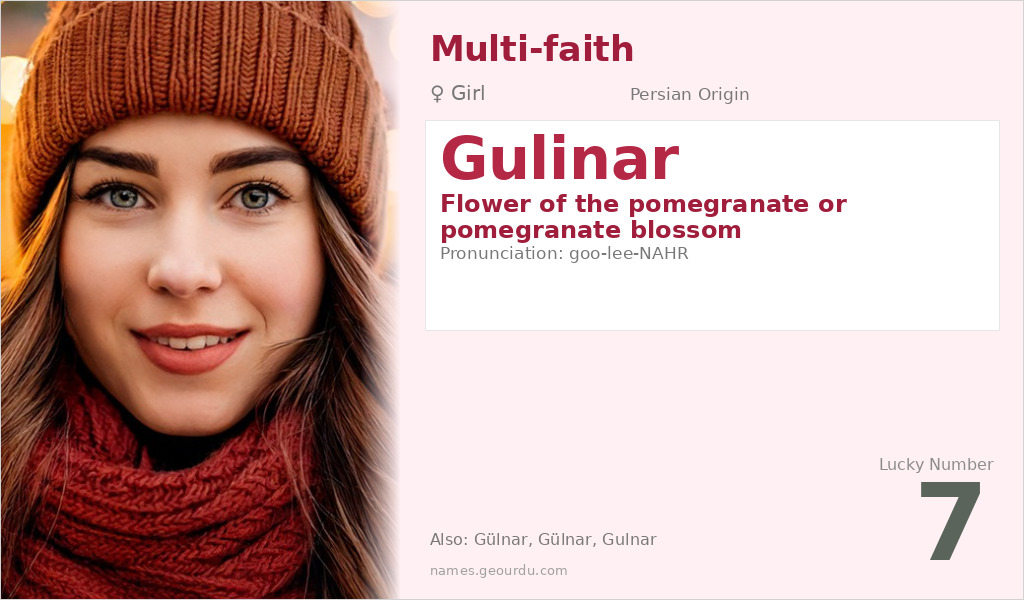
| 📛 Name | Gulinar |
| 💎 Meaning | Flower of the pomegranate or pomegranate blossom |
| 👤 Gender | Girl |
| 🕌 Religion | Multi-faith |
| 🌍 Origin | Persian |
| 🗣 Pronunciation | goo-lee-NAHR |
| ✍️ Urdu | گل انار |
| ✍️ Arabic | گل انار |
| 🔢 Numerology | 7 |
| ✨ Spellings | Gülnar, Gülnar, Gulnar, Golnar, Gülnare |
Origin & Cultural Significance
Gulinar originates from Persian language and culture, where compound names using ‘gul’ (flower) are common. The name spread through Persian cultural influence to neighboring regions including Turkey, Azerbaijan, Central Asia, and parts of South Asia. While commonly used in Muslim communities, the name is not exclusively Islamic and appears among various religious groups in Persian-influenced cultures, including Zoroastrian and Christian communities. The pomegranate has special significance in Persian mythology and art, often depicted in miniature paintings and poetry as a symbol of paradise, making names derived from it particularly meaningful. Today, Gulinar remains popular in Iran, Azerbaijan, Turkey, and among diaspora communities worldwide.
Personality Traits
Those named Gulinar are often perceived as creative, sensitive individuals with a strong aesthetic sense. The floral imagery suggests someone who appreciates beauty in all forms, from nature to art. The pomegranate connection adds layers of symbolism—suggesting fertility of ideas, richness of character, and protective qualities. People with this name may naturally gravitate toward nurturing roles and creative pursuits, embodying the delicate yet resilient nature of the blossom that becomes abundant fruit.
Similar Names
If you like Gulinar, consider: Gul, Gulbahar, Gulnaz, Gulshan, Nargis
Famous People Named Gulinar
- Gülnar Səlimova — Azerbaijani chess player and Woman Grandmaster
- Gülnarə Qədirova — Azerbaijani singer and actress
Frequently Asked Questions About Gulinar
What does Gulinar mean?
Gulinar means 'pomegranate flower' or 'pomegranate blossom'. It's a compound Persian name from 'gul' (flower) and 'anar' (pomegranate).
Is Gulinar a boy or girl name?
Gulinar is exclusively a girl's name in all cultures where it is used. The floral element and feminine endings make it distinctly feminine.
What is the origin of Gulinar?
Gulinar originates from Persian language and culture. It spread to Turkish, Azerbaijani, and Central Asian cultures through historical Persian influence.