Table of Contents
Hinda is a beautiful, timeless name with deep biblical roots and cross-cultural appeal. Meaning ‘female deer’ or ‘doe’ in Hebrew, this name carries connotations of grace, gentleness, and natural beauty. While historically Jewish in origin, Hinda has been embraced by Muslim, Christian, and other communities around the world. Its soft sound and meaningful etymology make it a compelling choice for parents seeking a name with both historical significance and contemporary charm.
Meaning of Hinda
The name Hinda derives directly from the Hebrew name ‘Hindah’ (הִנְדָּה), which literally translates to ‘female deer’ or ‘doe’. This etymology connects the name to natural imagery of grace, gentleness, and swiftness. In the Hebrew Bible/Old Testament, Hinda appears in the Book of Esther (Esther 1:9) as one of the women in King Ahasuerus’s court. The name’s linguistic roots are firmly in Semitic languages, specifically Hebrew, though it has been adopted into Arabic, Persian, and South Asian languages through cultural exchange. Unlike many names that evolve in meaning, Hinda has maintained its original ‘deer’ meaning across centuries of use.
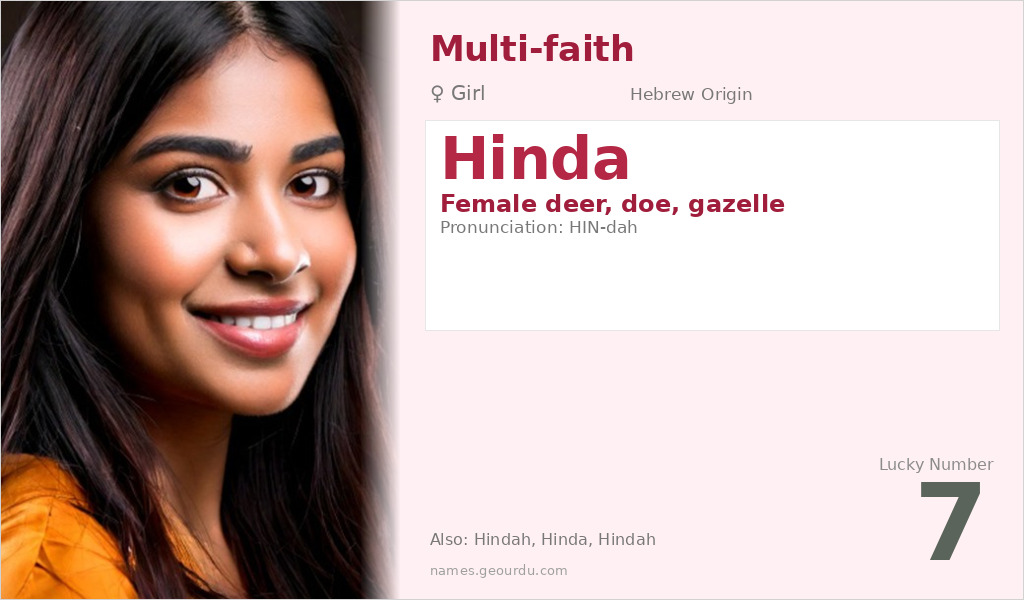
| 📛 Name | Hinda |
| 💎 Meaning | Female deer, doe, gazelle |
| 👤 Gender | Girl |
| 🕌 Religion | Multi-faith |
| 🌍 Origin | Hebrew |
| 🗣 Pronunciation | HIN-dah |
| ✍️ Urdu | ہندا |
| ✍️ Arabic | هندا |
| 🔢 Numerology | 7 |
| ✨ Spellings | Hindah, Hinda, Hindah, Henda |
Origin & Cultural Significance
Hinda originates from ancient Hebrew culture and appears in biblical texts, making it one of the oldest continuously used names in recorded history. The name spread through Jewish diaspora communities across Europe, the Middle East, and eventually to South Asia. In Muslim-majority regions like Pakistan, India, and Arab countries, Hinda was adopted not as an Islamic name per se, but as a culturally acceptable name with a pleasant meaning. This cross-cultural adoption is similar to how names like Sarah or David have transcended their original religious contexts. Today, Hinda is used by people of various faiths while maintaining its Hebrew linguistic heritage.
Personality Traits
Those named Hinda often embody the qualities associated with deer in folklore and literature: grace, sensitivity, and a deep connection to nature. They tend to be intuitive individuals who approach life with gentle determination rather than aggressive ambition. Their quiet observation skills make them excellent judges of character, while their compassionate nature draws people to them for comfort and advice. Like the deer that symbolizes their name, people named Hinda often move through life with elegant purpose.
Similar Names
If you like Hinda, consider: Hannah, Dinah, Zahava, Tzivia, Ayala
Famous People Named Hinda
- Hinda Miller — American politician and businesswoman from Vermont
- Hinda Honigman — Holocaust survivor and author of 'From the Ashes of Sobibor'
Frequently Asked Questions About Hinda
What does Hinda mean?
Hinda means 'female deer' or 'doe' in Hebrew. The name comes from the Hebrew word 'Hindah' and has maintained this meaning across centuries of use in various cultures.
Is Hinda a boy or girl name?
Hinda is exclusively a girl's name. It has always been feminine in its original Hebrew context and in all cultures that have adopted it, referring specifically to a female deer.
What is the origin of Hinda?
Hinda originates from Hebrew language and culture, specifically from the biblical name found in the Book of Esther. While adopted by Muslim and other communities, its linguistic and historical roots are firmly Hebrew.