Table of Contents
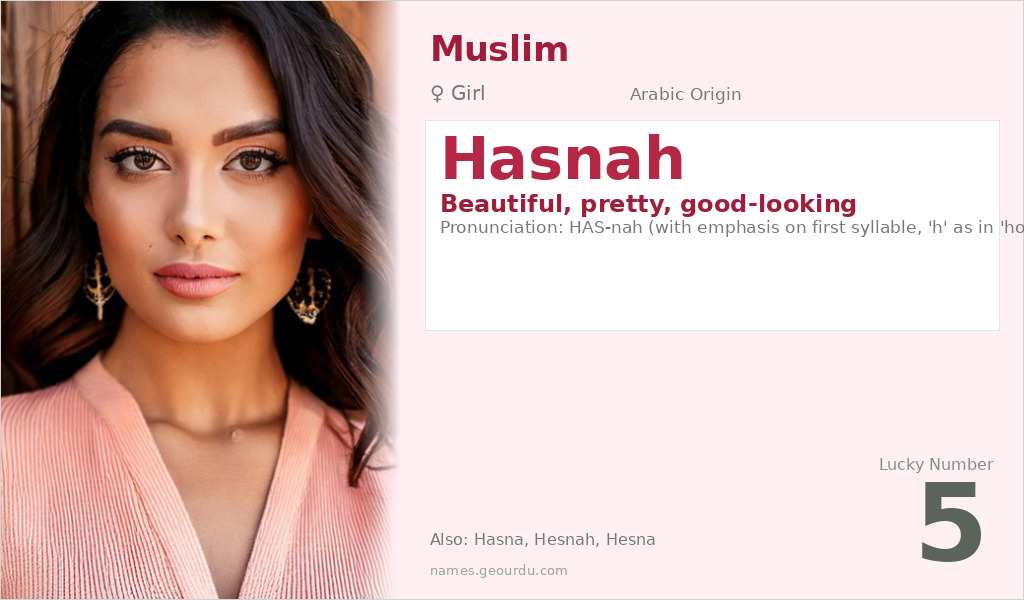
Hasnah is a beautiful Arabic name for girls that carries centuries of linguistic and cultural heritage. Derived from one of the most positive roots in the Arabic language, this name embodies both physical beauty and moral excellence. Popular across the Muslim world, Hasnah represents the feminine form of the well-known name Hasan. Discover the rich meaning and tradition behind this elegant name.
Meaning of Hasnah
Hasnah comes directly from the Arabic root ح-س-ن (ḥ-s-n), which forms the basis for numerous words related to beauty, goodness, and excellence in the Arabic language. The masculine form ‘Hasan’ means ‘handsome’ or ‘good’, while the feminine ‘Hasnah’ specifically means ‘beautiful’ or ‘pretty’. This root appears throughout classical Arabic literature and the Quran, where derivatives describe both physical attractiveness and virtuous character. The name follows standard Arabic morphological patterns where the feminine suffix ‘-ah’ transforms the adjective into its feminine equivalent. Linguistically, it’s part of a family of names including Husna (most beautiful) and Muhsin (doer of good).
| 📛 Name | Hasnah |
| 💎 Meaning | Beautiful, pretty, good-looking |
| 👤 Gender | Girl |
| 🕌 Religion | Muslim |
| 🌍 Origin | Arabic |
| 🗣 Pronunciation | HAS-nah (with emphasis on first syllable, 'h' as in 'house') |
| ✍️ Urdu | حسنہ |
| ✍️ Arabic | حَسْنَة |
| 🔢 Numerology | 5 |
| ✨ Spellings | Hasna, Hesnah, Hesna, Hassnah |
Origin & Cultural Significance
Hasnah originates from classical Arabic and has been used in Islamic cultures since the early centuries of Islam. The name gained prominence through Islamic tradition and Arabic poetry, where beauty (husn) was a frequent theme. While primarily used in Arabic-speaking regions, the name spread throughout the Muslim world via Islamic scholarship and cultural exchange. It appears in historical records of notable women in early Islamic history, including relatives of the Prophet Muhammad’s companions. Today, it remains popular across the Middle East, North Africa, South Asia, and Muslim communities worldwide.
Personality Traits
Those named Hasnah often embody the qualities their name represents—grace, aesthetic appreciation, and inner goodness. They tend to be nurturing individuals who value harmony and relationships. The name’s association with beauty often manifests not just in physical appearance but in their approach to life, art, and interpersonal connections. Many Hasnahs are known for their diplomatic nature and ability to create peaceful environments.
Similar Names
If you like Hasnah, consider: Hasan, Husna, Jamila, Zainab, Fatima
Famous People Named Hasnah
- Hasnah bint Awf — Mother of the Prophet Muhammad's companion Abd al-Rahman ibn Awf
- Hasnah al-Bakri — 20th century Syrian educator and women's rights activist
Frequently Asked Questions About Hasnah
What does Hasnah mean?
Hasnah means 'beautiful' or 'pretty' in Arabic. It's the feminine form of Hasan and comes from the Arabic root ḥ-s-n meaning 'to be beautiful, good, excellent'.
Is Hasnah a boy or girl name?
Hasnah is exclusively a girl's name. It's the feminine form of the masculine name Hasan, following Arabic grammatical gender rules where '-ah' suffix indicates feminine gender.
What is the origin of Hasnah?
Hasnah originates from classical Arabic and has been used in Islamic cultures for centuries. It comes from the Arabic root ḥ-s-n and is documented in early Arabic literature and Islamic tradition.