Table of Contents
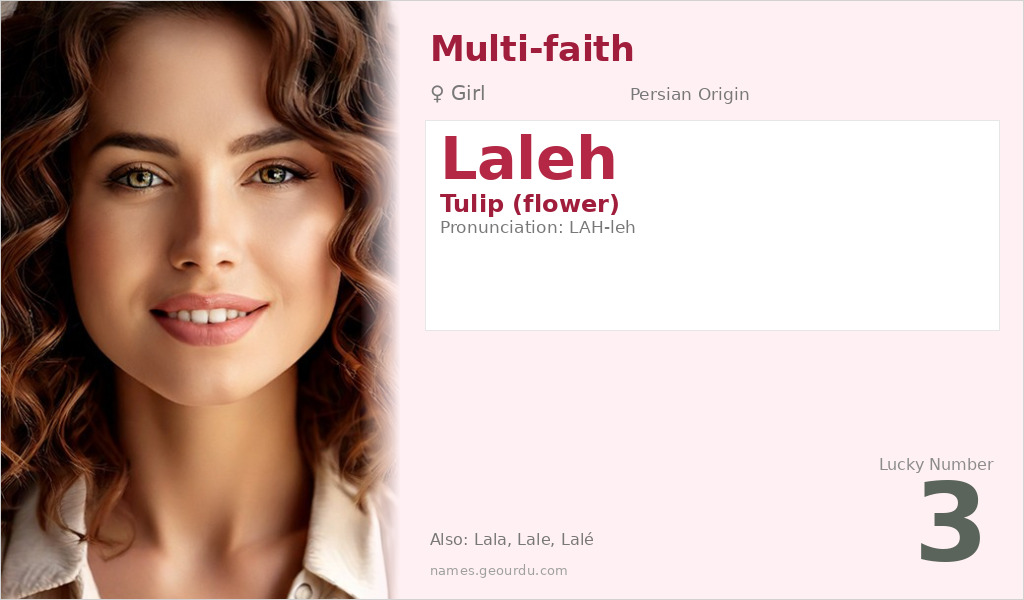
Laleh is a beautifully poetic name that carries the fragrance of Persian gardens and the vibrant colors of spring. Meaning ‘tulip’ in Persian, this name has traveled across cultures while maintaining its floral essence. Popular in Iran, Turkey, and among diaspora communities, Laleh represents more than just a flower – it embodies cultural heritage, natural beauty, and artistic sensibility. Whether you’re drawn to its melodic sound or its botanical significance, Laleh offers a name rich with history and symbolism.
Meaning of Laleh
Laleh derives directly from the Persian word ‘lāleh’ (لاله), which means ‘tulip’. The tulip holds deep cultural significance in Persian poetry and art, often symbolizing perfect love, spring’s arrival, and divine beauty. Linguistically, the Persian ‘laleh’ influenced similar words in neighboring languages, including Turkish ‘lale’ and Urdu ‘lala’. The name has no connection to Arabic ‘Leila’ (meaning ‘night’) despite some incorrect sources suggesting this. In Persian literature, the tulip appears frequently in works by poets like Hafez and Rumi, where it represents the beloved’s beauty and the transient nature of life. The red tulip specifically symbolizes martyrdom in some cultural contexts, adding layers of meaning to this floral name.
| 📛 Name | Laleh |
| 💎 Meaning | Tulip (flower) |
| 👤 Gender | Girl |
| 🕌 Religion | Multi-faith |
| 🌍 Origin | Persian |
| 🗣 Pronunciation | LAH-leh |
| ✍️ Urdu | لالہ |
| ✍️ Arabic | لاله |
| 🔢 Numerology | 3 |
| ✨ Spellings | Lala, Lale, Lalé, Laleh |
Origin & Cultural Significance
Laleh originates from Persian (Farsi) culture, where tulips have been cultivated and celebrated for centuries. The name gained particular prominence during the Ottoman Empire when tulips became a cultural obsession in Turkey (known as ‘Lale Devri’ or Tulip Era). While commonly used in Muslim communities, the name transcends religious boundaries and appears among Persian-speaking Zoroastrians, Christians, and secular families. The tulip’s journey along the Silk Road helped spread both the flower and its name across Central Asia. Today, Laleh remains popular in Iran, Afghanistan, Tajikistan, Turkey, and among diaspora communities worldwide, maintaining its connection to Persian cultural heritage while adapting to global naming trends.
Personality Traits
Named after the elegant tulip, individuals called Laleh often embody qualities of beauty, resilience, and seasonal renewal. Like the flower that pushes through winter soil to bloom in spring, they may demonstrate determination and the ability to thrive in challenging circumstances. Their aesthetic sensibility often manifests in artistic pursuits or appreciation for beauty in everyday life. The name suggests someone who brings color and joy to their environment, much like a garden of blooming tulips transforms a landscape.
Similar Names
If you like Laleh, consider: Gul (Persian/Turkish for rose), Narges (Persian for narcissus), Yasmin (Persian/Arabic for jasmine), Çiçek (Turkish for flower), Golnar (Persian for pomegranate flower)
Famous People Named Laleh
- Laleh Seddigh — Iranian racing driver and engineer
- Laleh Pourkarim — Swedish singer-songwriter of Iranian descent known mononymously as Laleh
Frequently Asked Questions About Laleh
What does Laleh mean?
Laleh means 'tulip' in Persian (Farsi). It is a floral name derived from the Persian word 'lāleh' (لاله), representing the beautiful spring flower celebrated in Persian and Turkish cultures.
Is Laleh a boy or girl name?
Laleh is exclusively a girl's name in all cultures where it is used. The feminine association comes from its floral meaning and grammatical gender in Persian, where flower names are typically feminine.
What is the origin of Laleh?
Laleh originates from Persian (Farsi) language and culture. The name comes from the Persian word for tulip and has been used for centuries in Iran and neighboring regions, later spreading to Turkey and other areas through cultural exchange.