Table of Contents
May is a beautifully simple name with surprisingly rich multicultural origins. While many associate it with the spring month, its Arabic meaning of ‘water’ gives it deep symbolic significance in Muslim naming traditions. This name crosses cultural boundaries while maintaining distinct meanings in different languages. Let’s explore the fascinating etymology and usage of May across various cultures.
Meaning of May
The name May carries different meanings depending on its linguistic origin. In Arabic, May (ماء) literally means ‘water’ — a profoundly symbolic element representing purity, life, and blessing in Islamic tradition. This Arabic root connects to the fundamental importance of water in desert cultures and religious texts. In Latin-derived languages, May originates from ‘Maius’, the Roman month named for the goddess Maia, associated with growth and spring. In Persian and Urdu contexts, May can refer to wine or the month, showing how the same phonetic name evolved differently across regions. The multiplicity of meanings makes May a name that can be interpreted through various cultural lenses.
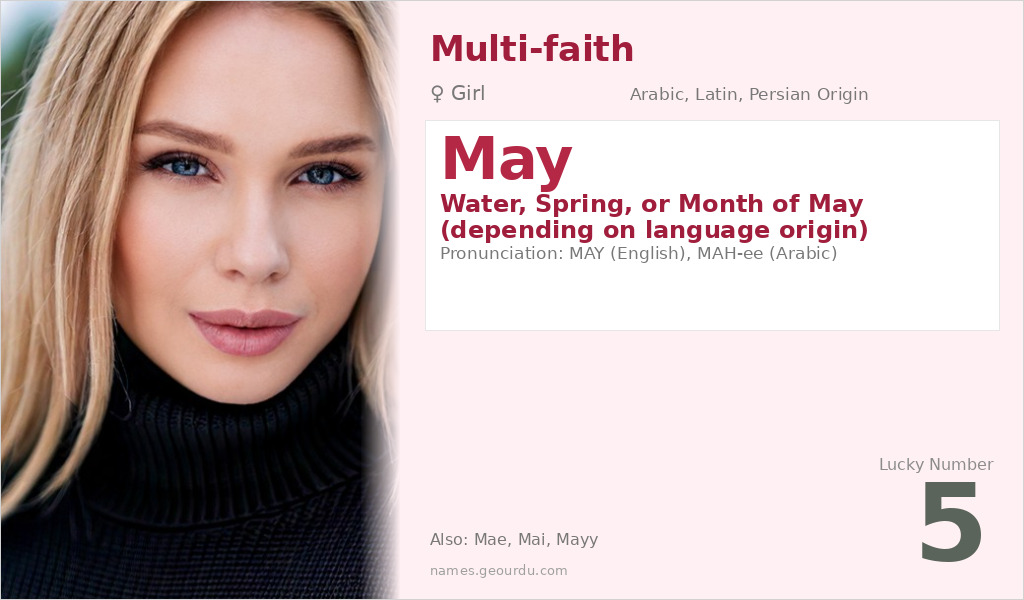
| 📛 Name | May |
| 💎 Meaning | Water, Spring, or Month of May (depending on language origin) |
| 👤 Gender | Girl |
| 🕌 Religion | Multi-faith |
| 🌍 Origin | Arabic, Latin, Persian |
| 🗣 Pronunciation | MAY (English), MAH-ee (Arabic) |
| ✍️ Urdu | مئی |
| ✍️ Arabic | ماء |
| 🔢 Numerology | 5 |
| ✨ Spellings | Mae, Mai, Mayy, Maye |
Origin & Cultural Significance
May has a truly multicultural origin story. The Arabic version traces back to the Semitic root for water, appearing in classical Arabic literature and used as a feminine name in Muslim communities across the Middle East, South Asia, and beyond. Simultaneously, the European version entered English through Norman French, evolving from the month name that itself descended from Latin. In South Asian Muslim communities, particularly in Pakistan and India, the Arabic meaning predominates, though the name is sometimes spelled differently to distinguish it from the month. This dual heritage means May appears in Christian, Muslim, and secular contexts worldwide, with each culture emphasizing different aspects of its meaning.
Personality Traits
Those named May often embody qualities associated with their name’s meanings. Like water, they may demonstrate adaptability, depth, and a calming presence. The spring/month association suggests renewal, growth, and natural beauty in their character. Many Mays are noted for their emotional intelligence and ability to connect with others, reflecting the life-giving properties of water. Their versatility allows them to thrive in diverse environments and situations.
Similar Names
If you like May, consider: Maya, Maeve, Mariam, Maysa, Mayar
Famous People Named May
- May Ziadah — Lebanese-Palestinian writer and poet
- May El Calamawy — Egyptian actress known for 'Moon Knight'
Frequently Asked Questions About May
What does May mean?
May has multiple meanings: In Arabic, it means 'water'. In Latin/European languages, it refers to the month of May or is a diminutive of Mary/Margaret. The meaning depends on cultural context.
Is May a boy or girl name?
May is predominantly a girl's name across all cultures where it's used, though spelling variations like 'Mae' are also feminine. There are no significant traditions of May as a masculine name.
What is the origin of May?
May has multiple origins: Arabic (meaning 'water'), Latin (from the month name Maius), and Persian/Urdu contexts. It's truly a multicultural name with different etymological paths.