Table of Contents
Makhduma is a beautiful and meaningful name that resonates with dignity and respect across Muslim cultures. Derived from Arabic roots, this name has been cherished for centuries, particularly in South Asia, where it symbolizes noble femininity. Whether you’re considering it for your child or exploring its rich history, Makhduma offers a connection to linguistic heritage and cultural prestige. Let’s delve into the fascinating details behind this elegant name.
Meaning of Makhduma
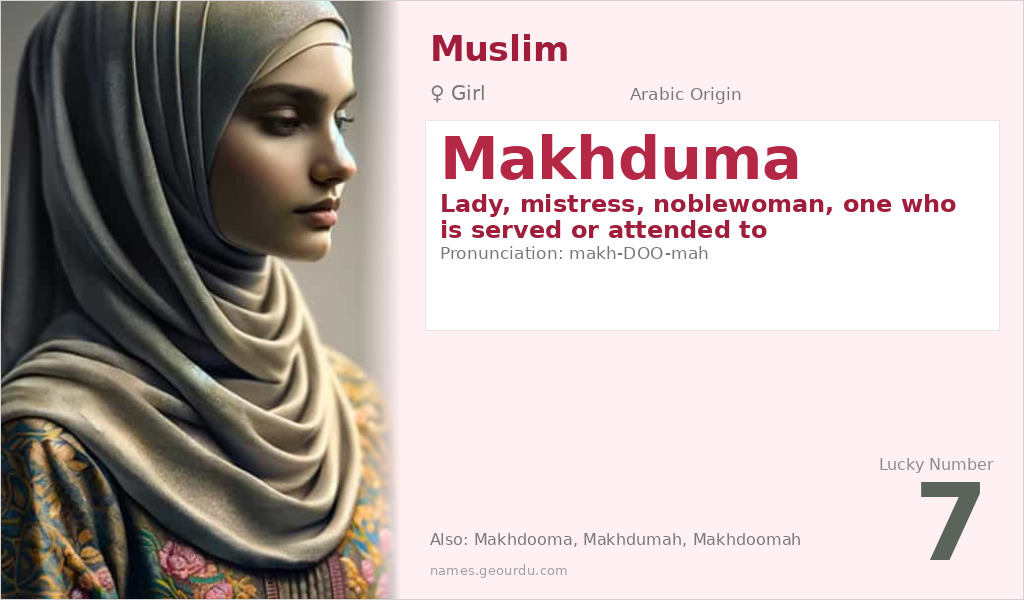
Makhduma originates from the Arabic word ‘makhdūmah’ (مخدومة), which stems from the triliteral root ‘kh-d-m’ (خ-د-م). This root conveys the concept of service, attendance, or ministering. In its feminine form, Makhduma literally means ‘the one who is served’ or ‘the attended to’, but culturally it translates to ‘lady’, ‘mistress’, or ‘noblewoman’. This reflects a person of high social or religious standing, often someone who commands respect and care. In languages like Urdu, Punjabi, and Sindhi, the name has been adopted and adapted, retaining its essence of reverence and status. It’s distinct from the masculine ‘Makhdum’, which means ‘master’ or ‘lord’, highlighting the gendered linguistic structure in Arabic-derived terms.
| 📛 Name | Makhduma |
| 💎 Meaning | Lady, mistress, noblewoman, one who is served or attended to |
| 👤 Gender | Girl |
| 🕌 Religion | Muslim |
| 🌍 Origin | Arabic |
| 🗣 Pronunciation | makh-DOO-mah |
| ✍️ Urdu | مخدومہ |
| ✍️ Arabic | مخدومة |
| 🔢 Numerology | 7 |
| ✨ Spellings | Makhdooma, Makhdumah, Makhdoomah, Makhduma |
Origin & Cultural Significance
The name Makhduma has its roots in classical Arabic, where it was used to denote women of rank or honor. It spread across the Muslim world through Islamic scholarship, trade, and conquests, becoming particularly prominent in South Asia during the Mughal era and Sufi traditions. In regions like Pakistan, India, and Bangladesh, it is associated with respected female figures in history, such as princesses, saints, and community leaders. The name is often found among families with religious or scholarly backgrounds, emphasizing a legacy of piety and leadership. Its usage continues today, symbolizing a blend of Arabic linguistic heritage and South Asian cultural identity.
Personality Traits
Those named Makhduma are often seen as poised, authoritative, and kind-hearted. They naturally embody the name’s meaning by inspiring service and devotion in others, whether in family, social, or professional settings. With a strong sense of responsibility and empathy, they tend to be protective and nurturing, making them beloved figures in their circles. Their presence often brings a sense of calm and respect, reflecting the noble qualities embedded in their name.
Similar Names
If you like Makhduma, consider: Makhdum, Khadeeja, Sayyida, Sharifa, Malika
Famous People Named Makhduma
- Makhduma Syeda Jahanara — 17th-century Mughal princess, scholar, and Sufi saint, daughter of Emperor Shah Jahan
- Makhduma-e-Jahan — historical title for noblewomen in South Asian Muslim courts
Frequently Asked Questions About Makhduma
What does Makhduma mean?
Makhduma means 'lady', 'mistress', or 'noblewoman' in Arabic, derived from the root meaning 'to serve', indicating a respected woman who is attended to.
Is Makhduma a boy or girl name?
Makhduma is exclusively a girl's name, as it is the feminine form of the Arabic word. The masculine equivalent is 'Makhdum'.
What is the origin of Makhduma?
Makhduma originates from Arabic and is widely used in Muslim cultures, especially in South Asia (e.g., Urdu, Punjabi, Sindhi), where it denotes noble status.