Table of Contents
Pashmina is an elegant name that evokes luxury and refinement, directly borrowed from the world of fine textiles. While relatively modern as a given name, its linguistic roots stretch back centuries to Persian craftsmanship traditions. This name carries the softness and beauty associated with the precious cashmere wool it describes, making it a distinctive choice for parents seeking something both beautiful and meaningful.
Meaning of Pashmina
Pashmina derives from the Persian word ‘pashm’ (پشم), meaning ‘wool’ or ‘fleece’, combined with the suffix ‘-ina’ to create ‘pashmīna’—literally ‘made of wool’. Specifically, it refers to the exceptionally fine wool from the undercoat of Himalayan goats (Capra hircus laniger), traditionally produced in the Kashmir region. The term entered South Asian languages like Urdu and Hindi as ‘pashmīnā’ (پشمینہ), maintaining its specific association with luxury textiles. As a given name, Pashmina represents a modern adaptation of this textile term, evoking qualities of softness, warmth, and elegance rather than having traditional name etymology.
| 📛 Name | Pashmina |
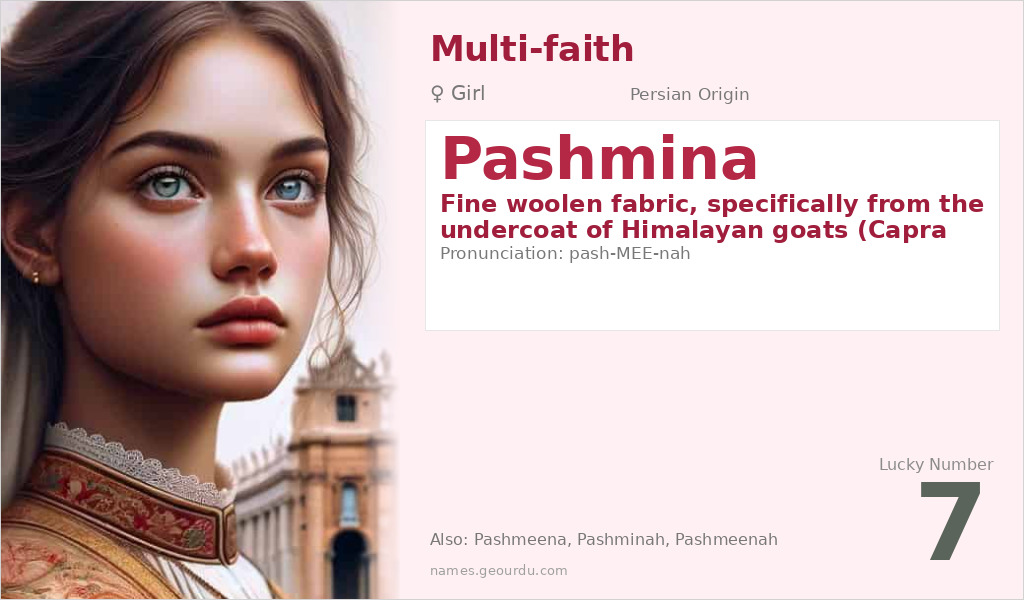
| 💎 Meaning | Fine woolen fabric, specifically from the undercoat of Himalayan goats (Capra hircus laniger) |
| 👤 Gender | Girl |
| 🕌 Religion | Multi-faith |
| 🌍 Origin | Persian |
| 🗣 Pronunciation | pash-MEE-nah |
| ✍️ Urdu | پشمینہ |
| ✍️ Arabic | باشمينا |
| 🔢 Numerology | 7 |
| ✨ Spellings | Pashmeena, Pashminah, Pashmeenah |
Origin & Cultural Significance
Pashmina originates from Persian language and textile traditions, specifically referring to the fine cashmere wool produced in the Himalayan regions. While the textile has centuries-old history in Persian, Kashmiri, and Central Asian cultures, the use of Pashmina as a personal name appears to be a contemporary phenomenon without deep historical roots in naming traditions. The name gained some popularity in the late 20th and early 21st centuries, particularly among parents attracted to its melodic sound and association with luxury and natural beauty. It crosses religious and cultural boundaries as a modern invented name rather than belonging to any specific religious naming tradition.
Personality Traits
Those named Pashmina are often associated with refinement, elegance, and a gentle nature, reflecting the softness and luxury of the fabric. The name suggests someone who appreciates beauty in all forms, from artistic expression to natural wonders. Like the durable yet delicate pashmina wool, individuals with this name may combine resilience with grace, able to navigate challenges while maintaining their inherent warmth and compassion.
Similar Names
If you like Pashmina, consider: Kashmir, Cashmere, Shamina, Parveen, Farah
Famous People Named Pashmina
- Pashmina — Fictional character in children's literature, often representing elegance or luxury
- No verified historical or contemporary public figures primarily known by this as a given name
Frequently Asked Questions About Pashmina
What does Pashmina mean?
Pashmina means 'fine woolen fabric' from the Persian word 'pashm' (wool) with the suffix '-ina', specifically referring to cashmere wool from Himalayan goats.
Is Pashmina a boy or girl name?
Pashmina is almost exclusively used as a girl's name in contemporary usage, though as a textile term it has no inherent gender.
What is the origin of Pashmina?
Pashmina originates from Persian language as a term for luxury wool textiles, with the name being a modern adaptation rather than a traditional given name.