Table of Contents
Sabbaghah is a distinctive Arabic name with deep roots in traditional crafts and professions. This feminine name carries the legacy of textile arts from Islamic civilizations where dyeing was both an economic activity and artistic expression. Unlike many modern names, Sabbaghah directly connects to a specific occupation, offering a unique window into historical social structures. Today, it remains a meaningful choice for parents seeking names with cultural authenticity and vocational significance.
Meaning of Sabbaghah
Sabbaghah derives from the Arabic root ‘ṣ-b-gh’ (ص-ب-غ), which forms the basis for words related to dyeing and coloring. The masculine form ‘Sabbagh’ refers to a male dyer, while the feminine ‘-ah’ suffix creates ‘Sabbaghah’ meaning ‘female dyer’. This occupational naming pattern was common in medieval Arab societies, where professions often became hereditary family names and eventually personal names. The name specifically denotes someone who dyes fabrics, leather, or other materials, using natural dyes like indigo, saffron, or henna. In classical Arabic, related terms include ‘sibghah’ (صبغة) meaning ‘dye’ or ‘color’ and ‘masbugh’ (مصبوع) meaning ‘dyed’. The name reflects the importance of textile industries in historical Islamic economies from Andalusia to Central Asia.
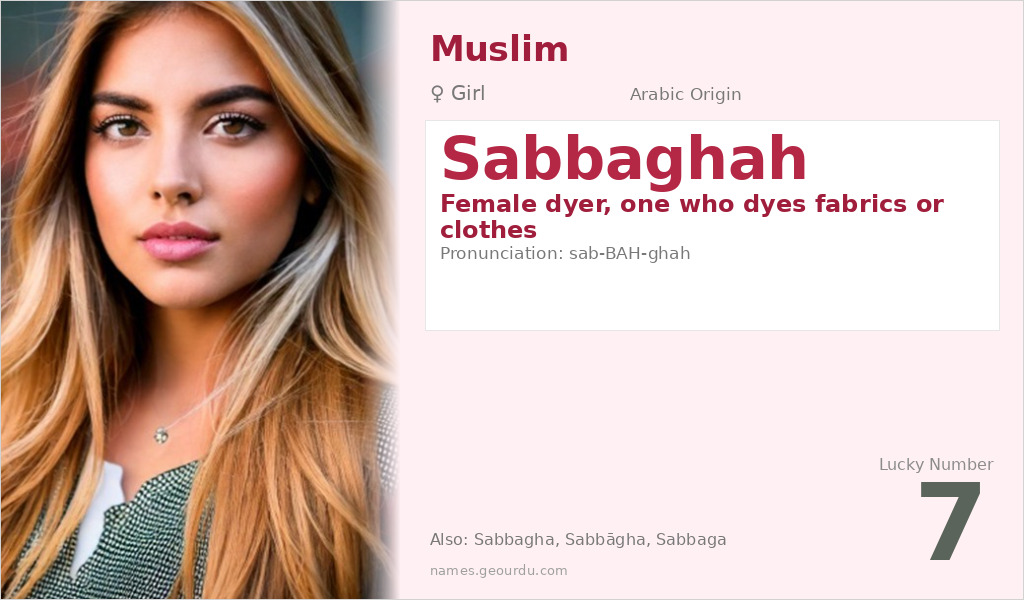
| 📛 Name | Sabbaghah |
| 💎 Meaning | Female dyer, one who dyes fabrics or clothes |
| 👤 Gender | Girl |
| 🕌 Religion | Muslim |
| 🌍 Origin | Arabic |
| 🗣 Pronunciation | sab-BAH-ghah |
| ✍️ Urdu | صباغہ |
| ✍️ Arabic | صباغة |
| 🔢 Numerology | 7 |
| ✨ Spellings | Sabbagha, Sabbāgha, Sabbaga, Sabbāga |
Origin & Cultural Significance
The name Sabbaghah originates from Arabic-speaking regions, particularly areas with strong textile traditions like Syria, Egypt, and Iraq. During the Islamic Golden Age (8th-14th centuries), dyeing was a respected craft with specialized guilds, and dyers often worked with expensive materials like Tyrian purple and cochineal. As a personal name, it likely evolved from occupational surnames within Muslim communities, similar to English names like ‘Taylor’ or ‘Smith’. While primarily used in Arab cultures, the name appears in Persian and Urdu contexts through cultural exchange, though always retaining its Arabic linguistic structure. In contemporary usage, it’s most common among Muslim families valuing traditional, meaningful names over modern inventions.
Personality Traits
The occupational origin of Sabbaghah suggests personality traits associated with craftsmanship and artistic sensibility. Those bearing this name might be perceived as meticulous, creative, and patient—qualities essential to traditional dyeing techniques requiring precision and timing. The connection to transforming plain materials into colorful fabrics symbolizes adaptability and the ability to bring beauty to practical matters. While personality associations are culturally subjective, the name’s historical context implies appreciation for skilled labor and aesthetic expression in daily life.
Similar Names
If you like Sabbaghah, consider: Sabbagh, Sabbah, Sabeen, Sabira, Sabreen
Famous People Named Sabbaghah
- No widely known contemporary public figures with this exact name found in verified sources
Frequently Asked Questions About Sabbaghah
What does Sabbaghah mean?
Sabbaghah means 'female dyer' or 'one who dyes fabrics' in Arabic, derived from the root verb 'ṣabagha' meaning 'to dye'.
Is Sabbaghah a boy or girl name?
Sabbaghah is exclusively a feminine name in Arabic, indicated by the '-ah' suffix. The masculine equivalent is 'Sabbagh'.
What is the origin of Sabbaghah?
Sabbaghah originates from Arabic language and culture, specifically from occupational naming traditions in historical Muslim societies where textile dyeing was a significant profession.