Table of Contents
Sabia is a beautiful feminine name with poetic roots in Arabic language and literature. Meaning ‘morning breeze’ or ‘gentle dawn wind’, it evokes images of refreshing beginnings and natural elegance. Used across the Muslim world and in Arabic-speaking Christian communities, this name carries centuries of cultural resonance. Its soft sounds and meaningful origin make it a timeless choice for parents seeking a name with both linguistic depth and aesthetic appeal.
Meaning of Sabia
The name Sabia derives from the Arabic root ‘ṣ-b-ḥ’ (ص-ب-ح) relating to morning and dawn. Specifically, it comes from ‘ṣabāḥ’ (morning) with the feminine suffix ‘-ia’, creating a term for the gentle wind that blows at daybreak. In classical Arabic poetry, the ‘ṣabā’ wind was celebrated as a bearer of sweet scents and a symbol of renewal. The name appears in works by poets like Al-Mutanabbi and in the Diwan of Arab poets. In Urdu and Persian literary traditions, the term evolved to represent any soft, pleasant breeze, but maintained its association with morning freshness. This etymological journey from literal wind to poetic name reflects the Arab world’s deep connection between language, nature, and beauty.
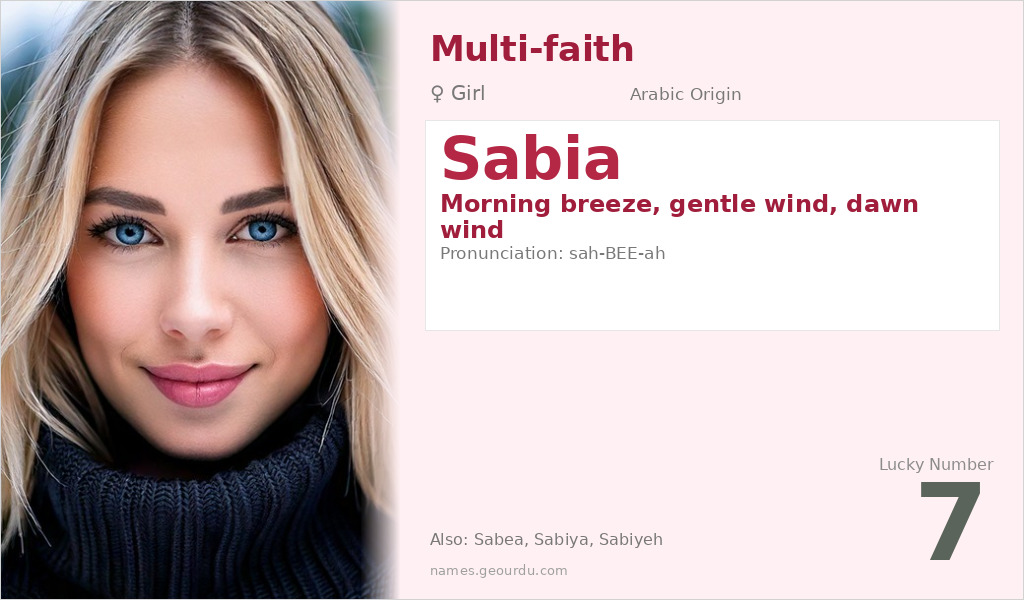
| 📛 Name | Sabia |
| 💎 Meaning | Morning breeze, gentle wind, dawn wind |
| 👤 Gender | Girl |
| 🕌 Religion | Multi-faith |
| 🌍 Origin | Arabic |
| 🗣 Pronunciation | sah-BEE-ah |
| ✍️ Urdu | صبیا |
| ✍️ Arabic | صَبِيَا |
| 🔢 Numerology | 7 |
| ✨ Spellings | Sabea, Sabiya, Sabiyeh, Sabiyah |
Origin & Cultural Significance
Sabia originates from classical Arabic language and pre-Islamic poetry, where natural phenomena were often personified in names. The name gained popularity across the Arab world and was adopted into Persian, Urdu, and other languages influenced by Arabic. While commonly used in Muslim communities, it also appears among Arabic-speaking Christians in Lebanon, Syria, and Palestine, making it a multi-faith name. In South Asia, particularly in Pakistan and India, the name entered through Persian literary influence during the Mughal era. Historical records show the name appearing in medieval Arabic texts and later in Ottoman court records, indicating its aristocratic associations. Today, it remains popular in Arabic-speaking countries, South Asia, and among diaspora communities worldwide.
Personality Traits
Those named Sabia are often associated with qualities of freshness, gentleness, and renewal—reflecting their name’s meaning as a morning breeze. They tend to be calm, reflective individuals who bring a sense of peace to their surroundings. Many exhibit artistic sensibilities, appreciating beauty in nature, music, and literature. Their balanced temperament allows them to navigate social situations with grace while maintaining thoughtful independence.
Similar Names
If you like Sabia, consider: Sabrina, Sabah, Saba, Safia, Samia
Famous People Named Sabia
- Sabia Saba — Lebanese singer known for classical Arabic music
- Sabia K. — Indian poet and writer in Urdu literature
Frequently Asked Questions About Sabia
What does Sabia mean?
Sabia means 'morning breeze', 'gentle wind', or 'dawn wind' in Arabic. It comes from the Arabic word 'ṣabāḥ' (morning) with a feminine suffix, creating a poetic term for the refreshing wind that blows at daybreak.
Is Sabia a boy or girl name?
Sabia is exclusively a feminine name in all cultures where it is used. The '-ia' ending is a feminine suffix in Arabic, and historical usage consistently shows it as a girl's name.
What is the origin of Sabia?
Sabia originates from classical Arabic language and poetry. It derives from the Arabic root 'ṣ-b-ḥ' relating to morning, specifically referring to the gentle east wind that blows at dawn, celebrated in pre-Islamic and Islamic Arabic literature.