Table of Contents
Sanaubar is a beautiful, nature-inspired name with deep roots in Persian language and culture. Meaning ‘pine tree’ or ‘fir tree,’ this name evokes images of evergreen strength and natural beauty. While particularly popular in Muslim communities of South Asia and Central Asia, it transcends religious boundaries as a poetic name choice. Let’s explore the rich linguistic heritage and cultural significance of this arboreal name.
Meaning of Sanaubar
Sanaubar derives directly from the Persian word ‘sanawbar’ (صنوبر), which specifically refers to pine trees or fir trees. The term has cognates in several languages influenced by Persian, including Urdu, Pashto, and Dari. In botanical terms, it particularly denotes coniferous trees of the Pinus genus, such as the chilgoza pine (Pinus gerardiana) valued for its edible nuts. The name carries metaphorical weight in Persian literature, where pine trees symbolize endurance, resilience, and eternal life due to their evergreen nature. This connection to natural permanence makes Sanaubar a name with profound symbolic meaning beyond its literal botanical reference.
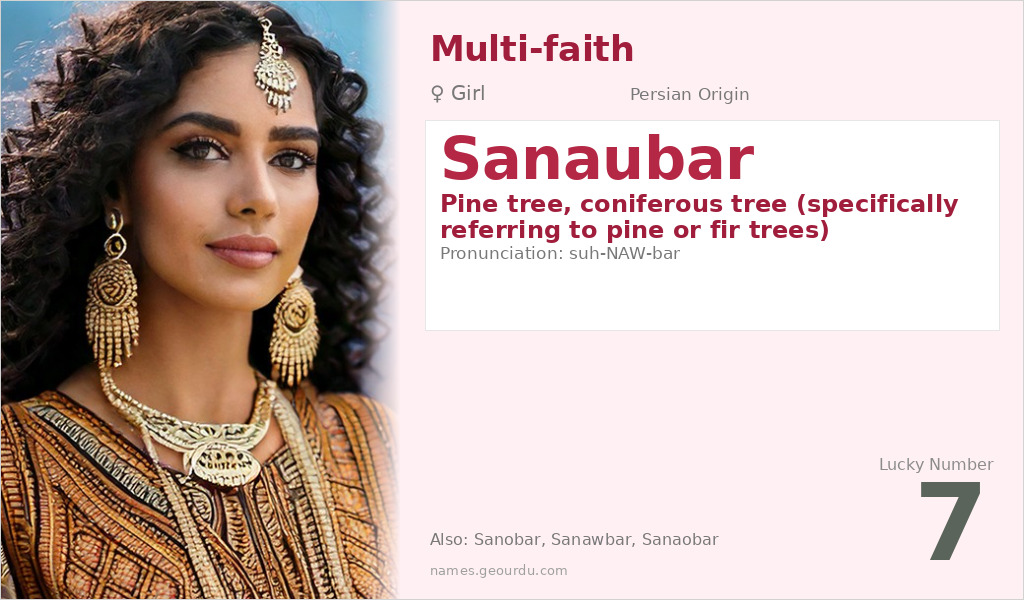
| 📛 Name | Sanaubar |
| 💎 Meaning | Pine tree, coniferous tree (specifically referring to pine or fir trees) |
| 👤 Gender | Girl |
| 🕌 Religion | Multi-faith |
| 🌍 Origin | Persian |
| 🗣 Pronunciation | suh-NAW-bar |
| ✍️ Urdu | صنوبر |
| ✍️ Arabic | صنوبر |
| 🔢 Numerology | 7 |
| ✨ Spellings | Sanobar, Sanawbar, Sanaobar, Sanaobar |
Origin & Cultural Significance
Sanaubar originates from Persian language and culture, where nature-inspired names have a long tradition in poetry and naming conventions. The name spread through Persian linguistic influence across South Asia, Central Asia, and the Middle East, particularly following historical Persian empires and cultural exchanges. While commonly used in Muslim communities of Afghanistan, Pakistan, Iran, and Tajikistan, the name isn’t exclusively Islamic—it appears in various Persian-influenced cultures regardless of religious affiliation. The name’s popularity reflects the enduring appreciation for natural beauty and symbolic meaning in Persianate naming traditions, where arboreal names often represent desirable qualities like strength, growth, and longevity.
Personality Traits
Those named Sanaubar are often associated with the qualities of the pine tree: resilience, stability, and deep-rooted strength. They tend to be practical yet poetic individuals who value tradition while maintaining adaptability. Like evergreen trees that weather seasonal changes, people with this name often demonstrate remarkable endurance through life’s challenges while providing shelter and support to those around them.
Similar Names
If you like Sanaubar, consider: Sanam, Sanaz, Samar, Sahar, Shirin
Famous People Named Sanaubar
- Sanobar (character) — Central character in the Afghan novel 'The Kite Runner' by Khaled Hosseini
- Sanobar — Common given name among Persian-speaking communities in Iran, Afghanistan, and Tajikistan
Frequently Asked Questions About Sanaubar
What does Sanaubar mean?
Sanaubar means 'pine tree' or 'fir tree' in Persian. It specifically refers to coniferous trees of the Pinaceae family, particularly species like the chilgoza pine.
Is Sanaubar a boy or girl name?
Sanaubar is primarily a feminine name in contemporary usage, though historically nature names in Persian could sometimes be unisex. In modern naming practices across Persian-speaking regions, it's overwhelmingly given to girls.
What is the origin of Sanaubar?
Sanaubar originates from the Persian language (صنوبر) and has been adopted into various languages influenced by Persian culture, including Urdu, Pashto, and Dari. It reflects the Persian tradition of nature-inspired names with poetic significance.