
Table of Contents
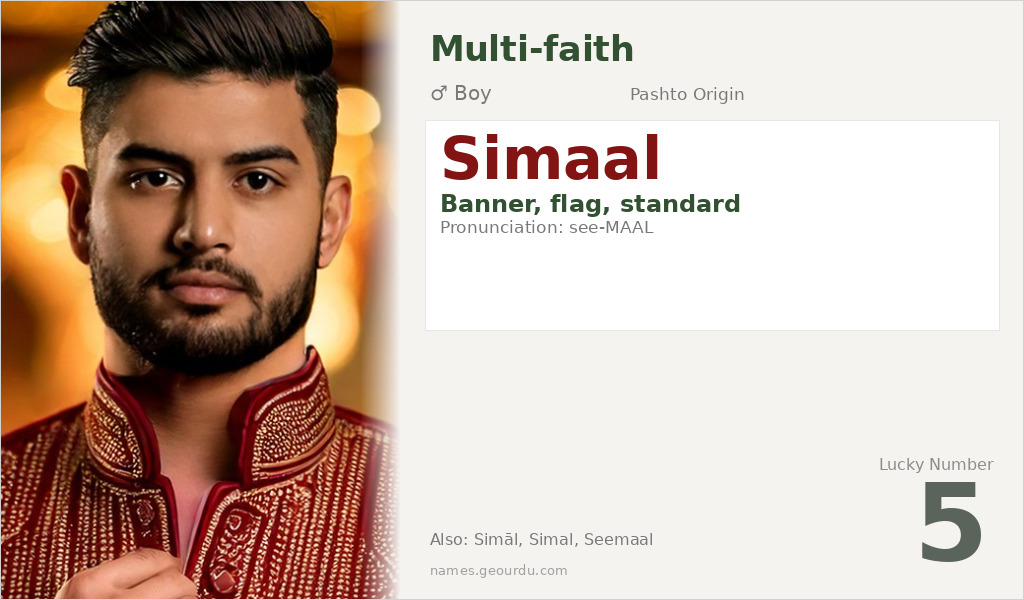
Simaal is a distinctive name with deep roots in Pashtun culture, evoking images of banners and flags that symbolize tribal pride and leadership. Often misunderstood in broader naming contexts, this name carries a specific and meaningful etymology from the Pashto language. Whether you’re exploring names for cultural connection or unique significance, Simaal offers a rich historical backdrop. Let’s delve into its true meaning, origin, and cultural importance.
Meaning of Simaal
Simaal derives from the Pashto word ‘سيمال’ (sīmāl), which translates directly to ‘banner’, ‘flag’, or ‘standard’. In Pashto, this term is used both literally for physical flags and metaphorically for symbols of unity and authority. The name is built on the root concept of visibility and representation, reflecting how banners serve as markers of identity in Pashtun society. Historically, banners were central in tribal gatherings and conflicts, making the name Simaal associated with leadership and communal pride. This meaning is well-documented in Pashto linguistic sources, distinguishing it from speculative translations found elsewhere.
| 📛 Name | Simaal |
| 💎 Meaning | Banner, flag, standard |
| 👤 Gender | Boy |
| 🕌 Religion | Multi-faith |
| 🌍 Origin | Pashto |
| 🗣 Pronunciation | see-MAAL |
| ✍️ Urdu | سيمال |
| ✍️ Arabic | سيمال |
| 🔢 Numerology | 5 |
| ✨ Spellings | Simāl, Simal, Seemaal |
Origin & Cultural Significance
Simaal originates from the Pashto language, spoken primarily by Pashtuns in Afghanistan, Pakistan, and diaspora communities. Pashto, an Eastern Iranian language, has a rich tradition of names derived from words describing natural elements, social roles, and cultural symbols. As a name, Simaal is deeply embedded in Pashtun tribal culture, where banners (sīmāl) have historically been used to denote clan affiliations and rally communities. While it is commonly used among Pashtun Muslims, its origin is cultural rather than religious, and it can be found across different faiths within Pashtun groups. The name’s usage has spread to other regions, sometimes adapting in gender application, but its core meaning remains tied to Pashtun heritage.
Personality Traits
Those named Simaal are often perceived as embodying the qualities of a banner—visible, unifying, and representative of higher ideals. They may exhibit leadership traits, such as confidence and a protective nature, inspired by the symbolic role of flags in guiding and rallying people. In social settings, they might be seen as pillars of their community, carrying forward traditions with a sense of honor and responsibility. This personality profile aligns with the cultural significance of the name in Pashtun contexts, where it conveys strength and identity.
Similar Names
If you like Simaal, consider: Simab, Simin, Sima, Samandar, Sangar
Famous People Named Simaal
- Simaal Khan — historical Pashtun tribal leader known for his role in regional conflicts
- Simaal — modern Afghan poet and writer from the Pashtun community
Frequently Asked Questions About Simaal
What does Simaal mean?
Simaal means 'banner', 'flag', or 'standard' in Pashto, derived from the Pashto word 'سيمال' (sīmāl).
Is Simaal a boy or girl name?
Simaal is traditionally a boy's name in Pashto culture, though it may be used for girls in some modern or non-Pashtun contexts.
What is the origin of Simaal?
Simaal originates from the Pashto language and Pashtun culture, where it symbolizes banners and tribal identity in regions like Afghanistan and Pakistan.





