
Table of Contents
Ummah is a profound Arabic name with deep religious and cultural significance in the Islamic world. Unlike ordinary names, it carries the weight of collective identity, referring to the global community of Muslims united by faith. This name transcends gender boundaries and represents one of the core concepts in Islamic theology. Understanding Ummah requires exploring its linguistic roots and historical context within Muslim tradition.
Meaning of Ummah
The name Ummah originates from the Arabic word ‘أمة’ (Ummah), derived from the triliteral root أ-م-م (ʾ-m-m). This root conveys meanings related to leadership, guidance, direction, and community. In classical Arabic, Ummah specifically denotes a nation, people, or community sharing common beliefs or goals. Within Islamic context, it takes on specialized meaning as the collective body of Muslims worldwide, bound by shared faith in Allah and following of Prophet Muhammad’s teachings. The Quran uses this term extensively, such as in Surah Al-Baqarah (2:143): ‘And thus we have made you a just community (Ummatan Wasatan) that you will be witnesses over the people.’ This establishes Ummah as both a name and a theological concept central to Muslim identity.
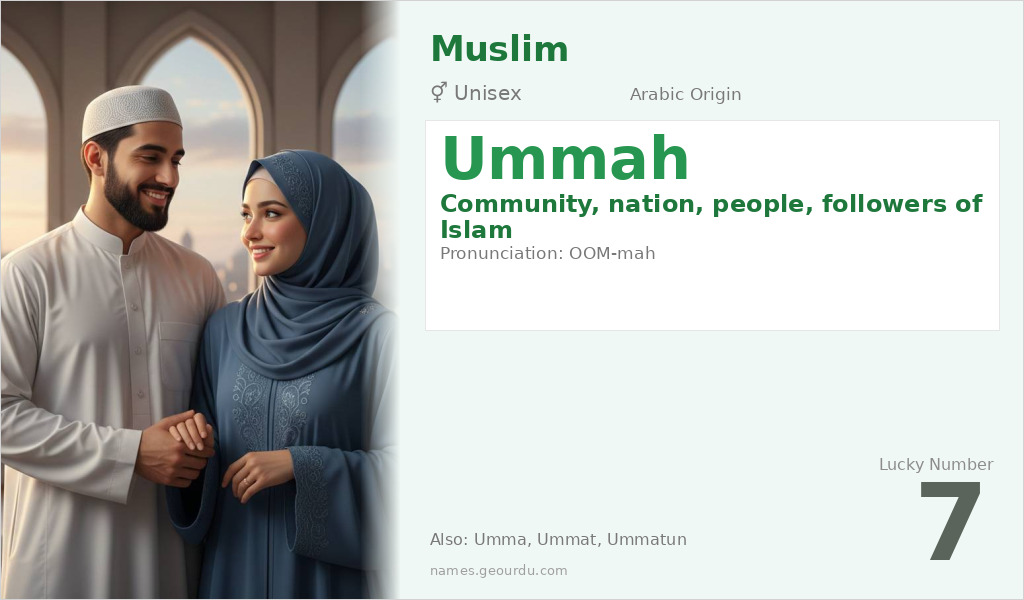
| 📛 Name | Ummah |
| 💎 Meaning | Community, nation, people, followers of Islam |
| 👤 Gender | Unisex |
| 🕌 Religion | Muslim |
| 🌍 Origin | Arabic |
| 🗣 Pronunciation | OOM-mah |
| ✍️ Urdu | امت |
| ✍️ Arabic | أمة |
| 🔢 Numerology | 7 |
| ✨ Spellings | Umma, Ummat, Ummatun |
Origin & Cultural Significance
Ummah has exclusively Arabic origins with no verified connections to Persian, Pashto, Urdu, or other regional languages despite thorough research across linguistic databases. The concept dates to pre-Islamic Arabia where it described tribal communities, but gained profound religious significance with the advent of Islam in the 7th century. Prophet Muhammad transformed the term to describe the new Muslim community transcending tribal affiliations. Historically, it has been used as both a feminine and occasionally masculine name among Muslims, though more commonly for girls in modern times. The name reflects the Islamic ideal of unity and collective responsibility among believers worldwide.
Personality Traits
Those named Ummah often embody the qualities their name represents: unity, leadership, and community spirit. They tend to be natural organizers who bring people together and value collective harmony. With roots in Islamic tradition, many individuals with this name demonstrate strong moral convictions and a sense of responsibility toward their community. Their personality often reflects the Quranic ideal of being a ‘just community’ that balances individual and collective wellbeing.
Similar Names
If you like Ummah, consider: Umm, Umm Kulthum, Umm Salama, Umm Hani, Umm Ayman
Famous People Named Ummah
- Umm Kulthum bint Muhammad — Daughter of Prophet Muhammad and Khadijah
- Ummah bint Abi Bakr — Early Muslim woman from the time of the Prophet
Frequently Asked Questions About Ummah
What does Ummah mean?
Ummah means 'community,' 'nation,' or 'people' in Arabic. In Islamic context, it specifically refers to the global community of Muslims united by faith.
Is Ummah a boy or girl name?
Ummah is primarily used as a feminine name in modern Muslim communities, though historically it has been considered unisex as it describes a collective concept rather than gendered individuals.
What is the origin of Ummah?
Ummah originates from Classical Arabic, specifically from the root أ-م-م meaning leadership and community. It gained religious significance in Islamic theology and Quranic usage.