
Table of Contents
Zakat is a profoundly significant term in Islam, representing one of the Five Pillars of the faith. While primarily known as the obligatory charity that Muslims must give annually, it occasionally appears as a personal name, though this usage is quite rare. The name carries deep spiritual meaning related to purification, growth, and social responsibility. Understanding Zakat requires exploring its religious context rather than treating it as a conventional given name.
Meaning of Zakat
Zakat (زكاة) originates from classical Arabic, derived from the triliteral root ز-ك-و (z-k-w). This root conveys multiple interconnected meanings: purification, cleansing, growth, and increase. In Islamic theology, Zakat specifically refers to the mandatory almsgiving that purifies both wealth and soul. The term appears in the Quran over 30 times, establishing it as a fundamental religious obligation. Linguistically, it’s related to words like ‘tazkiyah’ (purification) and ‘zakiyy’ (pure, intelligent). The concept represents both spiritual cleansing and the idea that charitable giving causes wealth to grow through divine blessing.
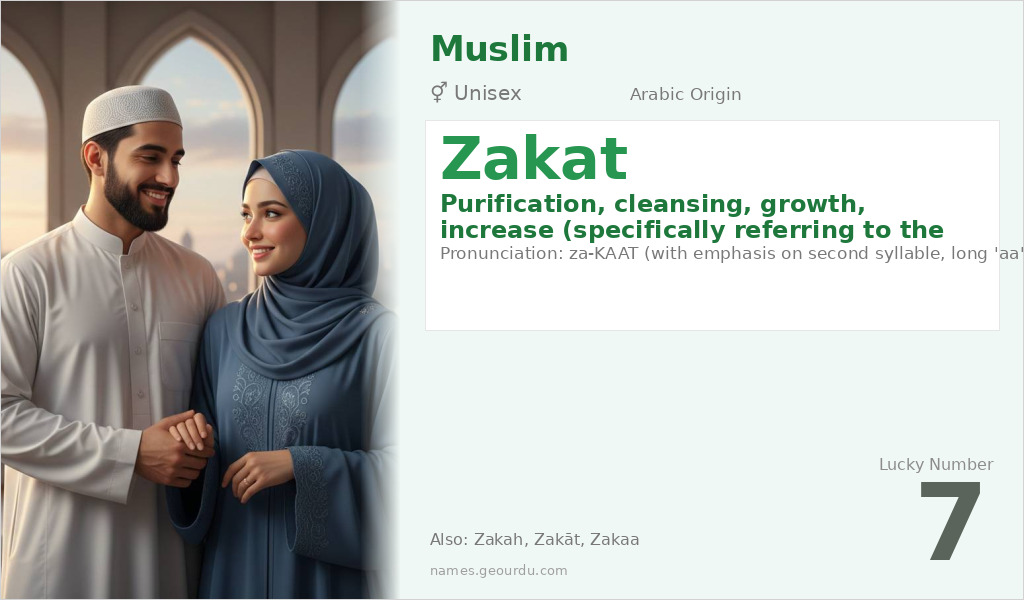
| 📛 Name | Zakat |
| 💎 Meaning | Purification, cleansing, growth, increase (specifically referring to the Islamic obligatory charity) |
| 👤 Gender | Unisex |
| 🕌 Religion | Muslim |
| 🌍 Origin | Arabic |
| 🗣 Pronunciation | za-KAAT (with emphasis on second syllable, long 'aa' sound) |
| ✍️ Urdu | زکوٰۃ |
| ✍️ Arabic | زكاة |
| 🔢 Numerology | 7 |
| ✨ Spellings | Zakah, Zakāt, Zakaa, Zakkat |
Origin & Cultural Significance
Zakat emerged as a central Islamic institution in 7th-century Arabia with the revelation of the Quran. While the Arabic root existed in pre-Islamic poetry, Islam gave it specific religious meaning as one of the Five Pillars. The practice systematized charity in early Muslim communities, distinguishing it from voluntary giving (sadaqah). As a personal name, Zakat is extremely uncommon across Muslim cultures—parents typically choose names of prophets, companions, or attributes of God rather than religious obligations. The name appears occasionally in historical records but remains rare compared to its usage as a religious term.
Personality Traits
Given its rarity as a personal name, specific personality associations are minimal. However, the name’s meaning suggests someone with strong ethical principles, generosity, and community awareness. The Islamic context implies spiritual depth and commitment to social justice. Those named Zakat might feel connected to values of purification, responsibility, and equitable wealth distribution.
Similar Names
If you like Zakat, consider: Zaki, Zakiyyah, Zakariya, Zainab, Zubair
Famous People Named Zakat
- None found — Zakat is primarily a religious term rather than a personal name in contemporary usage
Frequently Asked Questions About Zakat
What does Zakat mean?
Zakat means purification, cleansing, growth, and increase in Arabic. Specifically, it refers to the obligatory charity in Islam that Muslims must give annually from their wealth.
Is Zakat a boy or girl name?
Zakat is technically unisex but extremely rare as a personal name. It's primarily known as an Islamic religious term rather than a conventional given name.
What is the origin of Zakat?
Zakat originates from classical Arabic and Islamic tradition. It comes from the root ز-ك-و (z-k-w) and gained specific religious meaning as one of the Five Pillars of Islam in the 7th century.