
Table of Contents
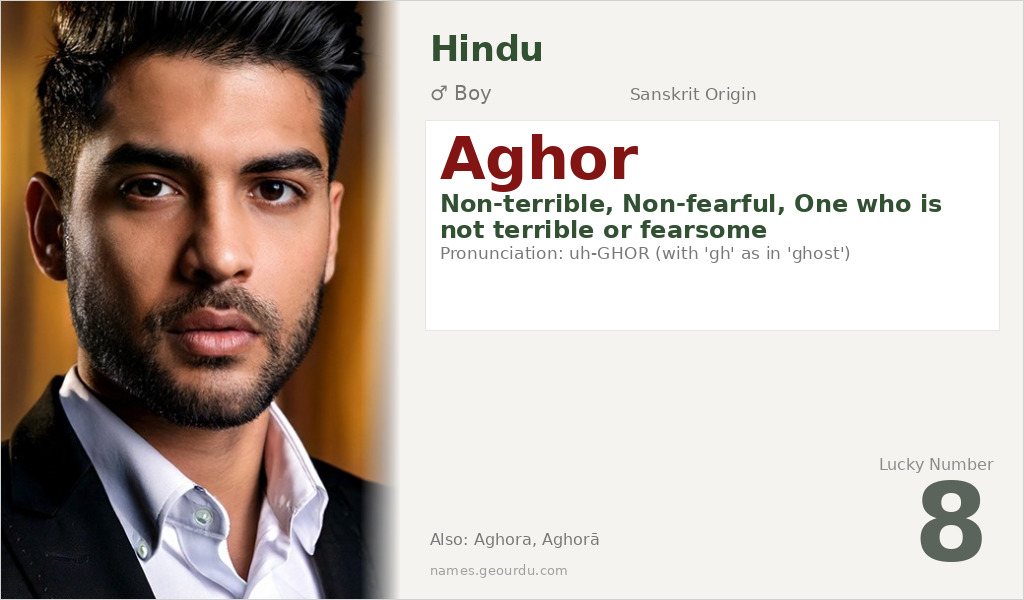
Aghor is a profound Sanskrit name with deep roots in Hindu tradition and philosophy. Meaning ‘Non-terrible’ or ‘Non-fearful,’ this name carries significant spiritual weight as one of the epithets of Lord Shiva. Used primarily for boys, Aghor represents the gentle, compassionate aspect of divinity that contrasts with more fearsome manifestations. This name has been cherished for centuries within Hindu communities for its meaningful etymology and cultural resonance.
Meaning of Aghor
The name Aghor originates from Sanskrit, one of the world’s oldest languages with a rich literary and religious tradition. It is composed of two elements: the prefix ‘a-‘ meaning ‘not’ or ‘non-‘ and ‘ghora’ meaning ‘terrible,’ ‘fearsome,’ ‘dreadful,’ or ‘fierce.’ Thus, Aghor literally translates to ‘not terrible’ or ‘non-fearful.’ In Hindu scriptures, particularly those related to Shaivism, Aghor is used as an epithet for Lord Shiva, referring to his benevolent, approachable aspect. This name appears in various ancient texts and continues to be used in religious and cultural contexts today. The linguistic construction follows common Sanskrit naming patterns where the ‘a-‘ prefix creates antonyms, giving the name its specific philosophical meaning.
| 📛 Name | Aghor |
| 💎 Meaning | Non-terrible, Non-fearful, One who is not terrible or fearsome |
| 👤 Gender | Boy |
| 🕌 Religion | Hindu |
| 🌍 Origin | Sanskrit |
| 🗣 Pronunciation | uh-GHOR (with 'gh' as in 'ghost') |
| ✍️ Urdu | اغور |
| ✍️ Arabic | أغور |
| 🔢 Numerology | 8 |
| ✨ Spellings | Aghora, Aghorā |
Origin & Cultural Significance
Aghor has its origins in ancient Sanskrit language and Hindu religious tradition, specifically within Shaivism (the worship of Shiva). The name appears in various Hindu scriptures and philosophical texts dating back centuries. In cultural context, it represents an important aspect of Hindu theology—the idea that the divine has both fearsome (ghora) and gentle (aghora) manifestations. The name is particularly significant in certain Shaiva traditions where different aspects of Shiva are emphasized. While primarily used in India and among Hindu communities worldwide, the name maintains its classical Sanskrit form without significant regional variations. Its usage reflects the enduring influence of Sanskrit and Hindu philosophy on naming traditions.
Personality Traits
Those named Aghor are often associated with qualities of calm strength and approachability, reflecting the name’s meaning of being ‘non-terrible.’ They may possess a balanced personality that combines gentleness with inner resilience. In cultural perception, the name suggests someone who is compassionate yet firm, peaceful yet determined. These traits align with the philosophical concept behind the name—representing the benevolent aspect of strength that doesn’t intimidate but rather comforts and protects.
Similar Names
If you like Aghor, consider: Aghora (Sanskrit variant), Abhaya (Sanskrit: fearless), Abhay (Sanskrit: fearless), Shiva (associated deity), Rudra (another name for Shiva)
Famous People Named Aghor
- Aghorashiva — 12th century Shaiva philosopher and saint from South India
- Aghoracharya — historical figure in Shaivism tradition
Frequently Asked Questions About Aghor
What does Aghor mean?
Aghor means 'Non-terrible' or 'Non-fearful' in Sanskrit. It is derived from 'a-' (not) and 'ghora' (terrible/fearsome), and is an epithet of Lord Shiva in Hindu tradition.
Is Aghor a boy or girl name?
Aghor is traditionally a boy's name in Hindu naming conventions. It is used almost exclusively for males within Hindu communities, reflecting its association with masculine divine aspects.
What is the origin of Aghor?
Aghor originates from Sanskrit, the classical language of ancient India. It has specific roots in Hindu religious tradition, particularly Shaivism, where it is used as a name for Lord Shiva's benevolent aspect.





