
Table of Contents
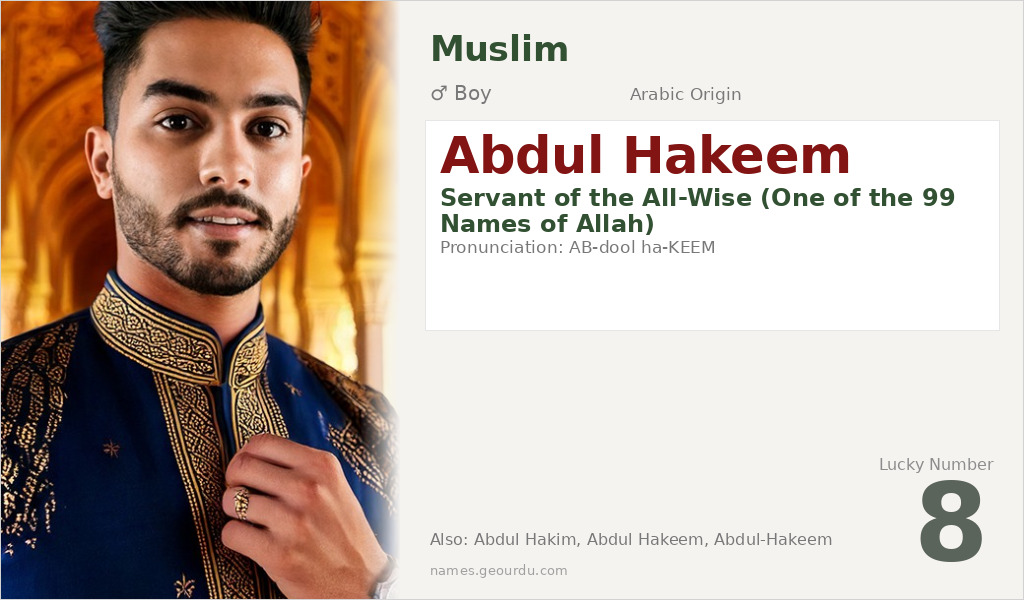
Abdul Hakeem is a profound and meaningful Arabic name that carries significant religious weight in Islamic tradition. As a compound name meaning ‘Servant of the All-Wise’, it connects the bearer directly to one of Allah’s divine attributes. This name has been cherished across Muslim cultures for centuries, representing devotion, wisdom, and spiritual connection. Understanding its etymology reveals why it remains a popular choice for Muslim families worldwide.
Meaning of Abdul Hakeem
Abdul Hakeem derives from classical Arabic, combining ‘Abdul’ (عبد ال) meaning ‘servant of’ with ‘Hakeem’ (الحكيم) meaning ‘the All-Wise’. ‘Hakeem’ is one of the 99 Names of Allah (Asma ul-Husna) mentioned in the Quran, specifically in Surah Al-Hashr (59:24): ‘He is Allah, the Creator, the Inventor, the Fashioner; to Him belong the best names.’ The name follows the traditional Arabic pattern for theophoric names where human qualities are expressed through servitude to divine attributes. Linguistically, ‘Hakeem’ comes from the Arabic root Ḥ-K-M (ح-ك-م) relating to wisdom, judgment, and authority. This construction emphasizes that true wisdom comes from Allah alone, and the bearer is a servant of that ultimate wisdom.
| 📛 Name | Abdul Hakeem |
| 💎 Meaning | Servant of the All-Wise (One of the 99 Names of Allah) |
| 👤 Gender | Boy |
| 🕌 Religion | Muslim |
| 🌍 Origin | Arabic |
| 🗣 Pronunciation | AB-dool ha-KEEM |
| ✍️ Urdu | عبدالحکیم |
| ✍️ Arabic | عبد الحكيم |
| 🔢 Numerology | 8 |
| ✨ Spellings | Abdul Hakim, Abdul Hakeem, Abdul-Hakeem, Abd al-Hakim, Abdul Hakeem |
Origin & Cultural Significance
The name Abdul Hakeem originates from pre-Islamic Arabic naming traditions that were Islamized with the advent of Islam in the 7th century. As Muslims began using names that reflected devotion to Allah’s attributes, ‘Abdul Hakeem’ emerged as part of this religious naming convention. The name spread throughout the Islamic world via Arabic language and Quranic teachings, becoming established from North Africa to Southeast Asia. It appears in historical records of Islamic scholars, rulers, and religious figures across centuries. While the name is Arabic in origin, it has been adopted and adapted in various Muslim cultures including Persian, Urdu, Turkish, and Malay-speaking communities, though always retaining its original Arabic meaning and religious significance.
Personality Traits
While personality traits aren’t determined by names, the meaning of Abdul Hakeem suggests qualities associated with wisdom and thoughtful consideration. Those bearing this name might be encouraged to develop intellectual curiosity, sound judgment, and a reflective nature. The name’s religious significance often connects bearers to values of knowledge-seeking, patience in decision-making, and spiritual depth that aligns with Islamic teachings about wisdom as a divine gift to be cultivated.
Similar Names
If you like Abdul Hakeem, consider: Abdul Rahman, Abdul Malik, Abdul Qadir, Abdul Aziz, Abdul Karim
Famous People Named Abdul Hakeem
- Abdul Hakeem Sialkoti — 17th century Islamic scholar from Sialkot, known for his contributions to Islamic philosophy and logic
- Abdul Hakim — Various historical figures including Mughal-era scholars and modern politicians across Muslim-majority countries
Frequently Asked Questions About Abdul Hakeem
What does Abdul Hakeem mean?
Abdul Hakeem means 'Servant of the All-Wise' in Arabic, where 'Hakeem' is one of the 99 Names of Allah referring to perfect wisdom and judgment.
Is Abdul Hakeem a boy or girl name?
Abdul Hakeem is exclusively a boy's name in Islamic naming traditions, following the pattern of male theophoric names beginning with 'Abdul'.
What is the origin of Abdul Hakeem?
The name originates from classical Arabic and Islamic tradition, specifically from the Quranic concept of Allah's attributes (Asma ul-Husna).





