Table of Contents
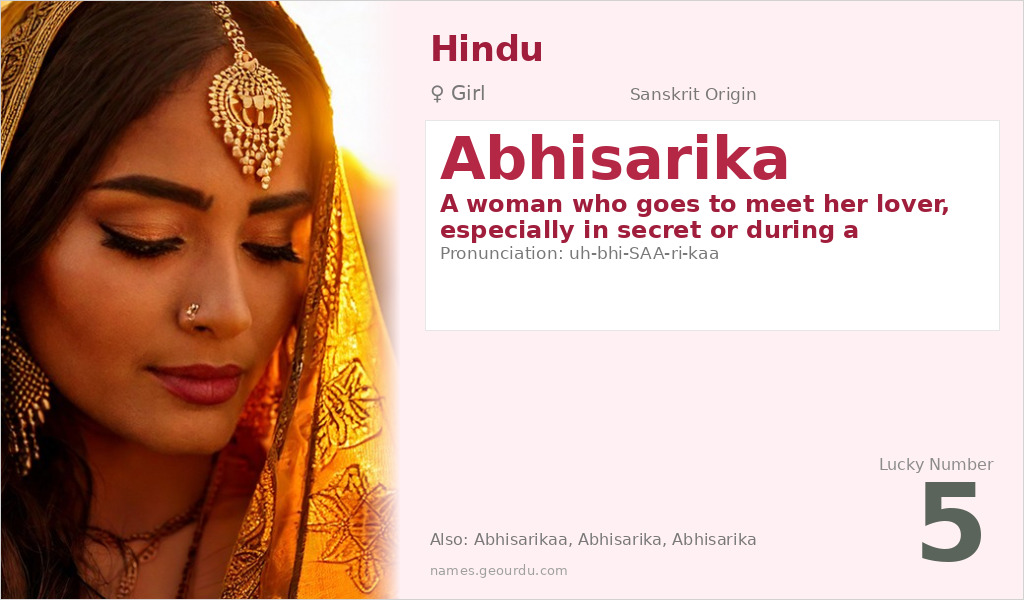
Abhisarika is a beautiful and meaningful Sanskrit name for girls that carries rich literary heritage from ancient India. Unlike common names, Abhisarika represents a specific type of heroine in classical Sanskrit poetry and drama – a woman who courageously goes to meet her beloved. This name embodies romantic initiative, passion, and determination, making it a distinctive choice with deep cultural roots. Let’s explore the fascinating etymology and significance of this classical Indian name.
Meaning of Abhisarika
Abhisarika derives from the Sanskrit language, combining ‘abhi-‘ meaning ‘towards’ or ‘near’ with the root ‘sṛ’ meaning ‘to go’ or ‘to move’. The complete term ‘abhisārikā’ literally translates to ‘she who goes toward’ or ‘the one who approaches’. In classical Indian literature, particularly in works like Bharata’s Nāṭyaśāstra (circa 200 BCE-200 CE) and later poetic traditions, Abhisarika specifically denotes one of the eight types of heroines (aṣṭa-nāyikā) who takes the initiative to meet her lover, often overcoming obstacles or societal constraints. This literary archetype represents women of agency and passion in romantic contexts. The name thus carries connotations of boldness, romantic determination, and proactive love rather than simply meaning ‘beloved’.
| 📛 Name | Abhisarika |
| 💎 Meaning | A woman who goes to meet her lover, especially in secret or during a rendezvous; a heroine in classical Sanskrit literature who ventures out for a romantic meeting |
| 👤 Gender | Girl |
| 🕌 Religion | Hindu |
| 🌍 Origin | Sanskrit |
| 🗣 Pronunciation | uh-bhi-SAA-ri-kaa |
| ✍️ Urdu | ابھیسارکا |
| ✍️ Arabic | أبهيساريكا |
| 🔢 Numerology | 5 |
| ✨ Spellings | Abhisarikaa, Abhisarika, Abhisarika, Abhisarika |
Origin & Cultural Significance
Abhisarika originates from classical Sanskrit literature and Indian poetic traditions dating back over two millennia. The concept comes from the detailed classification of heroines in ancient Indian dramaturgy and poetry, where different types of nāyikās (heroines) were categorized based on their circumstances and behaviors in love. Abhisarika represents the heroine who ventures out for a rendezvous with her beloved, often depicted in works by poets like Kālidāsa (4th-5th century CE). While the name has Hindu cultural roots through Sanskrit literature, it’s primarily a literary and cultural reference rather than a commonly used given name historically. In modern times, it has been adopted as a feminine name, particularly among families appreciating classical Indian literature and Sanskrit heritage.
Personality Traits
Drawing from its literary origins, the name Abhisarika suggests personality traits of courage, passion, and initiative. Those named Abhisarika are often perceived as determined individuals who actively pursue their goals and relationships rather than waiting passively. The archetype represents romantic boldness and the willingness to overcome obstacles for love, which translates metaphorically to perseverance and strong will in various life aspects. This name carries an energy of movement and purposefulness.
Similar Names
If you like Abhisarika, consider: Ananyā, Madanikā, Vasanti, Kāminī, Premalata
Famous People Named Abhisarika
- Abhisarika Sharma — Indian classical dancer specializing in Kathak, known for performances based on Sanskrit literary heroines
- Abhisarika Raut — Scholar of Sanskrit literature and author of research on nāyikā classification in classical Indian poetry
Frequently Asked Questions About Abhisarika
What does Abhisarika mean?
Abhisarika means 'a woman who goes to meet her lover' in Sanskrit. Specifically, it refers to a type of heroine in classical Indian literature who takes initiative in romantic relationships.
Is Abhisarika a boy or girl name?
Abhisarika is exclusively a girl's name. In Sanskrit grammar, the '-ikā' suffix creates feminine forms, and the literary archetype specifically describes a female heroine.
What is the origin of Abhisarika?
Abhisarika originates from classical Sanskrit literature and Indian poetic traditions. It comes from the classification of heroines (nāyikā) in ancient Indian dramaturgy, particularly in texts like the Nāṭyaśāstra.