
Table of Contents
Ajendra is a powerful and meaningful name of Sanskrit origin that carries the majestic imagery of mountains and kingship. Primarily used in Hindu communities, this name combines two significant elements to create a name that symbolizes strength, stability, and leadership. While not extremely common, Ajendra has a distinguished presence in Indian naming traditions. This guide explores the complete etymology, cultural context, and modern usage of this meaningful name.
Meaning of Ajendra
Ajendra derives from classical Sanskrit, formed by combining ‘Aja’ (अज) meaning ‘mountain’ and ‘Indra’ (इन्द्र) meaning ‘king’ or ‘lord’. The name literally translates to ‘king of mountains’ or ‘Indra of the mountains’, referencing both earthly majesty and divine royalty. In Hindu cosmology, mountains are sacred and often personified, making this name particularly resonant. The element ‘Indra’ specifically refers to the king of gods in Hindu mythology, adding a divine dimension to the name. Linguistically, it follows standard Sanskrit compound formation rules, making it a legitimate and meaningful construction. The name appears in various Hindu texts and literature, though it’s more commonly found as a given name in modern times rather than in ancient epics.
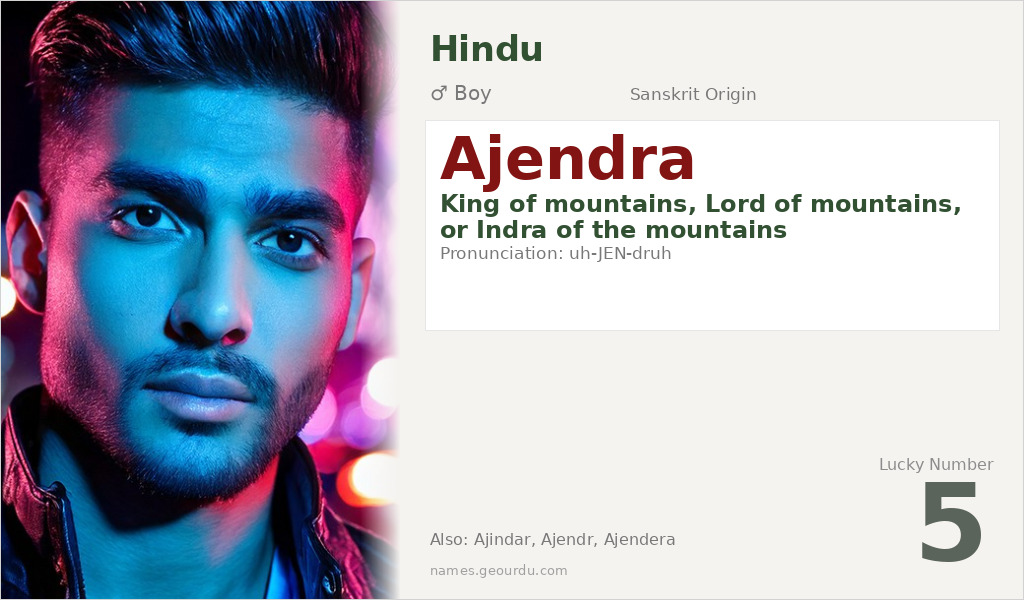
| 📛 Name | Ajendra |
| 💎 Meaning | King of mountains, Lord of mountains, or Indra of the mountains |
| 👤 Gender | Boy |
| 🕌 Religion | Hindu |
| 🌍 Origin | Sanskrit |
| 🗣 Pronunciation | uh-JEN-druh |
| ✍️ Urdu | اجیندر |
| ✍️ Arabic | أجيندرا |
| 🔢 Numerology | 5 |
| ✨ Spellings | Ajindar, Ajendr, Ajendera |
Origin & Cultural Significance
Ajendra originates from Sanskrit, the classical language of ancient India and the primary liturgical language of Hinduism. As a compound name, it reflects the sophisticated naming traditions of Sanskrit where meaningful elements are combined to create names with specific connotations. The name is predominantly used within Hindu communities across India and the diaspora, particularly in regions with strong Sanskrit naming traditions. While not among the most common Sanskrit names, it maintains a presence in modern Indian naming, especially among families seeking names with natural and regal symbolism. The name’s components—mountain and kingship—reflect important values in Hindu culture: stability, strength, protection, and leadership.
Personality Traits
Those named Ajendra are often associated with mountain-like qualities: steadfastness, reliability, and enduring strength. The ‘king’ element suggests natural leadership abilities and a protective nature. People with this name may be perceived as grounded individuals who provide stability to those around them. The combination creates a personality profile of someone who is both strong and noble, capable of bearing responsibilities while maintaining dignity.
Similar Names
If you like Ajendra, consider: Ajay, Indra, Mahendra, Rajendra, Virendra
Famous People Named Ajendra
- Ajendra Kumar — Indian politician from Uttar Pradesh
- Ajendra Singh — Indian cricketer who played for Rajasthan
Frequently Asked Questions About Ajendra
What does Ajendra mean?
Ajendra means 'king of mountains' or 'lord of mountains' in Sanskrit. It combines 'Aja' (mountain) and 'Indra' (king/lord).
Is Ajendra a boy or girl name?
Ajendra is exclusively a boy's name in Hindu naming traditions. Sanskrit compound names ending in '-endra' are typically masculine.
What is the origin of Ajendra?
Ajendra originates from Sanskrit, the classical language of ancient India. It is a Hindu name with roots in Sanskrit literature and naming traditions.





