
Table of Contents
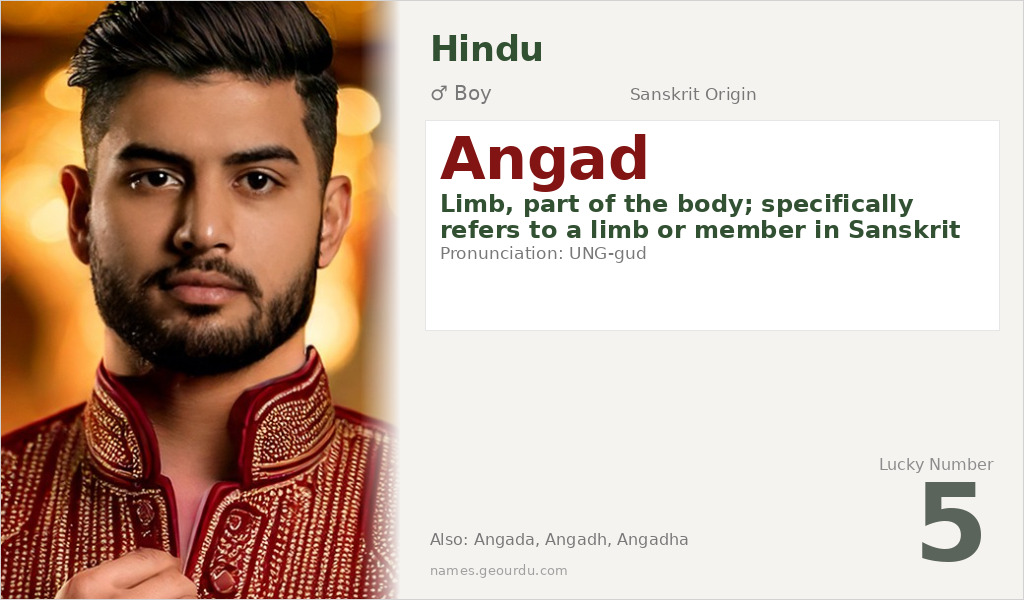
Angad is a traditional Hindu boy’s name with deep roots in Sanskrit literature and Hindu mythology. Derived from the Sanskrit word for ‘limb’ or ‘body part,’ this name carries connotations of strength, connection, and physicality. Most famously associated with Angada from the Ramayana, the name has maintained cultural relevance through centuries. Today, it remains a meaningful choice for parents seeking a name with historical and linguistic significance.
Meaning of Angad
The name Angad originates from the Sanskrit term ‘anga’ (अङ्ग), which fundamentally means ‘limb,’ ‘body part,’ or ‘member.’ When combined with the suffix ‘-da,’ it forms ‘angada,’ literally translating to ‘having limbs’ or ‘related to limbs.’ In classical Sanskrit texts, ‘angada’ specifically refers to an ornament worn on the arm, such as a bracelet or armlet, extending the meaning to decorative items associated with limbs. This dual meaning—both anatomical and ornamental—reflects the richness of Sanskrit etymology. The name appears in the Ramayana as Angada, son of the vanara king Vali, symbolizing strength and loyalty. Linguistic connections exist in other Indo-Aryan languages, where similar roots denote body parts or related concepts.
| 📛 Name | Angad |
| 💎 Meaning | Limb, part of the body; specifically refers to a limb or member in Sanskrit |
| 👤 Gender | Boy |
| 🕌 Religion | Hindu |
| 🌍 Origin | Sanskrit |
| 🗣 Pronunciation | UNG-gud |
| ✍️ Urdu | انگد |
| ✍️ Arabic | أنجاد |
| 🔢 Numerology | 5 |
| ✨ Spellings | Angada, Angadh, Angadha |
Origin & Cultural Significance
Angad has its origins in ancient Sanskrit, the classical language of India, and is deeply embedded in Hindu culture and mythology. It gained prominence through the character Angada in the Ramayana, an epic composed around the 5th century BCE, where he plays a crucial role as a messenger and warrior. The name is primarily used within Hindu communities, particularly in India and Nepal, and among the Indian diaspora. While it is most common in Sanskrit-derived languages like Hindi, Marathi, and Bengali, it has also been adopted in other cultural contexts due to its mythological significance. The name’s association with physical strength and loyalty stems from its literary heritage, making it a popular choice for boys in Hindu families.
Personality Traits
People named Angad are often thought to embody the qualities suggested by their name’s meaning—strength, resilience, and a strong connection to their roots. They may be perceived as dependable and protective, much like the mythological Angada who stood by his principles. Their personality might include a blend of physical vigor and emotional loyalty, making them natural leaders in group settings. While these traits are cultural associations rather than deterministic, they reflect the name’s enduring symbolic value in Hindu tradition.
Similar Names
If you like Angad, consider: Angada, Angaj, Angiras, Anga, Angana, Angara, Angadip, Angad Singh, Angad Paul, Angad Bedi
Famous People Named Angad
- Angada — Son of Vali in the Hindu epic Ramayana, known for his role as a messenger between Rama and Ravana
- Angad Singh — Indian actor and model known for his work in Bollywood films
Frequently Asked Questions About Angad
What does Angad mean?
Angad means 'limb' or 'body part' in Sanskrit, with extended meanings referring to arm ornaments. It is derived from the Sanskrit root 'anga.'
Is Angad a boy or girl name?
Angad is traditionally a boy's name in Hindu culture, as evidenced by its usage in the Ramayana for male characters and contemporary naming practices.
What is the origin of Angad?
Angad originates from Sanskrit, an ancient Indo-Aryan language of India, and is deeply rooted in Hindu mythology, particularly the Ramayana.





