
Table of Contents
Anang is a distinctive Sanskrit name with deep roots in Hindu mythology and philosophy. Meaning ‘bodiless’ or ‘incorporeal,’ this name carries both literal and symbolic significance. Traditionally given to boys, Anang represents the transcendent nature of love and desire beyond physical form. Discover the rich cultural heritage and modern relevance of this ancient name.
Meaning of Anang
The name Anang originates from Sanskrit, combining the prefix ‘a-‘ (meaning ‘without’ or ‘not’) with ‘anga’ (meaning ‘body’ or ‘limb’). This creates the literal meaning ‘bodiless’ or ‘incorporeal.’ In Hindu mythology, this became an epithet for Kamadeva, the god of love, after he was reduced to ashes by Shiva’s third eye and lost his physical form. The name thus symbolizes love that transcends physical boundaries and exists in pure essence. Linguistically, it’s a compound word common in Sanskrit naming traditions, where ‘a-‘ negations create meaningful philosophical concepts.
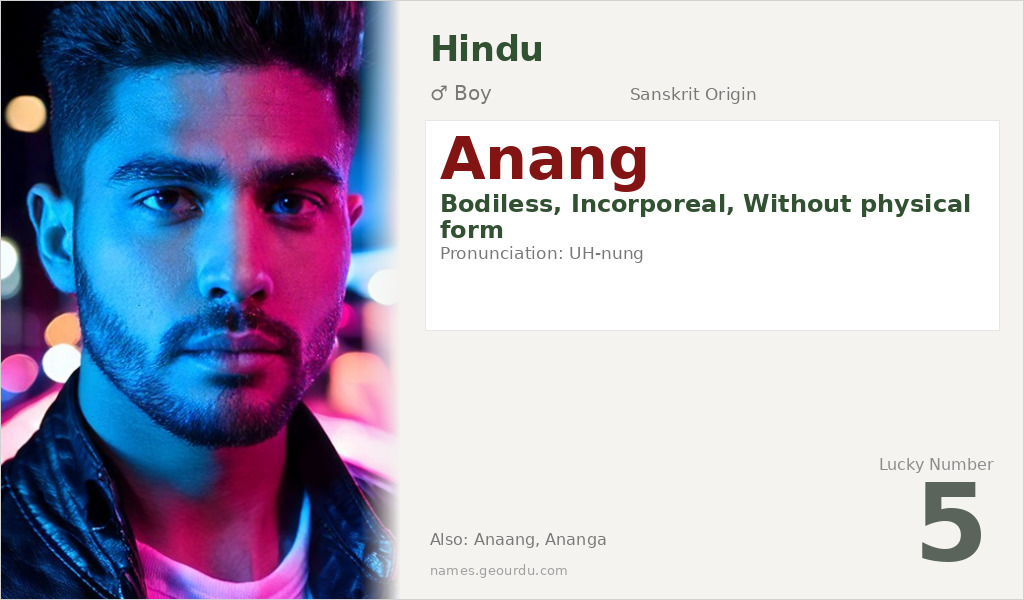
| 📛 Name | Anang |
| 💎 Meaning | Bodiless, Incorporeal, Without physical form |
| 👤 Gender | Boy |
| 🕌 Religion | Hindu |
| 🌍 Origin | Sanskrit |
| 🗣 Pronunciation | UH-nung |
| ✍️ Urdu | اننگ |
| ✍️ Arabic | أنانغ |
| 🔢 Numerology | 5 |
| ✨ Spellings | Anaang, Ananga |
Origin & Cultural Significance
Anang has its origins in ancient Sanskrit literature and Hindu mythology, dating back to Vedic and Puranic texts. The name gained prominence through the story of Kamadeva, who became ‘Ananga’ (bodiless) after being burned by Shiva. This mythological event is detailed in texts like the Shiva Purana and Matsya Purana. The name appears in classical Sanskrit poetry and drama, often used metaphorically for love itself. While primarily a Hindu name, its philosophical meaning has made it recognizable in other Indian cultural contexts, though it remains most common among Hindu communities.
Personality Traits
Those named Anang often embody the qualities associated with their mythological namesake—creativity, passion, and emotional depth. They tend to be charismatic individuals who connect with others on an intuitive level. The ‘bodiless’ aspect of the name suggests someone who values intellectual and spiritual pursuits over purely material concerns. Their adaptable nature allows them to navigate different social situations with grace and charm.
Similar Names
If you like Anang, consider: Kamadeva, Madan, Manmatha, Kandarpa, Pradyumna
Famous People Named Anang
- Anang Desai — Indian actor known for TV series 'Khichdi'
- Anang Pal II — Tomar dynasty ruler who established Delhi in the 8th century
Frequently Asked Questions About Anang
What does Anang mean?
Anang means 'bodiless' or 'incorporeal' in Sanskrit. It's an epithet for Kamadeva, the Hindu god of love, who lost his physical form.
Is Anang a boy or girl name?
Anang is traditionally a masculine name given to boys in Hindu culture, though its mythological association is with the male deity Kamadeva.
What is the origin of Anang?
Anang originates from Sanskrit language and Hindu mythology, specifically from the story of Kamadeva becoming bodiless after encountering Shiva.





