
Table of Contents
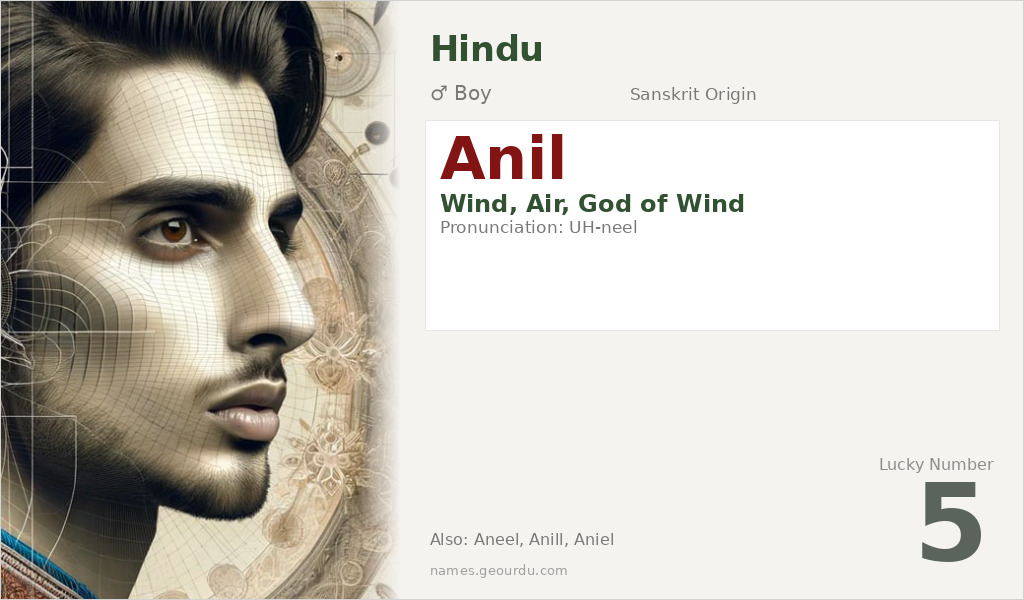
Anil is a classic Sanskrit name with deep roots in Hindu mythology and culture. Meaning ‘wind’ or ‘god of wind’, it carries connotations of vitality, movement, and natural power. Popular across South Asia and beyond, this name has been borne by notable figures in entertainment, sports, and other fields. Discover the rich etymology and cultural significance of this timeless name.
Meaning of Anil
The name Anil originates from the Sanskrit word अनिल (anila), which directly translates to ‘wind’ or ‘air’. In Hindu mythology, Anil is one of the eight Vasus, divine beings associated with natural elements, and is specifically identified with Vayu, the deity of wind. This connection gives the name a spiritual dimension, symbolizing breath, life force, and the unseen energy that sustains the world. The Sanskrit root ‘an’ relates to breathing or living, emphasizing themes of vitality and dynamism. Historically, the name appears in ancient texts like the Rigveda and Puranas, where Anil is revered as a powerful natural force. Its meaning has remained consistent across centuries, making it a enduring choice with clear linguistic and cultural foundations.
| 📛 Name | Anil |
| 💎 Meaning | Wind, Air, God of Wind |
| 👤 Gender | Boy |
| 🕌 Religion | Hindu |
| 🌍 Origin | Sanskrit |
| 🗣 Pronunciation | UH-neel |
| ✍️ Urdu | انیل |
| ✍️ Arabic | أنيل |
| 🔢 Numerology | 5 |
| ✨ Spellings | Aneel, Anill, Aniel |
Origin & Cultural Significance
Anil has its origins in ancient Sanskrit, the classical language of India, and is deeply embedded in Hindu tradition. It emerged from Vedic mythology, where Anil is celebrated as a god of wind among the Vasus, a group of elemental deities. The name spread through Hindu scriptures and later into common usage across India and neighboring regions like Nepal and Sri Lanka. In modern times, it remains popular in Hindu communities worldwide, often chosen for its auspicious and natural connotations. While primarily associated with Hinduism, the name has also been adopted in other cultures due to its phonetic appeal and positive meaning, though its core identity remains tied to Sanskrit and Hindu heritage.
Personality Traits
People named Anil are often seen as energetic and adaptable, much like the wind they’re named after. They tend to be excellent communicators, able to connect with diverse groups and navigate social situations with ease. Their curiosity and love for exploration make them lifelong learners, always seeking new experiences and knowledge. This dynamic personality can lead them to success in fields that require innovation, leadership, and interpersonal skills.
Similar Names
If you like Anil, consider: Vayu, Marut, Pavan, Samir, Anila
Famous People Named Anil
- Anil Kapoor — Indian actor known for Bollywood films like 'Mr. India' and 'Slumdog Millionaire'
- Anil Kumble — Former Indian cricketer and captain, one of India's greatest spin bowlers
Frequently Asked Questions About Anil
What does Anil mean?
Anil means 'wind', 'air', or 'god of wind' in Sanskrit, derived from the word अनिल (anila).
Is Anil a boy or girl name?
Anil is traditionally a boy's name in Hindu culture, though variations like Anila are used for girls.
What is the origin of Anil?
Anil originates from Sanskrit, an ancient Indian language, and is deeply rooted in Hindu mythology as the name of a wind god.





