
Table of Contents
Astovidatu is a name shrouded in ancient mythology rather than modern naming traditions. With roots in Avestan and Old Persian languages, this name carries historical significance from Zoroastrian texts where it appears as a demonic figure. Unlike common baby names today, Astovidatu offers a glimpse into pre-Islamic Iranian spiritual beliefs. Its rarity makes it a unique but historically complex choice for parents interested in ancient cultures.
Meaning of Astovidatu
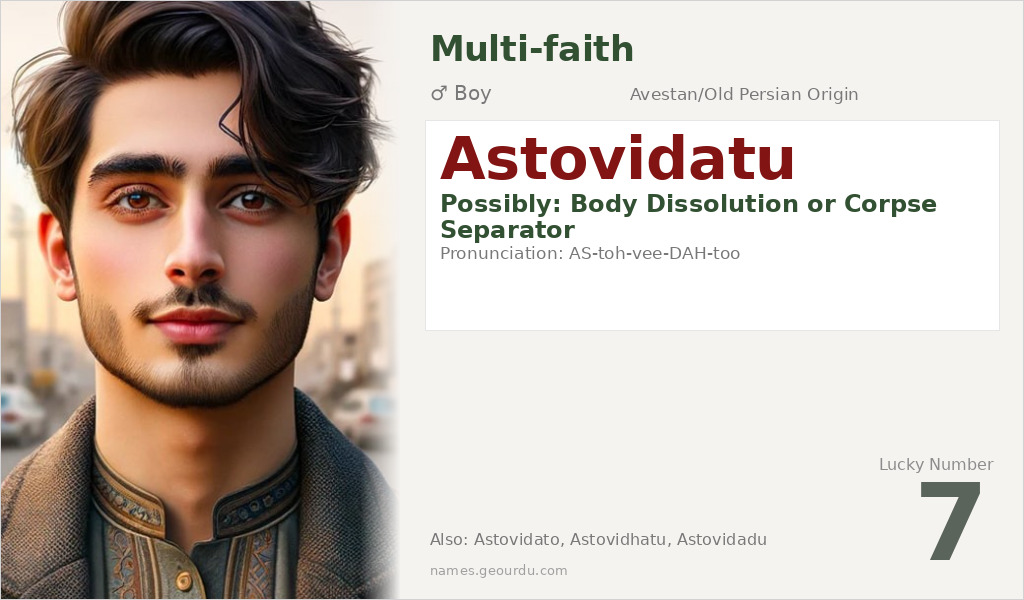
The meaning of Astovidatu traces back to Avestan, the sacred language of Zoroastrianism. It is believed to be a compound name, possibly combining ‘ast’ (meaning bone or corpse) with elements related to separation or dissolution. In Zoroastrian cosmology, Astovidatu is specifically identified as a demon who separates the soul from the body at the moment of death, making the literal interpretation ‘Body Dissolver’ or ‘Corpse Separator’. This places it among other demonic names in Avestan texts like Aka Manah (Evil Mind) and Druj (Falsehood). The name does not appear in mainstream dictionaries of modern Persian, Arabic, or regional languages like Pashto or Sindhi as a given name, suggesting its usage is primarily mythological rather than practical.
| 📛 Name | Astovidatu |
| 💎 Meaning | Possibly: Body Dissolution or Corpse Separator |
| 👤 Gender | Boy |
| 🕌 Religion | Multi-faith |
| 🌍 Origin | Avestan/Old Persian |
| 🗣 Pronunciation | AS-toh-vee-DAH-too |
| ✍️ Urdu | استوویداتو |
| ✍️ Arabic | أستوفيداتو |
| 🔢 Numerology | 7 |
| ✨ Spellings | Astovidato, Astovidhatu, Astovidadu |
Origin & Cultural Significance
Astovidatu originates from ancient Iranian religious texts, specifically the Avesta—the primary collection of Zoroastrian scriptures. This places its cultural context in pre-Islamic Persia, where Zoroastrianism was the dominant religion before the Arab conquest in the 7th century. The name is part of a pantheon of spiritual beings, including both benevolent (yazatas) and malevolent (daevas) entities. Unlike names that transitioned into Muslim naming traditions after Islamization, Astovidatu remained confined to mythological references and is not documented in Islamic, Persian, or regional naming practices like those in Balochi or Kurdish cultures. Its preservation is largely through academic study of ancient texts rather than living naming traditions.
Personality Traits
Given its origins as a demon name in Zoroastrian mythology, Astovidatu does not carry conventional personality associations like modern given names. In a speculative sense, the name might evoke traits of transformation or spiritual depth, reflecting its role in mythological narratives about death and separation. However, parents considering this name should be aware of its historical context as a negative figure in ancient texts, which contrasts with typical naming choices that emphasize positive qualities. Its rarity means there are no established cultural personality traits associated with it in contemporary societies.
Similar Names
If you like Astovidatu, consider: Ardashir, Darius, Cyrus, Zarathustra, Vishtaspa
Famous People Named Astovidatu
- None documented — name is extremely rare as a given name in historical or modern records
Frequently Asked Questions About Astovidatu
What does Astovidatu mean?
Astovidatu likely means 'Body Dissolver' or 'Corpse Separator' in Avestan, based on its appearance in Zoroastrian texts as a demon who separates soul from body at death.
Is Astovidatu a boy or girl name?
Astovidatu is historically used as a male name in mythological contexts, though it is extremely rare as a given name in any culture today.
What is the origin of Astovidatu?
The name originates from Avestan, the language of Zoroastrian scriptures in ancient Iran, and is not part of mainstream Muslim, Persian, or regional naming traditions.





