Table of Contents
Baijanti is a beautiful and spiritually significant name of Sanskrit origin, primarily used for girls in Hindu communities. Meaning ‘a fragrant flower’ or specifically referring to the divine garland of Lord Vishnu, this name carries deep mythological and cultural resonance. With its melodic sound and rich heritage, Baijanti represents both natural beauty and divine connection. Explore the fascinating etymology and traditions associated with this elegant name.
Meaning of Baijanti
Baijanti derives from the Sanskrit word ‘vaijayantī’ (वैजयन्ती), which has two primary meanings in Hindu tradition. First, it refers to a specific type of fragrant flower, often identified as jasmine or blue lotus in different regional interpretations. Second and more significantly, it denotes the celestial garland worn by Lord Vishnu, described in Hindu scriptures as being made of five types of precious gems or immortal flowers. The word itself comes from ‘vijaya’ meaning victory, with ‘vaijayanti’ translating to ‘garland of victory’ or ‘belonging to excellence’. This dual meaning—both botanical and divine—gives the name its layered significance in Indian culture.
| 📛 Name | Baijanti |
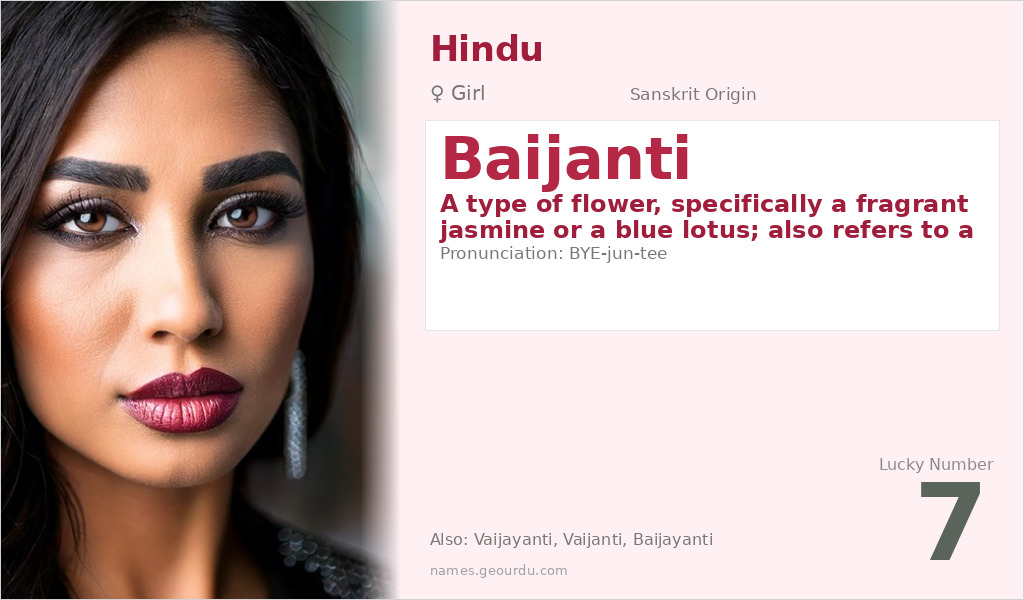
| 💎 Meaning | A type of flower, specifically a fragrant jasmine or a blue lotus; also refers to a garland worn by Lord Vishnu |
| 👤 Gender | Girl |
| 🕌 Religion | Hindu |
| 🌍 Origin | Sanskrit |
| 🗣 Pronunciation | BYE-jun-tee |
| ✍️ Urdu | بائجنتی |
| ✍️ Arabic | باجانتي |
| 🔢 Numerology | 7 |
| ✨ Spellings | Vaijayanti, Vaijanti, Baijayanti, Vyjayanti |
Origin & Cultural Significance
Baijanti originates from classical Sanskrit literature and Hindu mythology, with its earliest references found in texts like the Vishnu Purana and Bhagavata Purana. In these scriptures, Vaijayanti is described as Vishnu’s eternal garland, symbolizing victory, prosperity, and divine protection. The name has been used in India for centuries, particularly in Hindu communities where names with floral and divine associations are cherished. While primarily used in India, variations of the name appear in Southeast Asian cultures influenced by Hindu traditions. The name maintains its religious significance while also being appreciated for its aesthetic qualities.
Personality Traits
Those named Baijanti are often associated with grace, spirituality, and artistic sensitivity. The name’s floral meaning suggests someone who appreciates beauty in all forms, while its divine connection indicates depth of character and moral strength. Typically, Baijantis are perceived as calm, intuitive individuals with a natural elegance that influences their interactions and choices. Their personality often reflects the name’s dual nature—both grounded in natural beauty and aspiring toward higher spiritual ideals.
Similar Names
If you like Baijanti, consider: Vaijanti, Jasmin, Kamala, Padma, Malati
Famous People Named Baijanti
- Baijanti Mishra — Indian classical vocalist from the Gwalior gharana
- Vaijayanti Mala — Miss India 1952 and Bollywood actress of the 1950s-60s
Frequently Asked Questions About Baijanti
What does Baijanti mean?
Baijanti means 'a fragrant flower' or 'the divine garland of Lord Vishnu' in Sanskrit. It specifically refers to a type of jasmine or blue lotus and has mythological significance in Hinduism.
Is Baijanti a boy or girl name?
Baijanti is primarily used as a girl's name in Hindu culture, though names with similar roots like Vaijayant can be masculine. The floral and graceful connotations make it predominantly feminine in modern usage.
What is the origin of Baijanti?
Baijanti originates from Sanskrit, specifically from the word 'vaijayantī' found in Hindu scriptures. It has been used in Indian culture for centuries with both botanical and religious significance.