
Table of Contents
Atasi is a distinctive name with deep roots in ancient Indian culture and language. Derived from Sanskrit, this name carries botanical significance that connects it to traditional healing and practical wisdom. While sometimes used as a feminine name in modern contexts, Atasi has historical usage as a unisex name. Its connection to the natural world makes it a meaningful choice for parents seeking a name with ecological and cultural resonance.
Meaning of Atasi
Atasi originates from the Sanskrit word ‘atasī’ (अतसी), which specifically refers to the flax plant (Linum usitatissimum). This plant has been cultivated in the Indian subcontinent for thousands of years for both its fibers and seeds. In Ayurvedic medicine, linseed (atasi beeja) is valued for its therapeutic properties, particularly for digestive and respiratory health. The name appears in classical Sanskrit texts including the Charaka Samhita, where it’s mentioned among medicinal plants. There is no etymological basis for the ‘blue flower’ interpretation found in some modern sources – this likely stems from confusion with other floral names or the blue flowers some flax varieties produce.
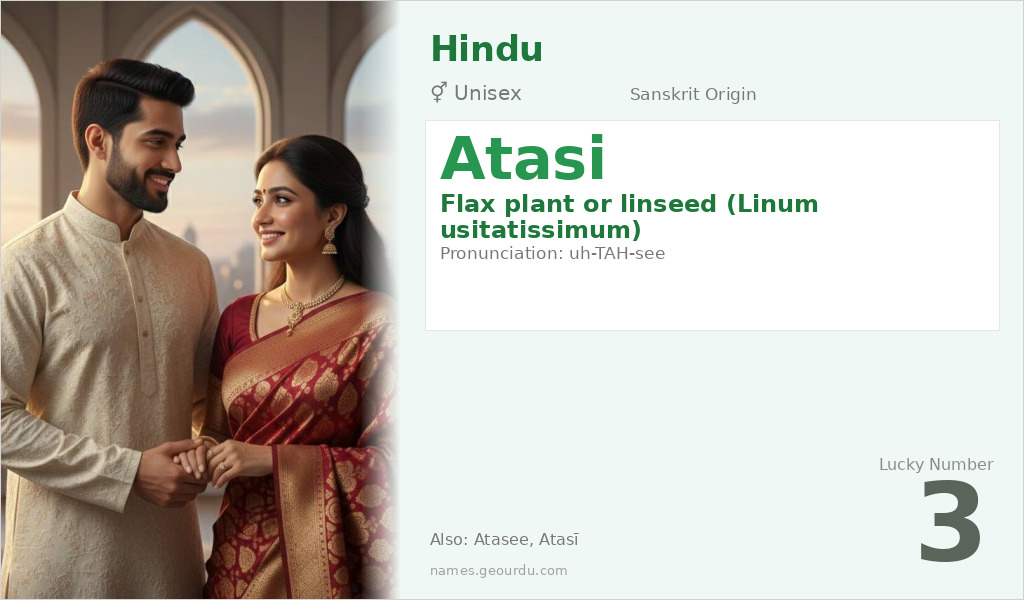
| 📛 Name | Atasi |
| 💎 Meaning | Flax plant or linseed (Linum usitatissimum) |
| 👤 Gender | Unisex |
| 🕌 Religion | Hindu |
| 🌍 Origin | Sanskrit |
| 🗣 Pronunciation | uh-TAH-see |
| ✍️ Urdu | اتسی |
| ✍️ Arabic | أتاسي |
| 🔢 Numerology | 3 |
| ✨ Spellings | Atasee, Atasī |
Origin & Cultural Significance
The name Atasi has its origins in ancient Sanskrit, the classical language of India that dates back over 3,500 years. In Hindu culture, names derived from plants and natural elements have been traditionally significant, reflecting the deep connection between spirituality and nature. While primarily associated with Hindu tradition due to its Sanskrit origin, the name doesn’t carry specific religious connotations beyond its cultural context. The flax plant itself has practical importance in Indian history, used for making linen textiles and as a source of nutritious seeds and medicinal oil.
Personality Traits
Names derived from plants often carry associations with growth, healing, and natural wisdom. Those named Atasi might be perceived as grounded individuals with practical problem-solving abilities. The connection to a useful plant suggests someone who contributes value to their community and approaches life with resourcefulness. These associations are cultural interpretations rather than deterministic personality traits.
Similar Names
If you like Atasi, consider: Alasi, Avasi, Atashi, Atasiya, Atasika
Famous People Named Atasi
- Atasi Das — Indian actress known for Bengali films and television
- Atasi — Character in ancient Indian literature referencing the flax plant
Frequently Asked Questions About Atasi
What does Atasi mean?
Atasi means 'flax plant' or 'linseed' in Sanskrit, referring to the plant Linum usitatissimum cultivated for its fibers and seeds.
Is Atasi a boy or girl name?
Atasi is historically a unisex name in Sanskrit tradition, though in modern usage it's more commonly given to girls in Hindu communities.
What is the origin of Atasi?
Atasi originates from Sanskrit, the ancient classical language of India, where it specifically denotes the flax plant with both practical and medicinal significance.