
Table of Contents
Dildar is a beautiful and meaningful name with deep roots in Persian culture and literature. Meaning ‘heart-possessor’ or ‘beloved’, this name carries romantic and affectionate connotations that have made it popular across South Asia, the Middle East, and Central Asia. Whether you’re considering this name for your child or exploring its linguistic heritage, understanding Dildar’s rich background reveals why it has endured for centuries.
Meaning of Dildar
The name Dildar originates from Persian (Farsi), where it’s a compound of two elements: ‘dil’ (دل) meaning ‘heart’ and ‘dar’ (دار) meaning ‘possessor’, ‘holder’, or ‘keeper’. This creates the literal translation ‘heart-possessor’ or ‘one who holds the heart’, making it a term of endearment that signifies being cherished and beloved. The name appears frequently in classical Persian poetry, particularly in works by poets like Hafez and Rumi, where it describes romantic ideals and deeply loved individuals. In modern usage across Persian, Urdu, Pashto, Kurdish, and Turkish, the meaning remains consistent, though pronunciation and spelling variations exist regionally.
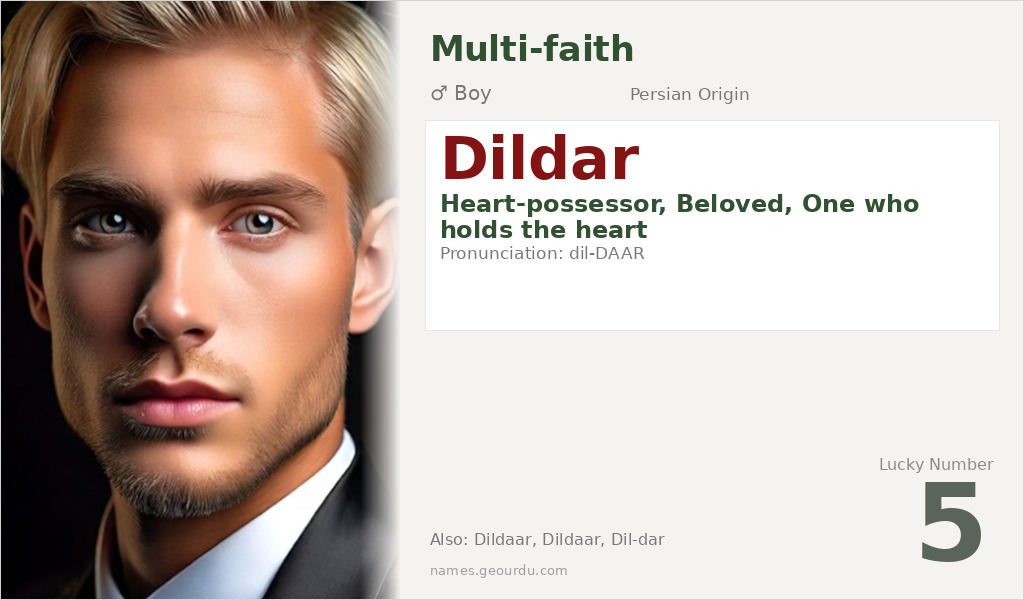
| 📛 Name | Dildar |
| 💎 Meaning | Heart-possessor, Beloved, One who holds the heart |
| 👤 Gender | Boy |
| 🕌 Religion | Multi-faith |
| 🌍 Origin | Persian |
| 🗣 Pronunciation | dil-DAAR |
| ✍️ Urdu | دلدار |
| ✍️ Arabic | دلدار |
| 🔢 Numerology | 5 |
| ✨ Spellings | Dildaar, Dildaar, Dil-dar |
Origin & Cultural Significance
Dildar has its origins in Persian language and culture, dating back to medieval Persian literature where it was used both as a given name and a poetic term. The name spread through Persian cultural influence across the Islamic world, particularly during the Mughal Empire in South Asia and the Ottoman Empire in the Middle East. While commonly used by Muslims, it’s not exclusively Islamic—the name appears in Zoroastrian and secular contexts in Iran and is used by people of various faiths in multicultural regions. Today, Dildar remains popular in Iran, Afghanistan, Pakistan, India, Turkey, and among diaspora communities worldwide.
Personality Traits
People named Dildar are often associated with warmth, emotional depth, and charismatic presence. The name’s meaning suggests someone who naturally attracts affection and forms meaningful relationships. In many cultures, names with ‘dil’ (heart) components are believed to influence personality toward compassion, romance, and emotional intelligence. While individual personalities vary, the name carries expectations of kindness and the ability to connect deeply with others.
Similar Names
If you like Dildar, consider: Dilawar, Dilshad, Dilnawaz, Dilbar, Dilruba
Famous People Named Dildar
- Dildar Pervaiz — Pakistani politician and former federal minister
- Dildar Hussain — Bangladeshi cricketer who played for the national team
Frequently Asked Questions About Dildar
What does Dildar mean?
Dildar means 'heart-possessor' or 'beloved' in Persian, from 'dil' (heart) and 'dar' (possessor).
Is Dildar a boy or girl name?
Dildar is primarily a masculine name in all cultures where it's used, though rare feminine usage exists in some regions.
What is the origin of Dildar?
Dildar originates from Persian (Farsi) language and culture, with documented usage dating back to classical Persian literature.





