
Table of Contents
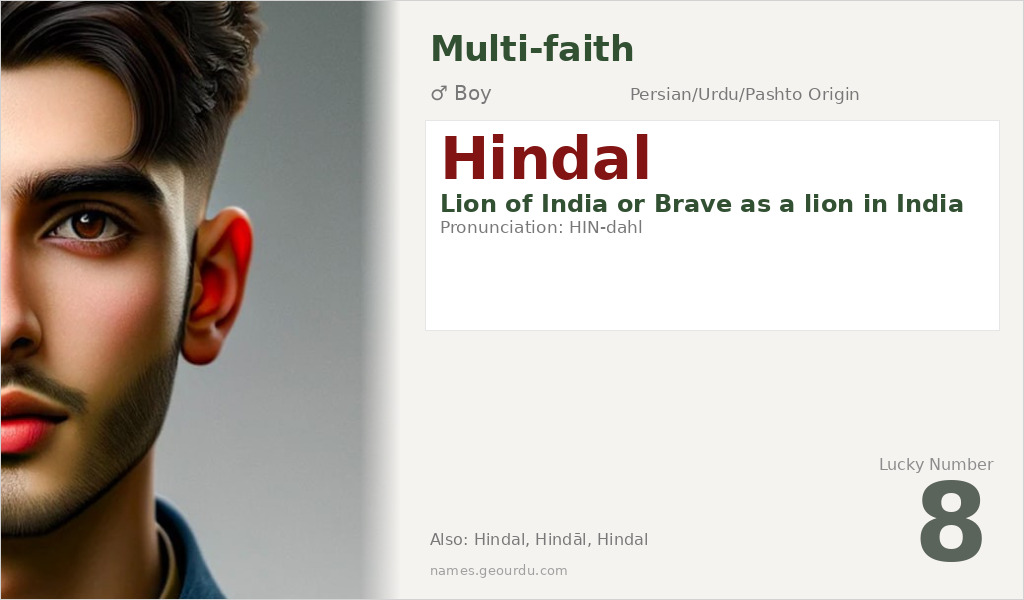
Hindal is a powerful and historic name that resonates across South Asia, evoking images of strength and regional pride. Often chosen for boys, it combines elements meaning ‘India’ and ‘lion’ to create a name symbolizing courage and connection to the Indian subcontinent. With roots in Persian, Urdu, and Pashto, Hindal has been borne by Mughal royalty and tribal figures, making it a name rich in cultural heritage. Discover the true meaning and origins of this distinctive name.
Meaning of Hindal
The name Hindal is a compound derived from two components: ‘Hind’ and ‘Al’. ‘Hind’ originates from Persian and Urdu, referring to the Indian subcontinent, a term historically used for the region of India. ‘Al’ comes from the Persian word ‘āl’ (آل), meaning ‘lion’ or metaphorically ‘brave’ or ‘courageous’. Thus, Hindal translates to ‘Lion of India’ or ‘Brave as a lion in India’, emphasizing valor and strength associated with the land. This etymology is supported by linguistic analysis in Persian and Urdu dictionaries, as well as usage in Pashto and Balochi contexts where similar compound names are common. The name reflects a tradition of using animal symbolism, like lions, to denote power and fearlessness in South Asian naming practices.
| 📛 Name | Hindal |
| 💎 Meaning | Lion of India or Brave as a lion in India |
| 👤 Gender | Boy |
| 🕌 Religion | Multi-faith |
| 🌍 Origin | Persian/Urdu/Pashto |
| 🗣 Pronunciation | HIN-dahl |
| ✍️ Urdu | ہندال |
| ✍️ Arabic | هندال |
| 🔢 Numerology | 8 |
| ✨ Spellings | Hindal, Hindāl, Hindal |
Origin & Cultural Significance
Hindal has its origins in Persian and Urdu, with significant adoption in Pashto and Balochi-speaking regions of South Asia and Afghanistan. It emerged during the medieval period, particularly in the Mughal Empire, where it was used by nobility, such as Prince Hindal Mirza, son of Emperor Babur. The name is also prevalent among Pashtun and Baloch tribes, where it signifies bravery and a connection to the Indian subcontinent, often given to honor warriors or leaders. Culturally, it transcends religious boundaries, being used by Muslims, Hindus, and others in the region, though it is most commonly associated with Islamic traditions due to historical Mughal influence. Today, it remains a traditional name in Pakistan, India, and Afghanistan, symbolizing heritage and courage.
Personality Traits
People named Hindal are often perceived as bold and assertive, with a natural inclination towards leadership and protection. Their name’s meaning, ‘Lion of India’, may inspire them to exhibit confidence and resilience in challenges. They might value tradition and family roots, showing a strong sense of identity and pride in their cultural background. In social settings, they can be charismatic and inspiring, drawing others with their courageous spirit.
Similar Names
If you like Hindal, consider: Hind, Alam, Sher, Asad, Babur
Famous People Named Hindal
- Hindal Mirza — Mughal prince, son of Emperor Babur and brother of Humayun, known for his role in 16th-century Indian history
- Hindal — A character in historical texts and folklore in Pashtun and Baloch traditions, often depicted as a warrior
Frequently Asked Questions About Hindal
What does Hindal mean?
Hindal means 'Lion of India' or 'Brave as a lion in India', derived from Persian/Urdu components 'Hind' (India) and 'Al' (lion/brave).
Is Hindal a boy or girl name?
Hindal is traditionally a boy's name, used in South Asian cultures like Pashto, Balochi, and Urdu-speaking communities for males.
What is the origin of Hindal?
Hindal originates from Persian and Urdu, with strong usage in Pashto and Balochi languages, historically linked to the Mughal Empire and tribal traditions in South Asia.





