
Table of Contents
Izzat is a powerful Arabic name that carries deep cultural and linguistic significance across the Muslim world. Derived from the root meaning ‘strength and honor,’ this name has been cherished for centuries for its noble connotations. From the Middle East to South Asia, Izzat represents dignity, respect, and prestige in personal and social contexts. Understanding this name’s rich heritage reveals why it remains a meaningful choice for parents seeking a name with substance and tradition.
Meaning of Izzat
The name Izzat originates from the Arabic triliteral root ع-ز-ز (ʿ-z-z), which forms the basis for words related to strength, power, and invincibility. Specifically, Izzat comes from the noun ‘ʿizzah’ (عِزَّة), meaning honor, dignity, glory, or respect. This root appears in the Quran, such as in Surah Al-Fatir (35:10): ‘To Him ascends good speech, and righteous work raises it…’ where divine honor is referenced. In classical Arabic, the concept of ‘izzah’ encompasses both personal dignity and social prestige. The name has maintained this core meaning as it spread through Islamic cultures into Persian, Urdu, Turkish, and other languages, always retaining its association with honorable status and respect.
| 📛 Name | Izzat |
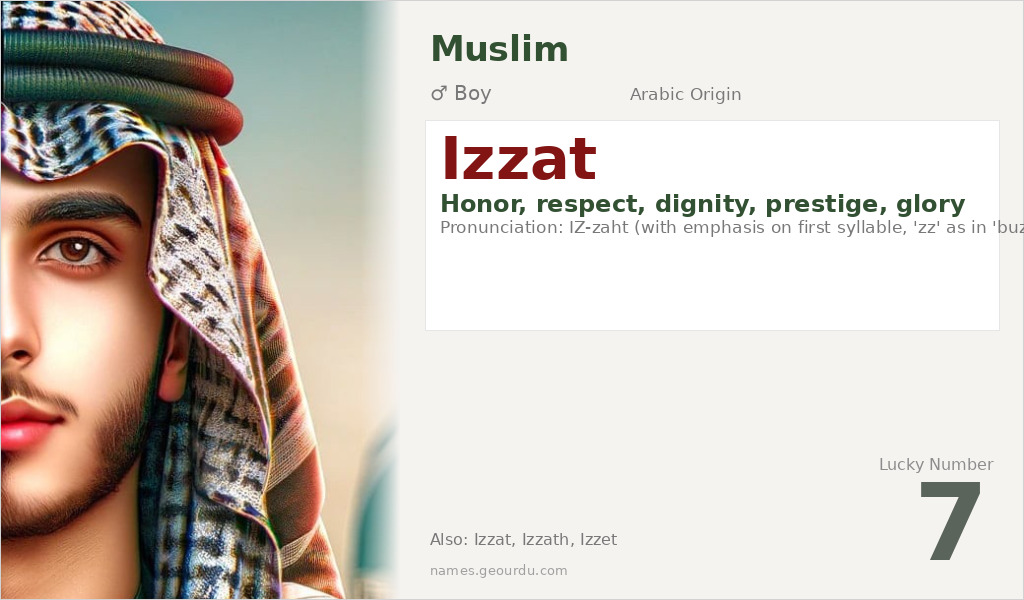
| 💎 Meaning | Honor, respect, dignity, prestige, glory |
| 👤 Gender | Boy |
| 🕌 Religion | Muslim |
| 🌍 Origin | Arabic |
| 🗣 Pronunciation | IZ-zaht (with emphasis on first syllable, 'zz' as in 'buzz') |
| ✍️ Urdu | عزت |
| ✍️ Arabic | عزت |
| 🔢 Numerology | 7 |
| ✨ Spellings | Izzat, Izzath, Izzet, Izzett, Izat, Izzah, Izzah |
Origin & Cultural Significance
Izzat has its origins in pre-Islamic and classical Arabic language and culture, where concepts of honor (ʿird) and dignity (ʿizzah) were central to tribal and social values. With the advent of Islam, the term gained religious significance, appearing in the Quran and Hadith literature to describe both divine attributes and human virtues. The name spread throughout the Islamic world via trade routes, conquests, and cultural exchange, becoming established in regions from North Africa to Southeast Asia. In South Asian Muslim communities (Urdu, Pashto, Punjabi, Sindhi, Balochi), Izzat became particularly significant, often representing family honor and social standing. While primarily an Arabic name, its adoption across diverse Islamic cultures demonstrates its universal appeal among Muslim communities valuing traditional virtues.
Personality Traits
Those named Izzat often embody the qualities their name represents—dignity, respectability, and strength of character. They tend to approach life with seriousness and purpose, valuing principles over convenience. In social settings, they may naturally command respect through their composed demeanor and ethical stance. The name’s meaning can influence both self-perception and social expectations, creating individuals who strive to maintain honor in their personal and professional relationships.
Similar Names
If you like Izzat, consider: Izzuddin, Izz al-Din, Aziz, Izzam, Izzan, Mu'izz, Azmat, Sharaf, Karim, Fakhr
Famous People Named Izzat
- Izzat Ibrahim al-Douri — Iraqi military commander and former Vice Chairman of Saddam Hussein's Revolutionary Command Council
- Izzat Ghazzawi — Palestinian writer and human rights activist, recipient of the Lotus Prize for Literature
Frequently Asked Questions About Izzat
What does Izzat mean?
Izzat means 'honor, respect, dignity, prestige, or glory' in Arabic. It comes from the root ع-ز-ز (ʿ-z-z) related to strength and power, specifically from the noun 'ʿizzah' meaning honor.
Is Izzat a boy or girl name?
Izzat is primarily a masculine name in Arabic and Islamic naming traditions. While names can sometimes be used across genders in modern contexts, historically and culturally, Izzat has been used almost exclusively for boys.
What is the origin of Izzat?
Izzat originates from classical Arabic language and culture. It has been used since pre-Islamic times and gained religious significance in Islam, spreading throughout the Muslim world from the Middle East to South Asia and beyond.





