
Table of Contents
Ibn Sina is a distinguished Arabic patronymic name that carries centuries of intellectual heritage. Meaning ‘Son of Sina’, this name is forever linked to one of history’s greatest polymaths, Avicenna, whose contributions to medicine, philosophy, and science shaped civilizations. While following traditional Arabic naming conventions, Ibn Sina has transcended its linguistic origins to become a symbol of scholarly excellence. Today, parents choosing this name often seek to honor both cultural traditions and intellectual aspirations.
Meaning of Ibn Sina
Ibn Sina is a compound Arabic name consisting of two elements: ‘Ibn’ meaning ‘son of’ and ‘Sina’ as a personal name. The word ‘Ibn’ (ابن) is a fundamental component of Arabic patronymics, establishing direct paternal lineage. ‘Sina’ (سينا) presents more complexity—while some scholars suggest connections to Hebrew ‘Shina’ or possible links to China (الصين in Arabic), its precise etymology remains debated among linguists. What’s clear is that the complete name follows the classic Arabic naming pattern where ‘Ibn’ precedes the father’s given name, creating a genealogical identifier rather than a name with independent semantic meaning. This structure is common across Semitic languages and reflects the importance of lineage in traditional naming systems.
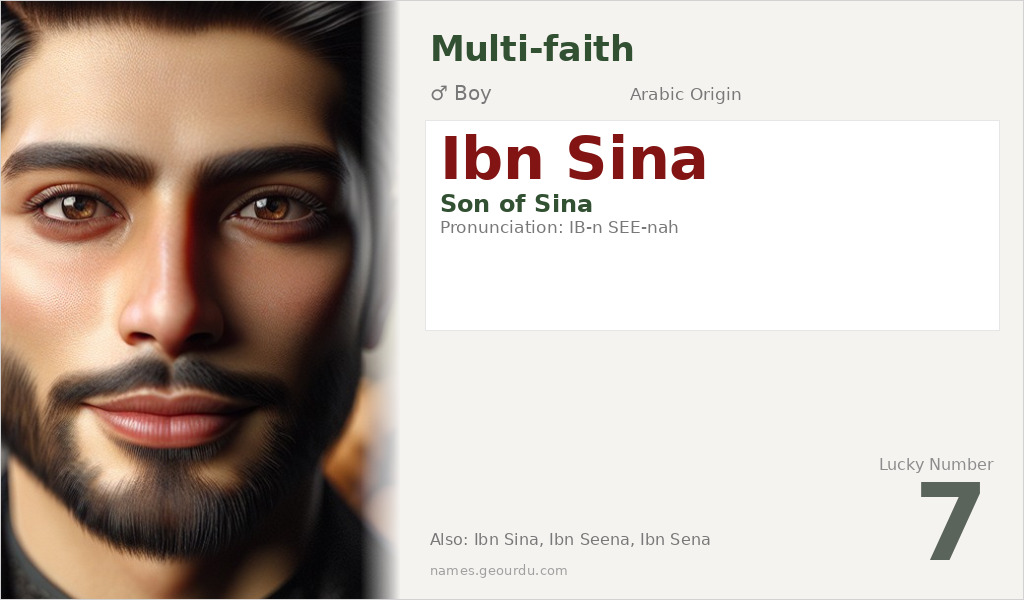
| 📛 Name | Ibn Sina |
| 💎 Meaning | Son of Sina |
| 👤 Gender | Boy |
| 🕌 Religion | Multi-faith |
| 🌍 Origin | Arabic |
| 🗣 Pronunciation | IB-n SEE-nah |
| ✍️ Urdu | ابن سینا |
| ✍️ Arabic | ابن سينا |
| 🔢 Numerology | 7 |
| ✨ Spellings | Ibn Sina, Ibn Seena, Ibn Sena |
Origin & Cultural Significance
The name Ibn Sina originates from Arabic naming traditions that date back to pre-Islamic Arabia and became standardized during the Islamic Golden Age. While the name structure is Arabic, its most famous bearer—Abu Ali Ibn Sina (Avicenna)—was Persian, demonstrating how Arabic naming conventions spread across the Islamic world. The name gained particular prominence in the 11th century through Avicenna’s monumental works in medicine, philosophy, and science, which were translated into Latin and influenced European thought for centuries. Today, Ibn Sina remains used in Arabic-speaking communities worldwide, though it’s often chosen to honor the historical figure rather than strictly following patronymic conventions.
Personality Traits
Those named Ibn Sina often grow up with an awareness of their name’s historical weight, particularly its association with Avicenna’s intellectual legacy. This connection can foster qualities of curiosity, analytical thinking, and a respect for knowledge across disciplines. The name suggests someone who values tradition while seeking understanding, potentially exhibiting both reverence for heritage and innovative thinking. While personality isn’t determined by name alone, carrying such a historically significant name may inspire confidence in intellectual pursuits and cultural identity.
Similar Names
If you like Ibn Sina, consider: Ibn Khaldun, Ibn Battuta, Ibn Rushd, Ibn Arabi, Ibn Taymiyyah
Famous People Named Ibn Sina
- Abu Ali Ibn Sina (Avicenna) — 11th-century Persian polymath, physician, and philosopher, one of the most significant thinkers in Islamic Golden Age
- Ibn Sina (modern figures) — Various individuals carrying this patronymic name in Arabic-speaking regions
Frequently Asked Questions About Ibn Sina
What does Ibn Sina mean?
Ibn Sina means 'Son of Sina' in Arabic. It's a patronymic name where 'Ibn' means 'son of' and 'Sina' is the father's given name.
Is Ibn Sina a boy or girl name?
Ibn Sina is exclusively a boy's name, as 'Ibn' specifically means 'son of' in Arabic. The feminine equivalent would be 'Bint Sina' (daughter of Sina).
What is the origin of Ibn Sina?
Ibn Sina originates from Arabic naming traditions, specifically the patronymic system common across Semitic languages. While the structure is Arabic, the name gained worldwide recognition through the 11th-century Persian polymath Avicenna (Abu Ali Ibn Sina).





