
Table of Contents
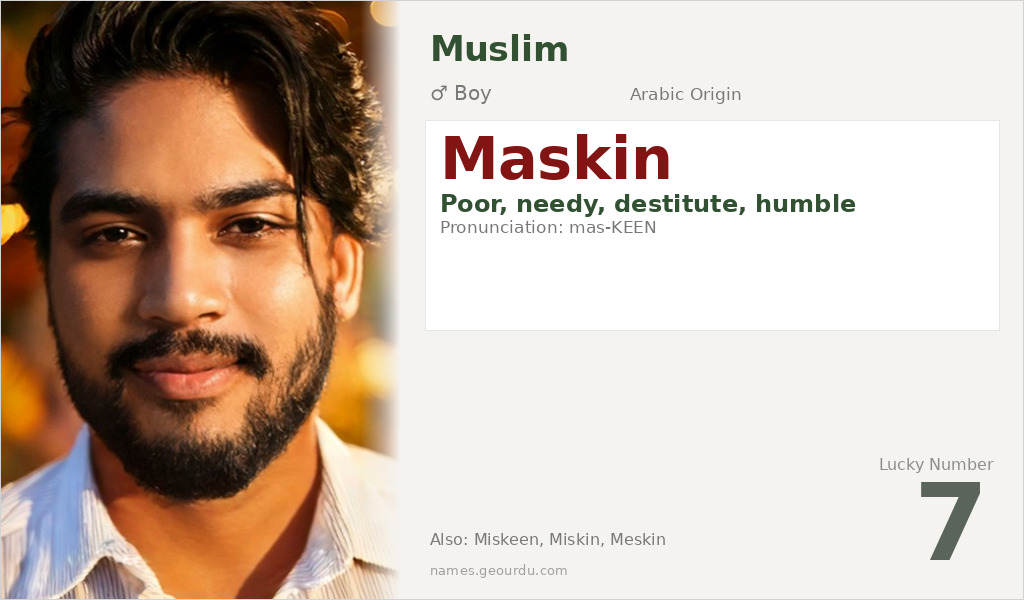
Maskin is a meaningful Arabic name that carries deep spiritual and cultural significance in the Muslim world. Derived from the Quranic term for ‘the poor’ or ‘needy’, it symbolizes humility and reliance on divine providence. This name has been used for centuries across Islamic societies, reflecting values of compassion and modesty. Understanding its origins offers insight into Islamic naming traditions and linguistic heritage.
Meaning of Maskin
Maskin originates from the Arabic word مَسْكِين (maskīn), which means ‘poor’, ‘needy’, ‘destitute’, or ‘humble’. It is derived from the triliteral root س-ك-ن (s-k-n), associated with concepts of dwelling, stillness, and settlement. In classical Arabic, ‘maskīn’ specifically refers to someone who is impoverished and in need of assistance, as distinguished from other terms for poverty. The name appears in Islamic texts, including the Quran, where it is used to describe those deserving of charity and kindness. This linguistic background gives the name a profound ethical and spiritual dimension, emphasizing values of humility and social justice.
| 📛 Name | Maskin |
| 💎 Meaning | Poor, needy, destitute, humble |
| 👤 Gender | Boy |
| 🕌 Religion | Muslim |
| 🌍 Origin | Arabic |
| 🗣 Pronunciation | mas-KEEN |
| ✍️ Urdu | مسکین |
| ✍️ Arabic | مَسْكِين |
| 🔢 Numerology | 7 |
| ✨ Spellings | Miskeen, Miskin, Meskin, Maskyn |
Origin & Cultural Significance
Maskin has its roots in pre-Islamic and early Islamic Arabic language and culture. It gained prominence through its usage in the Quran and Hadith, where it is often mentioned in contexts of charity and social welfare. The name spread across the Muslim world via Arabic influence, becoming incorporated into languages such as Persian, Urdu, Turkish, and others. Historically, it has been used as both a given name and a descriptive term, reflecting the Islamic emphasis on humility and care for the less fortunate. Its continued use in modern times underscores its enduring cultural and religious relevance.
Personality Traits
Those named Maskin are often associated with traits of humility, empathy, and spiritual depth. They may be seen as compassionate individuals who value simplicity and have a strong sense of social justice. The name’s meaning can inspire a lifestyle focused on modesty and concern for others, aligning with Islamic teachings on charity and community support.
Similar Names
If you like Maskin, consider: Fakir, Miskeen, Gharib, Miskeena, Miskina
Famous People Named Maskin
- Miskeen — a 16th-century Persian poet known for his humble themes
- Miskin — historical figures in Ottoman records bearing this name
Frequently Asked Questions About Maskin
What does Maskin mean?
Maskin means 'poor', 'needy', 'destitute', or 'humble' in Arabic. It is derived from the root س-ك-ن (s-k-n) and is used in Islamic contexts to denote humility and reliance on divine providence.
Is Maskin a boy or girl name?
Maskin is traditionally a boy's name in Arabic and Islamic cultures. While Arabic grammar typically uses masculine forms for such adjectives, feminine variants like Miskina exist but are less common as given names.
What is the origin of Maskin?
Maskin originates from Arabic, with roots in pre-Islamic and early Islamic language. It is prominently featured in the Quran and has spread to other Islamic languages such as Persian, Urdu, and Turkish through cultural and religious diffusion.





