
Table of Contents
Malang is a spiritually resonant name with deep roots in Persian and South Asian Islamic traditions. Far more than just a label, it carries the weight of mystical heritage, evoking images of wandering dervishes and ascetics who pursue divine connection above worldly concerns. This name has traveled across languages and cultures while maintaining its core meaning of spiritual detachment and devotion.
Meaning of Malang
The name Malang derives from the Persian word ‘ملنگ’ (malang), which specifically refers to a wandering mystic, ascetic, or dervish. This term entered numerous languages including Urdu, Punjabi, Sindhi, and Pashto through cultural and religious exchange. In Islamic mystical traditions, particularly Sufism, a malang is someone who has renounced material possessions and social conventions to focus entirely on spiritual pursuit. The name thus embodies concepts of poverty, devotion, and freedom from worldly attachments, making it a powerful choice for families valuing spiritual depth over conventional success markers.
| 📛 Name | Malang |
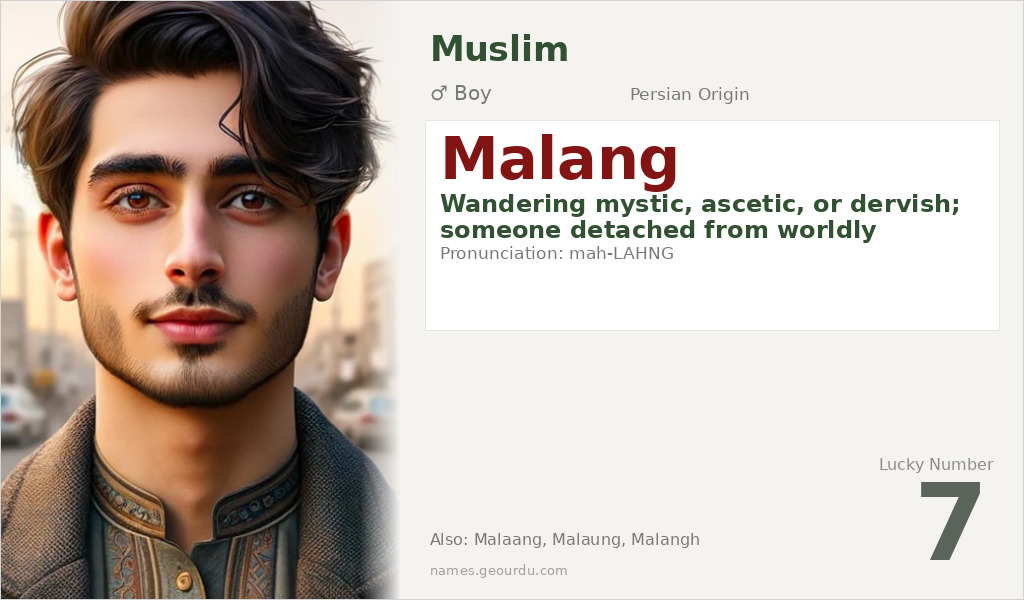
| 💎 Meaning | Wandering mystic, ascetic, or dervish; someone detached from worldly concerns |
| 👤 Gender | Boy |
| 🕌 Religion | Muslim |
| 🌍 Origin | Persian |
| 🗣 Pronunciation | mah-LAHNG |
| ✍️ Urdu | ملنگ |
| ✍️ Arabic | ملنگ |
| 🔢 Numerology | 7 |
| ✨ Spellings | Malaang, Malaung, Malangh |
Origin & Cultural Significance
Malang originated in Persian language and culture, where it described ascetic mystics within Islamic Sufi traditions. As Persian influence spread through Muslim empires and trade routes, the word was adopted into South Asian languages including Urdu, Punjabi, and Sindhi. In regions like Punjab and Sindh, malangs became recognized as a distinct class of Sufi devotees, often associated with specific saints and shrines. The name remains particularly popular in Pakistan, Afghanistan, and parts of India among Muslim communities who revere Sufi traditions and value spiritual symbolism in naming.
Personality Traits
Those named Malang are often associated with contemplative, independent personalities. They may exhibit traits of spiritual seeking, non-conformity, and depth of thought. While sometimes perceived as detached from material concerns, they typically possess strong inner convictions and philosophical perspectives. The name suggests someone who values authenticity over social approval and finds meaning in spiritual or intellectual pursuits rather than conventional achievements.
Similar Names
If you like Malang, consider: Dervish, Fakir, Qalandar, Sufi, Mystic
Famous People Named Malang
- Malang Jan — 19th century Pashto poet and Sufi mystic from Afghanistan
- Malang Baba — revered Sufi saint in Punjab region whose shrine attracts devotees
Frequently Asked Questions About Malang
What does Malang mean?
Malang means 'wandering mystic,' 'ascetic,' or 'dervish' in Persian. It refers to someone detached from worldly concerns and devoted to spiritual pursuit, particularly in Sufi Islamic traditions.
Is Malang a boy or girl name?
Malang is traditionally a masculine name given to boys in Muslim communities, particularly those with Persian or South Asian cultural backgrounds. It is rarely used for girls.
What is the origin of Malang?
Malang originates from Persian language and culture, where it described ascetic mystics. It spread to Urdu, Punjabi, Sindhi, Pashto, and other languages through Islamic mystical traditions, especially Sufism.





