
Table of Contents
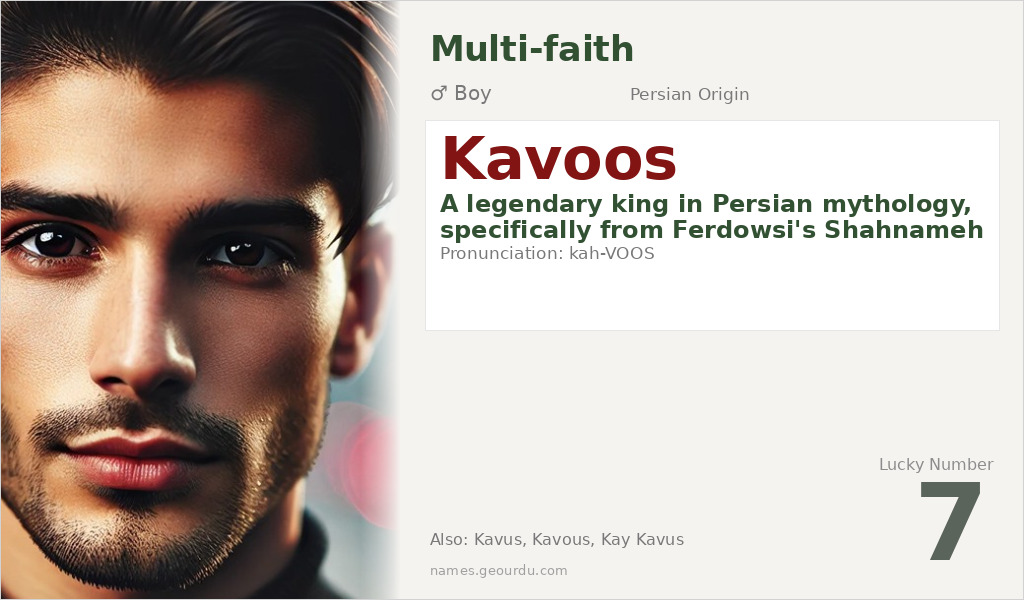
Kavoos is a name steeped in Persian mythology and epic literature, carrying the weight of ancient legends and royal heritage. This distinctive name comes directly from Ferdowsi’s monumental work, the Shahnameh (Book of Kings), where Kavoos appears as a central figure in Persian epic tradition. While sometimes used in Muslim communities today, its origins predate Islam and connect to Iran’s rich pre-Islamic cultural heritage. The name evokes images of ancient kings, mythical adventures, and the enduring power of Persian literary tradition.
Meaning of Kavoos
Kavoos (also spelled Kay Kāvus or Kai Kāvus) specifically refers to a legendary king in Persian mythology. The name originates from Middle Persian (Pahlavi) and is composed of two elements: ‘Kay’ meaning ‘king’ or ‘ruler,’ and ‘Kāvus’ as the specific name of this mythological figure. In Ferdowsi’s 10th-century epic Shahnameh, Kāvus is the second Shah of the Kayanian dynasty, known for his ambitious but often ill-fated adventures. The most famous of these is his attempt to fly to heaven using eagles tied to his throne, which ultimately fails and teaches him humility. The name has been preserved through centuries of Persian literature and continues to symbolize both royal ambition and the human struggle with pride and limitation.
| 📛 Name | Kavoos |
| 💎 Meaning | A legendary king in Persian mythology, specifically from Ferdowsi's Shahnameh (Book of Kings) |
| 👤 Gender | Boy |
| 🕌 Religion | Multi-faith |
| 🌍 Origin | Persian |
| 🗣 Pronunciation | kah-VOOS |
| ✍️ Urdu | قابوس |
| ✍️ Arabic | قابوس |
| 🔢 Numerology | 7 |
| ✨ Spellings | Kavus, Kavous, Kay Kavus, Kai Kavus, Kāvus, Qavus |
Origin & Cultural Significance
Kavoos has its roots in pre-Islamic Persian culture and mythology, specifically appearing in the Shahnameh (Book of Kings) completed by Ferdowsi around 1010 CE. This epic poem compiled and preserved Iran’s mythical and historical traditions, with Kavoos (Kay Kāvus) featuring prominently as a ruler of the Kayanian dynasty. The name represents a bridge between ancient Persian Zoroastrian culture and later Islamic Persian civilization, as Ferdowsi’s work helped preserve these traditions through linguistic and cultural transformation. Today, the name is used primarily in Persian-speaking communities across Iran, Afghanistan, Tajikistan, and diaspora populations, valued for its connection to literary heritage rather than specific religious affiliation.
Personality Traits
In Persian epic tradition, Kavoos embodies complex personality traits that make him a compelling mythological figure. He is portrayed as highly ambitious and innovative, constantly seeking new conquests and achievements, but this ambition is tempered by occasional poor judgment and excessive pride. His failed attempt to reach heaven represents the human struggle against limitations and the need for humility. Despite his flaws, Kavoos remains a respected ruler in the Shahnameh, whose stories teach valuable lessons about leadership, ambition, and self-awareness.
Similar Names
If you like Kavoos, consider: Kaykhosrow, Kaykhosrau, Fereydun, Jamshid, Zal
Famous People Named Kavoos
- Kay Kāvus — Legendary Persian king from Ferdowsi's Shahnameh, ruler of the Kayanian dynasty
- Kai Kāvus ibn Iskandar — 11th-century Persian prince and author of the mirror for princes 'Qabusnama'
Frequently Asked Questions About Kavoos
What does Kavoos mean?
Kavoos means 'legendary Persian king' specifically referring to Kay Kāvus from Ferdowsi's Shahnameh (Book of Kings). The name originates from Middle Persian and denotes a mythological ruler of the Kayanian dynasty.
Is Kavoos a boy or girl name?
Kavoos is exclusively a masculine name, as it refers to a male king in Persian mythology. There are no documented feminine variants or uses of this name in any cultural tradition.
What is the origin of Kavoos?
Kavoos originates from Persian mythology and literature, specifically from Ferdowsi's 10th-century epic poem Shahnameh (Book of Kings). It comes from Middle Persian (Pahlavi) and represents pre-Islamic Persian cultural heritage that has been preserved through Islamic-era literature.





