
Table of Contents
Mansar is a powerful and historic name with deep roots in Pashto culture, symbolizing victory and triumph. Often chosen for boys, it reflects qualities of strength and leadership, resonating across South Asian communities. This name carries a legacy of valor and success, making it a meaningful choice for parents seeking a name with cultural depth and positive connotations. Explore the rich etymology and modern relevance of Mansar in this detailed guide.
Meaning of Mansar
Mansar derives from the Pashto word ‘mansūr’ (منصور), which translates to ‘victorious,’ ‘triumphant,’ or ‘conqueror.’ Its etymology can be traced to the Arabic root ‘n-ṣ-r’ (ن-ص-ر), meaning ‘to help’ or ‘to grant victory,’ but in Pashto, it has taken on a more specific emphasis on conquest and achievement. This name is prevalent among Pashtun and Baloch ethnic groups, where it is often associated with military prowess and successful endeavors. Linguistically, it shares similarities with the Arabic name Mansur, but in regional dialects, Mansar carries distinct cultural nuances. The meaning underscores themes of overcoming obstacles and attaining glory, making it a popular choice in naming traditions.
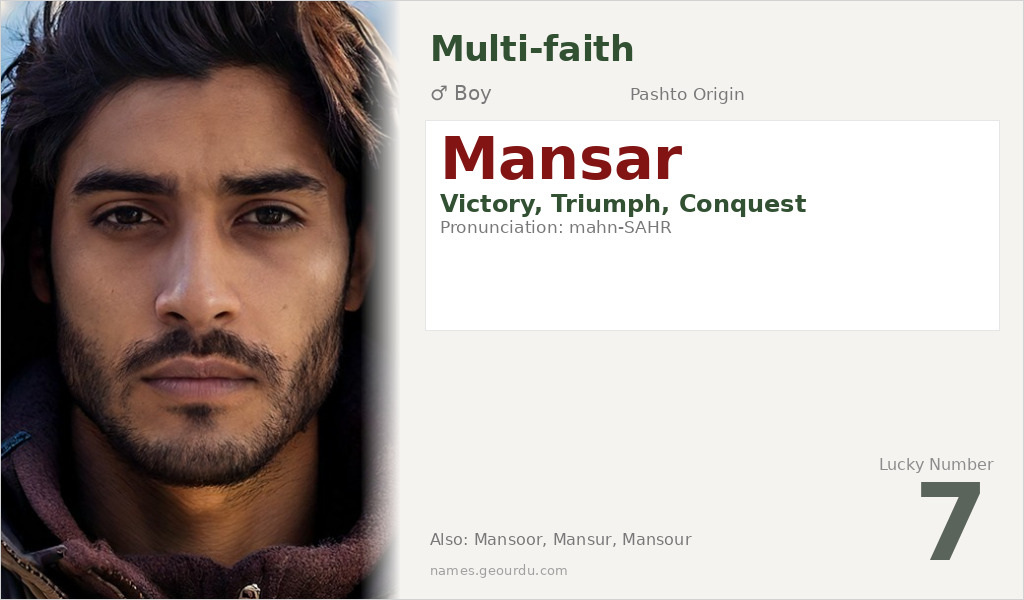
| 📛 Name | Mansar |
| 💎 Meaning | Victory, Triumph, Conquest |
| 👤 Gender | Boy |
| 🕌 Religion | Multi-faith |
| 🌍 Origin | Pashto |
| 🗣 Pronunciation | mahn-SAHR |
| ✍️ Urdu | منصور |
| ✍️ Arabic | منصور |
| 🔢 Numerology | 7 |
| ✨ Spellings | Mansoor, Mansur, Mansour, Mansar |
Origin & Cultural Significance
Originating from the Pashto language, Mansar is deeply embedded in the cultural and historical contexts of Pashtun and Baloch communities in Afghanistan, Pakistan, and Iran. It has been used for centuries to honor warriors, leaders, and individuals who demonstrated exceptional courage and success. The name transcends religious boundaries, being adopted by Muslims, Hindus, and Sikhs in South Asia, reflecting its cultural rather than strictly religious significance. Historically, figures like tribal leaders and resistance fighters have borne this name, cementing its association with strength and resilience. Today, it remains a favored name in these regions, symbolizing a heritage of victory and pride.
Personality Traits
People named Mansar are often perceived as determined and ambitious, with a natural inclination toward leadership and strategic thinking. They exhibit resilience in the face of challenges, drawing on the name’s connotations of victory to pursue their goals with confidence. Their personality tends to inspire trust and admiration in others, making them effective in roles that require decisiveness and courage. Overall, Mansar embodies traits of success and perseverance, aligning with its etymological roots.
Similar Names
If you like Mansar, consider: Nasir, Zafar, Fateh, Qasim, Kamran
Famous People Named Mansar
- Mansar Khan — 19th-century Pashtun tribal leader known for resistance against British colonial rule in the North-West Frontier Province.
- Mansar Hussain — Pakistani cricketer who played domestic cricket in the 1980s, representing various regional teams.
Frequently Asked Questions About Mansar
What does Mansar mean?
Mansar means 'Victory, Triumph, Conquest' in Pashto, derived from the word 'mansūr' which signifies being victorious or triumphant.
Is Mansar a boy or girl name?
Mansar is traditionally a boy's name, commonly used in Pashtun, Baloch, and other South Asian cultures for males.
What is the origin of Mansar?
Mansar originates from the Pashto language, with roots in the Arabic 'n-ṣ-r' root, and is culturally significant among Pashtun and Baloch communities in regions like Afghanistan and Pakistan.





