
Table of Contents
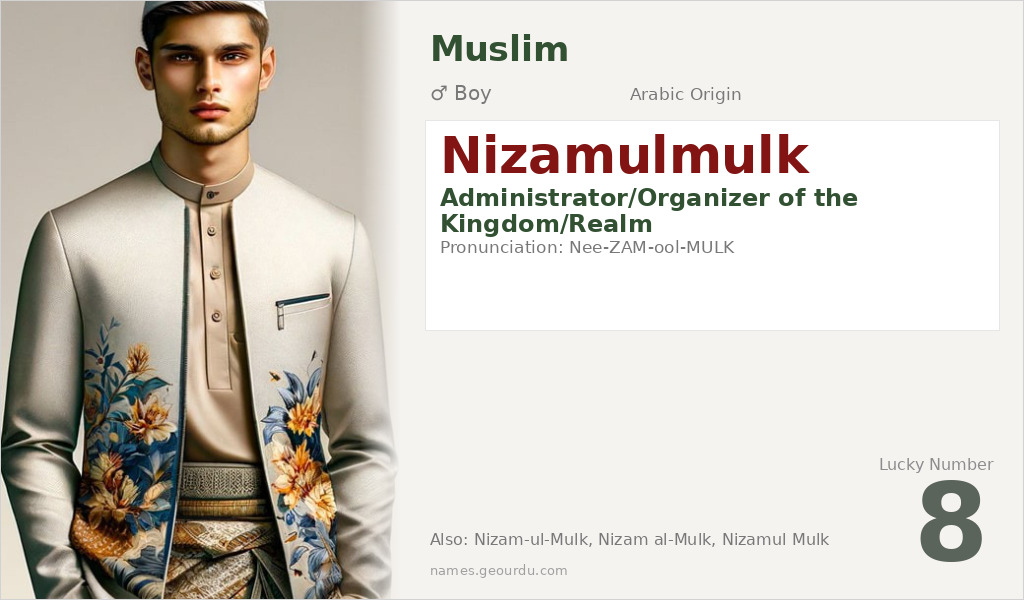
Nizamulmulk is a distinguished Arabic name with deep historical roots in Islamic governance and administration. Meaning ‘Administrator of the Kingdom’ or ‘Organizer of the Realm’, this name carries connotations of leadership, order, and responsibility. Traditionally given to boys, it reflects aspirations for administrative excellence and noble character. The name has been borne by notable historical figures who shaped empires and governments.
Meaning of Nizamulmulk
Nizamulmulk is a compound Arabic name with clear etymological components. The first part, ‘Nizam’ (نظام), derives from the Arabic root N-Z-M, relating to order, arrangement, system, and organization. The second part, ‘al-Mulk’ (الملك), comes from the root M-L-K, meaning kingdom, dominion, sovereignty, or realm. When combined, the name literally means ‘Organizer of the Kingdom’ or ‘Administrator of the Realm’. Historically, this wasn’t just a personal name but an honorific title given to high-ranking officials, particularly viziers and administrators in various Islamic empires. The name embodies the ideal of just governance and efficient administration that was highly valued in medieval Islamic political thought.
| 📛 Name | Nizamulmulk |
| 💎 Meaning | Administrator/Organizer of the Kingdom/Realm |
| 👤 Gender | Boy |
| 🕌 Religion | Muslim |
| 🌍 Origin | Arabic |
| 🗣 Pronunciation | Nee-ZAM-ool-MULK |
| ✍️ Urdu | نظام الملک |
| ✍️ Arabic | نظام الملك |
| 🔢 Numerology | 8 |
| ✨ Spellings | Nizam-ul-Mulk, Nizam al-Mulk, Nizamul Mulk, Nizam al Mulk |
Origin & Cultural Significance
Nizamulmulk originates from classical Arabic and was adopted into Persian, Urdu, and other Islamic languages as a title and name. Its usage became prominent during the Seljuk Empire with the famous vizier Nizam al-Mulk Tusi (1018-1092), who served the Seljuk sultans and wrote influential works on governance. The name continued through the Mughal period in South Asia and the Ottoman Empire. In the Indian subcontinent, it became particularly associated with the Asaf Jahi dynasty of Hyderabad, where ‘Nizam’ became the title for the ruling monarch. While primarily an Arabic name, it has been fully integrated into Muslim naming traditions across various cultures and regions.
Personality Traits
Those named Nizamulmulk are often associated with leadership qualities, organizational skills, and a strong sense of duty. The name suggests someone who values structure, fairness, and effective management. Historically, bearers of this name have been administrators, scholars, and rulers, indicating traits of intelligence, strategic thinking, and responsibility. In modern contexts, the name continues to convey aspirations for competence in leadership roles and community service.
Similar Names
If you like Nizamulmulk, consider: Nizamuddin, Nizam, Mulk, Sultan, Shahryar
Famous People Named Nizamulmulk
- Nizam al-Mulk Tusi — 11th-century Persian scholar and vizier of the Seljuk Empire, author of 'Siyasatnama' (Book of Government)
- Nizam-ul-Mulk, Asaf Jah I — Founder of the Asaf Jahi dynasty that ruled the Hyderabad State in India from 1724 to 1948
Frequently Asked Questions About Nizamulmulk
What does Nizamulmulk mean?
Nizamulmulk means 'Administrator of the Kingdom' or 'Organizer of the Realm' in Arabic. It's a compound name from 'Nizam' (order/organization) and 'al-Mulk' (the kingdom).
Is Nizamulmulk a boy or girl name?
Nizamulmulk is exclusively a boy's name in Muslim naming traditions. Historically, it has been used as a male honorific title and personal name.
What is the origin of Nizamulmulk?
Nizamulmulk originates from classical Arabic and was widely used in Persian and Islamic administrative contexts. It gained prominence during the Seljuk Empire and continued through Mughal and Ottoman periods.





