
Table of Contents
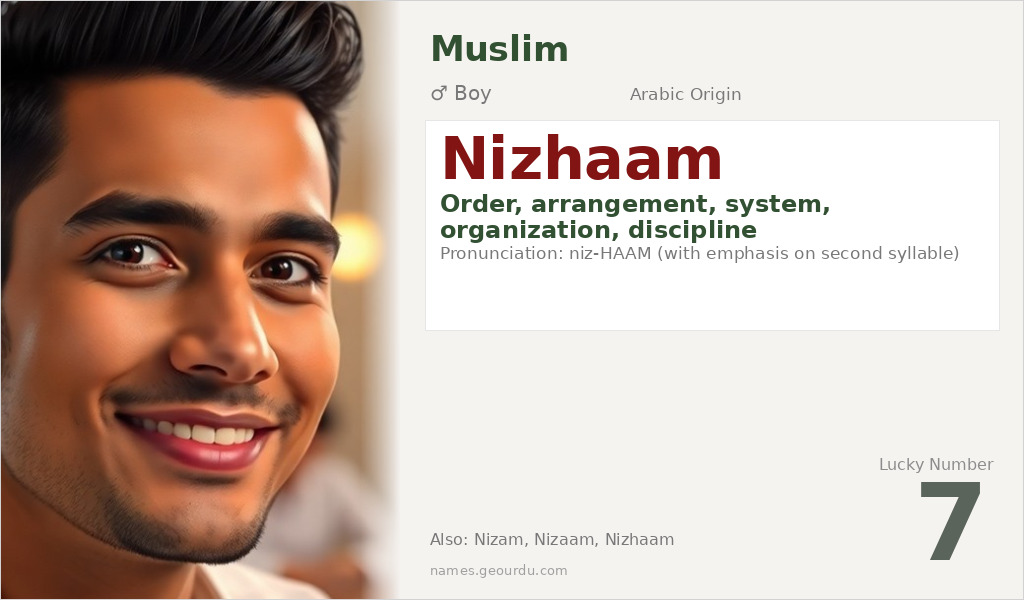
Nizhaam is a distinguished Arabic masculine name that carries profound meaning in Islamic and historical contexts. Derived from the Arabic root meaning ‘to arrange’ or ‘to organize,’ this name symbolizes structure, discipline, and systematic thinking. Popular among Muslim communities worldwide, Nizhaam has been borne by notable historical figures and continues to be a meaningful choice for parents seeking a name with intellectual and administrative connotations.
Meaning of Nizhaam
The name Nizhaam originates from the Arabic word ‘نظام’ (niẓām), which means ‘order, arrangement, system, or organization.’ It comes from the triliteral root ن-ظ-م (n-ẓ-m), which conveys the concept of putting things in proper sequence or organizing systematically. In classical Arabic, this root appears in various forms including ‘nazama’ (to arrange in order), ‘nazm’ (poetry with organized meter), and ‘manzumah’ (an organized composition). The name specifically refers to someone who establishes or maintains order, making it particularly suitable for individuals with leadership or administrative qualities. Historically, the term evolved to denote military and governmental systems, most notably in the Ottoman Empire’s ‘Nizam-ı Cedid’ (New Order) reforms.
| 📛 Name | Nizhaam |
| 💎 Meaning | Order, arrangement, system, organization, discipline |
| 👤 Gender | Boy |
| 🕌 Religion | Muslim |
| 🌍 Origin | Arabic |
| 🗣 Pronunciation | niz-HAAM (with emphasis on second syllable) |
| ✍️ Urdu | نظام |
| ✍️ Arabic | نظام |
| 🔢 Numerology | 7 |
| ✨ Spellings | Nizam, Nizaam, Nizhaam, Nezam, Nizaam |
Origin & Cultural Significance
Nizhaam has its origins in classical Arabic language and culture, with significant historical usage across the Islamic world. The name gained particular prominence during the Ottoman Empire, where ‘Nizam’ became an official title for military commanders and administrators. In South Asia, the title ‘Nizam’ was famously used by the rulers of Hyderabad, with Mir Osman Ali Khan being recognized as the last Nizam. The name spread through Persian and Turkish linguistic influences and is used across Muslim communities from the Middle East to South Asia. While primarily an Arabic name, it has been adopted in various forms in Urdu, Persian, Turkish, and other languages influenced by Islamic civilization.
Personality Traits
Those named Nizhaam are often perceived as natural organizers with a strong sense of structure and discipline. They tend to approach life methodically, preferring well-planned systems over chaos or improvisation. This systematic thinking often makes them effective leaders, administrators, or problem-solvers who can create order from complexity. Their personality typically combines intellectual rigor with practical application, making them valued in both professional and personal contexts.
Similar Names
If you like Nizhaam, consider: Nazim, Nazir, Nadeem, Naeem, Naseem
Famous People Named Nizhaam
- Nizam al-Mulk — 11th century Persian scholar and vizier of the Seljuk Empire, founder of the Nizamiyya system of education
- Mir Osman Ali Khan — Last Nizam of Hyderabad, one of the world's wealthiest men in the early 20th century
Frequently Asked Questions About Nizhaam
What does Nizhaam mean?
Nizhaam means 'order, arrangement, system, or organization' in Arabic, derived from the root ن-ظ-م (n-ẓ-m) relating to systematic organization.
Is Nizhaam a boy or girl name?
Nizhaam is exclusively a masculine name in Arabic and Islamic naming traditions, though some similar-sounding names like Nazima exist for girls.
What is the origin of Nizhaam?
Nizhaam originates from classical Arabic and has historical significance in Islamic civilization, particularly in Ottoman Turkish and Persian administrative contexts.





