
Table of Contents
Pamir is a distinctive name with deep geographical roots, evoking the majestic highlands of Central Asia. Derived from Persian, it directly references the Pamir Mountains, a region famed for its breathtaking peaks and cultural significance. This name carries a sense of strength, endurance, and natural beauty, making it a meaningful choice for parents seeking a name with historical and environmental resonance. While used in various cultures, it is particularly appreciated in regions connected to the Pamirs.
Meaning of Pamir
Pamir originates from the Persian word ‘پامیر’ (Pāmīr), which specifically denotes the Pamir Mountains, a high-altitude area often termed ‘the roof of the world.’ In Persian and related languages like Tajik and Dari, ‘Pamir’ can refer to high plateaus or mountain valleys, emphasizing its geographical meaning. The term has historical usage in Central Asian contexts, describing the rugged terrain spanning Tajikistan, Afghanistan, Pakistan, and China. Linguistically, it is rooted in Iranian languages, with possible connections to older terms for elevated land. Unlike many names with abstract meanings, Pamir is directly tied to a physical landscape, reflecting the cultural importance of mountains in the region.
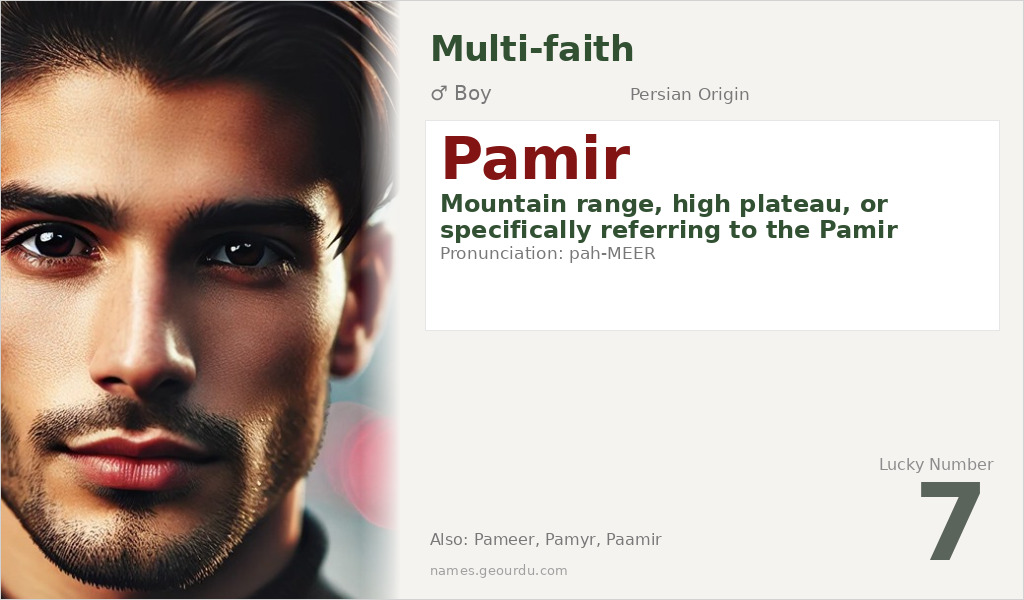
| 📛 Name | Pamir |
| 💎 Meaning | Mountain range, high plateau, or specifically referring to the Pamir Mountains region |
| 👤 Gender | Boy |
| 🕌 Religion | Multi-faith |
| 🌍 Origin | Persian |
| 🗣 Pronunciation | pah-MEER |
| ✍️ Urdu | پامیر |
| ✍️ Arabic | بامير |
| 🔢 Numerology | 7 |
| ✨ Spellings | Pameer, Pamyr, Paamir |
Origin & Cultural Significance
The name Pamir has its origins in Persian culture and the geographical landscape of Central Asia, specifically the Pamir Mountains. This region has been historically significant for trade routes like the Silk Road and is home to diverse ethnic groups, including Tajiks, Kyrgyz, and Wakhi people. While the name is used in Muslim-majority areas such as Afghanistan and Pakistan, it is not inherently religious but rather cultural and geographical. It has spread to other languages and cultures through migration and cultural exchange, often retaining its association with strength and natural grandeur. In modern times, it is given as a first name in various countries, symbolizing heritage or admiration for mountainous regions.
Personality Traits
People named Pamir are often associated with traits like resilience, stability, and a strong connection to their roots, mirroring the enduring nature of mountains. They may be perceived as calm, dependable, and protective, with a grounded personality that others find reassuring. This name can inspire a sense of adventure and respect for nature, reflecting the wild beauty of the Pamir region. While personality varies individually, the name’s connotations often influence perceptions of strength and steadfastness.
Similar Names
If you like Pamir, consider: Kohsar, Himal, Jabal, Parvat, Alborz
Famous People Named Pamir
- Pamir Mountains — Major mountain range in Central Asia, often called 'the roof of the world'
- Pamir Airways — Former Afghan airline named after the region
Frequently Asked Questions About Pamir
What does Pamir mean?
Pamir means 'mountain range' or 'high plateau,' specifically referring to the Pamir Mountains in Central Asia. It originates from the Persian word 'پامیر' (Pāmīr).
Is Pamir a boy or girl name?
Pamir is primarily used as a boy's name, especially in cultures connected to Central Asia. It is rarely given to girls, though naming practices can vary regionally.
What is the origin of Pamir?
Pamir originates from Persian, with strong ties to the Pamir Mountains region in Central Asia. It is a geographical name used in various cultures, including those in Afghanistan, Tajikistan, and Pakistan.





