
Table of Contents
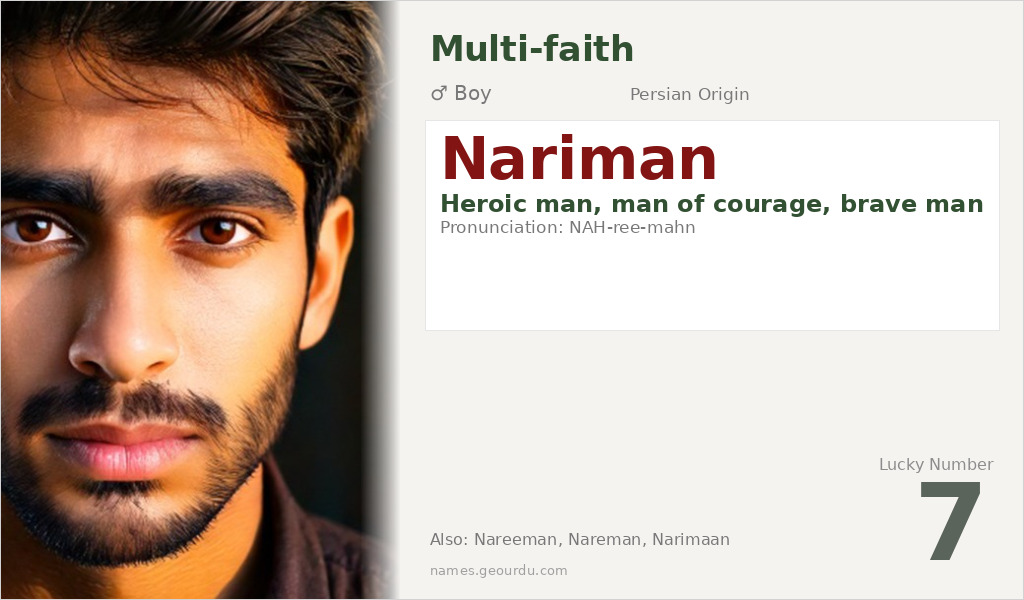
Nariman is a powerful Persian name with deep roots in ancient mythology and heroic epics. Meaning ‘heroic man’ or ‘man of courage’, this name carries the legacy of legendary kings and warriors from Persian tradition. Popular across Iran, Afghanistan, Tajikistan, and among Persian-speaking communities worldwide, Nariman represents strength, nobility, and spiritual valor. Its appearance in Ferdowsi’s Shahnameh has cemented its place as one of the most respected names in Persian culture.
Meaning of Nariman
Nariman derives from Old Persian elements with clear etymological roots. The first component ‘nairi’ comes from Avestan and Old Persian, meaning ‘man, male, or hero’. The second component ‘manah’ means ‘mind, thought, or spirit’ in the same ancient languages. Thus, Nariman literally translates to ‘heroic man’, ‘man of heroic spirit’, or ‘brave-minded man’. This compound structure is characteristic of many traditional Persian names that combine qualities or attributes. The name appears in Zoroastrian texts and pre-Islamic Persian mythology before gaining prominence in Islamic-era literature like the Shahnameh. Its meaning has remained consistent across centuries, representing ideal masculine virtues in Persian culture.
| 📛 Name | Nariman |
| 💎 Meaning | Heroic man, man of courage, brave man |
| 👤 Gender | Boy |
| 🕌 Religion | Multi-faith |
| 🌍 Origin | Persian |
| 🗣 Pronunciation | NAH-ree-mahn |
| ✍️ Urdu | نریمان |
| ✍️ Arabic | نریمان |
| 🔢 Numerology | 7 |
| ✨ Spellings | Nareeman, Nareman, Narimaan |
Origin & Cultural Significance
Nariman originates from ancient Persian culture and Zoroastrian tradition, predating Islamic influence in the region. The name first appears in mythological accounts of the Pishdadian dynasty, the earliest legendary kings of Persia according to tradition. In Ferdowsi’s 10th-century epic Shahnameh (Book of Kings), Nariman is depicted as a noble king and great-grandfather of the supreme hero Rostam. The name spread through Persian cultural influence across Greater Iran, including modern-day Iran, Afghanistan, Tajikistan, and parts of Central Asia and South Asia. While adopted by Muslim communities, it retains its pre-Islamic Persian identity and is used by people of various faiths in Persian-speaking regions, including Zoroastrians, Muslims, and others.
Personality Traits
Those named Nariman often embody the heroic qualities suggested by their name’s meaning. They tend to display courage in facing challenges while maintaining thoughtful consideration in their decisions. The name’s association with legendary nobility often inspires a strong sense of honor and responsibility in bearers. Many Narimans develop leadership qualities naturally, balancing action with reflection in ways that earn respect from others.
Similar Names
If you like Nariman, consider: Rostam, Sohrab, Esfandiyar, Bahram, Kaveh
Famous People Named Nariman
- Nariman Narimanov — Azerbaijani revolutionary and statesman, first president of Soviet Azerbaijan
- Nariman G. — Character in Persian epic Shahnameh, great-grandfather of Rostam and legendary king of the Pishdadian dynasty
Frequently Asked Questions About Nariman
What does Nariman mean?
Nariman means 'heroic man' or 'man of courage' in Persian. It comes from the Old Persian elements 'nairi' (man/hero) and 'manah' (mind/spirit).
Is Nariman a boy or girl name?
Nariman is exclusively a masculine name in all cultures where it is used. There is no feminine equivalent or usage in historical or contemporary contexts.
What is the origin of Nariman?
Nariman originates from ancient Persian culture and Zoroastrian tradition. It appears in pre-Islamic Persian mythology and gained prominence through Ferdowsi's Shahnameh epic, making it a culturally significant name across Persian-speaking regions.





