
Table of Contents
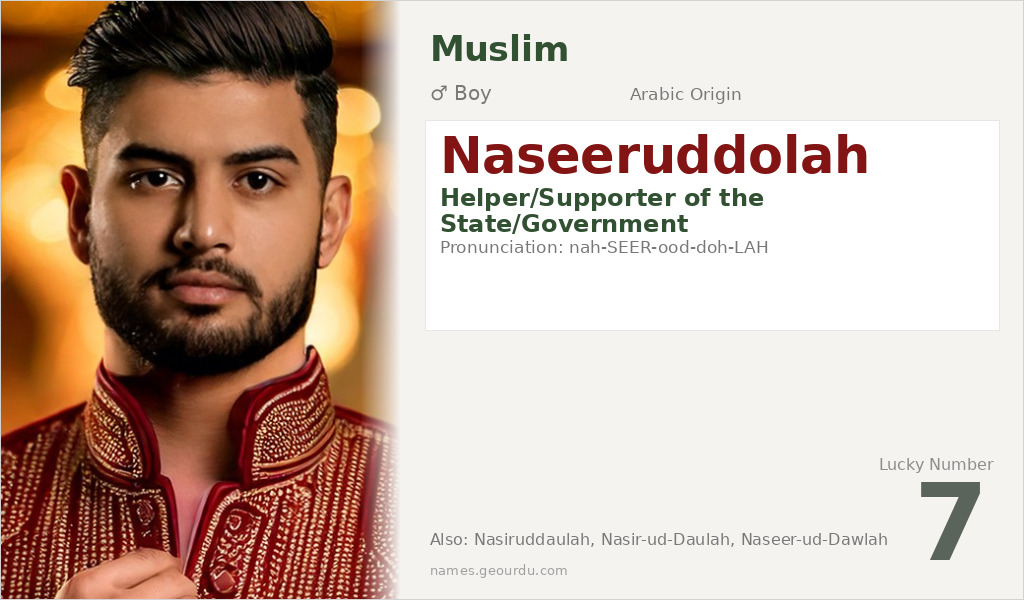
Naseeruddolah is a distinguished Arabic name with deep historical and cultural significance in the Muslim world. Meaning ‘Helper of the State’ or ‘Supporter of the Government’, this name reflects traditional Islamic values of service and community leadership. Often associated with nobility and administrative roles, Naseeruddolah carries a legacy of responsibility and public service. Its compound structure reveals the rich linguistic heritage of Arabic naming traditions.
Meaning of Naseeruddolah
Naseeruddolah is a compound Arabic name with two distinct components that together create a meaningful whole. The first part, ‘Naseer’, comes from the Arabic root N-Ṣ-R (ن ص ر), which carries the core meaning of ‘helping’, ‘supporting’, or ‘assisting’. This root appears in many important Islamic terms, including ‘Nasr’ (victory) and ‘Ansar’ (helpers, specifically referring to the Medinan supporters of Prophet Muhammad). The second component, ‘ud-Dolah’, means ‘of the state’ or ‘of the government’, derived from ‘dawlah’ (دولة), which refers to a state, government, or ruling dynasty. When combined, the name literally translates to ‘Helper of the State’, suggesting someone who supports or assists the government or ruling authority. This name exemplifies the Arabic tradition of creating meaningful compound names that express virtues, roles, or aspirations.
| 📛 Name | Naseeruddolah |
| 💎 Meaning | Helper/Supporter of the State/Government |
| 👤 Gender | Boy |
| 🕌 Religion | Muslim |
| 🌍 Origin | Arabic |
| 🗣 Pronunciation | nah-SEER-ood-doh-LAH |
| ✍️ Urdu | نصیر الدولہ |
| ✍️ Arabic | نصير الدولة |
| 🔢 Numerology | 7 |
| ✨ Spellings | Nasiruddaulah, Nasir-ud-Daulah, Naseer-ud-Dawlah, Nasir al-Dawlah |
Origin & Cultural Significance
Naseeruddolah originates from classical Arabic and has been used historically across the Islamic world, particularly in regions influenced by Arabic culture and language. The name gained prominence during the medieval Islamic period when it was often used as an honorific title for rulers, administrators, and military commanders who served the state. It appears in historical records from the Abbasid Caliphate through to the Mughal Empire and various Islamic dynasties. The name reflects the Islamic political tradition where service to the state was considered a religious and civic duty. While primarily Arabic in origin, the name has been adopted in various forms across Persian, Urdu, and other languages influenced by Islamic civilization, maintaining its core meaning while adapting to local phonetic patterns.
Personality Traits
Those named Naseeruddolah are often associated with qualities of leadership, responsibility, and public service. The meaning of their name suggests someone who naturally takes on supportive roles within their community or organization. They tend to be diplomatic, organized, and value structure and tradition. Historically, bearers of this name have often been involved in governance, administration, or community leadership, reflecting the name’s literal meaning of serving the state or community.
Similar Names
If you like Naseeruddolah, consider: Nasir, Naseer, Nasrullah, Nasruddin, Nusrat
Famous People Named Naseeruddolah
- Nasir al-Dawla ibn Hamdan — 10th century Hamdanid ruler of Mosul known for his patronage of arts and sciences
- Nasir-ud-Daulah — Title used by several Mughal and Deccan rulers including Asaf Jah II, Nizam of Hyderabad (1762-1803)
Frequently Asked Questions About Naseeruddolah
What does Naseeruddolah mean?
Naseeruddolah means 'Helper of the State' or 'Supporter of the Government' in Arabic. It is a compound name where 'Naseer' means helper/supporter and 'ud-Dolah' means of the state/government.
Is Naseeruddolah a boy or girl name?
Naseeruddolah is exclusively a boy's name in Arabic and Islamic naming traditions. The name's meaning and historical usage are masculine in all cultural contexts where it appears.
What is the origin of Naseeruddolah?
Naseeruddolah originates from classical Arabic and has been used historically across the Islamic world. It combines two Arabic words: 'Naseer' (helper) from the root N-Ṣ-R and 'dawlah' (state/government).





