
Table of Contents
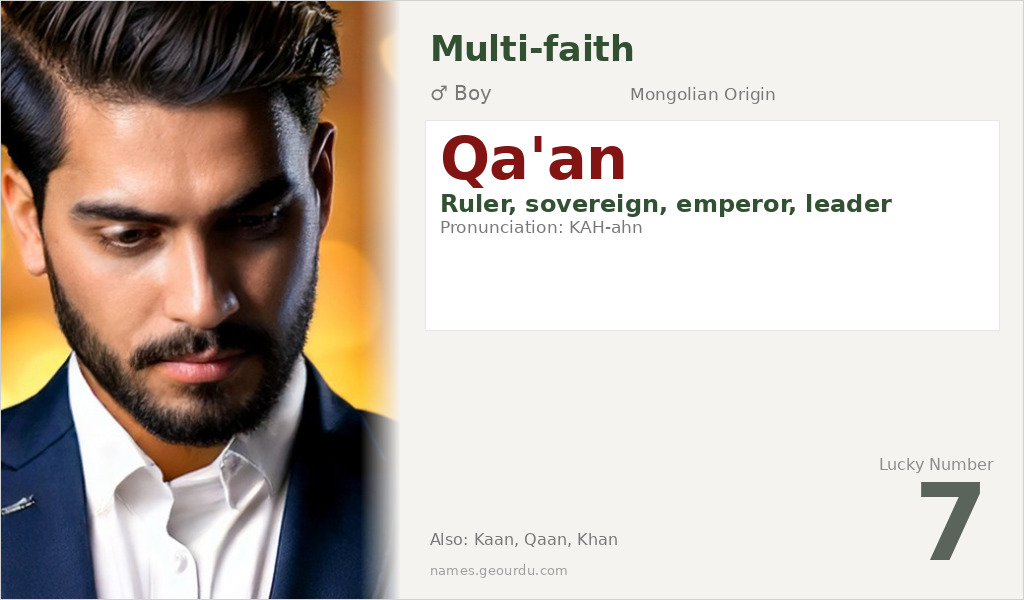
Qa’an is a powerful masculine name with deep historical roots in Mongol imperial tradition. Meaning ‘ruler’ or ’emperor’, this name carries centuries of regal heritage and has been adopted across various cultures through historical interactions. While particularly notable in Islamic contexts due to Mongol conversions, it transcends single religious associations and represents leadership across multiple traditions.
Meaning of Qa'an
Qa’an originates from the Mongolian title ‘Khagan’ (ᠬᠠᠭᠠᠨ), which means ‘supreme ruler’, ’emperor’, or ‘great leader’. This term was specifically used for the highest authority in the Mongol Empire, with Genghis Khan establishing the title for himself and his successors. The word entered Persian as ‘Qa’an’ during the Ilkhanate period when Mongol rulers governed Persia and converted to Islam. From Persian, it spread to Arabic, Turkish, Urdu, and other languages in regions influenced by Mongol history, always retaining its core meaning of sovereign authority rather than justice-related concepts.
| 📛 Name | Qa'an |
| 💎 Meaning | Ruler, sovereign, emperor, leader |
| 👤 Gender | Boy |
| 🕌 Religion | Multi-faith |
| 🌍 Origin | Mongolian |
| 🗣 Pronunciation | KAH-ahn |
| ✍️ Urdu | قاآن |
| ✍️ Arabic | قاآن |
| 🔢 Numerology | 7 |
| ✨ Spellings | Kaan, Qaan, Khan, Khagan, Qaghan |
Origin & Cultural Significance
The name Qa’an has its origins in 13th-century Mongolia as the imperial title for the Great Khan of the Mongol Empire. It gained prominence in Islamic cultures following the Mongol invasions and subsequent conversions of Mongol rulers to Islam, particularly during the Ilkhanate in Persia (1256-1335). Historical figures like Batu Khan and Möngke Khan carried this title, which later evolved into a given name in various Central Asian and Islamic communities. Today, it’s used primarily in regions with historical Mongol influence, including parts of Afghanistan, Pakistan, Iran, and Turkey, often chosen for its connotations of strength and leadership.
Personality Traits
Those named Qa’an typically embody leadership characteristics, often displaying natural authority, strategic vision, and organizational capabilities. They tend to be confident individuals who excel in positions of responsibility and can inspire loyalty in others. Their name’s historical weight often influences their self-perception, fostering ambition and a sense of purpose in personal and professional endeavors.
Similar Names
If you like Qa'an, consider: Khan, Sultan, Shah, Amir, Malik
Famous People Named Qa'an
- Qa'an Batu Khan — Mongol ruler and founder of the Golden Horde, grandson of Genghis Khan
- Qa'an Möngke Khan — Fourth Great Khan of the Mongol Empire (1251-1259)
Frequently Asked Questions About Qa'an
What does Qa'an mean?
Qa'an means 'ruler', 'sovereign', or 'emperor'. It originates from the Mongolian title 'Khagan', used for the supreme leader of the Mongol Empire.
Is Qa'an a boy or girl name?
Qa'an is exclusively a masculine name, reflecting its origins as a title for male rulers and emperors in Mongol and subsequent Islamic traditions.
What is the origin of Qa'an?
Qa'an has Mongolian origins as the imperial title 'Khagan'. It entered Islamic cultures through historical Mongol empires, particularly during the Ilkhanate period in Persia, and was adopted into Persian, Arabic, and other regional languages.





