
Table of Contents
Nasib is a profound Arabic name that speaks to the very fabric of human existence—our fate, destiny, and allotted portion in life. Used for centuries across the Arab world and beyond, it carries weight in poetry, scripture, and daily language. Whether as a given name or a common noun, Nasib reminds us of life’s predetermined journey and the shares we receive along the way.
Meaning of Nasib
Nasib (نصيب) originates from the Arabic root ن-ص-ب (n-ṣ-b), which conveys the idea of assigning, allotting, or establishing. As a noun, it specifically refers to one’s fate, destiny, fortune, or share—be it in wealth, happiness, or life circumstances. This concept is deeply embedded in Islamic theology, where it aligns with the belief in divine decree (qadar). The word appears in the Quran, classical poetry, and modern usage, maintaining its core meaning across dialects. In Persian, Urdu, Pashto, and other languages influenced by Arabic, Nasib retains this significance, often used in phrases like ‘nasib mein hai’ (it is in my destiny) to express acceptance of life’s events.
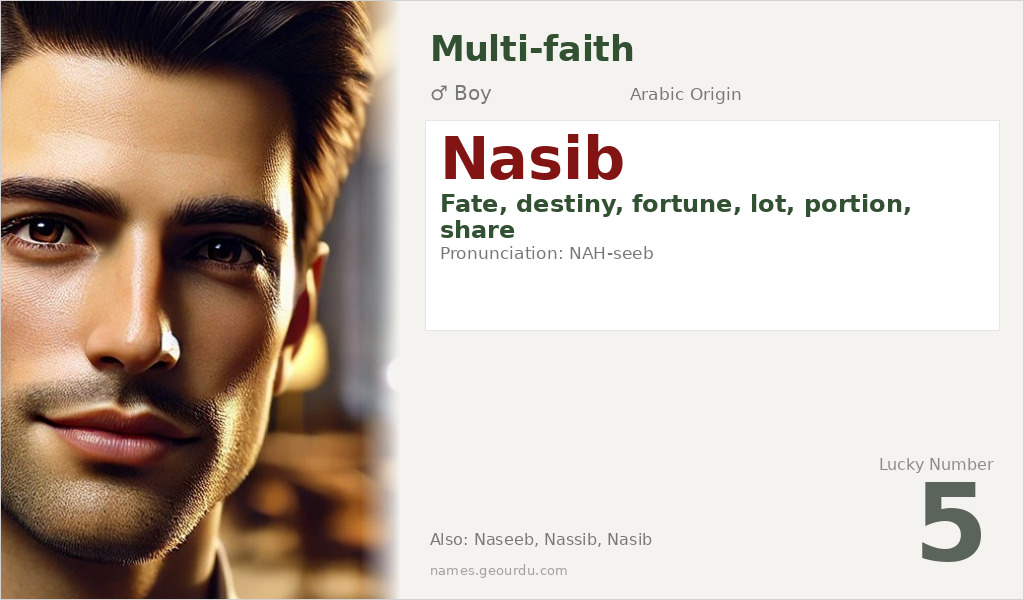
| 📛 Name | Nasib |
| 💎 Meaning | Fate, destiny, fortune, lot, portion, share |
| 👤 Gender | Boy |
| 🕌 Religion | Multi-faith |
| 🌍 Origin | Arabic |
| 🗣 Pronunciation | NAH-seeb |
| ✍️ Urdu | نصیب |
| ✍️ Arabic | نصيب |
| 🔢 Numerology | 5 |
| ✨ Spellings | Naseeb, Nassib, Nasib, Naseeb, Naseeb |
Origin & Cultural Significance
Nasib has its roots in classical Arabic, with documented usage dating back to pre-Islamic poetry and early Islamic texts. It spread across the Muslim world through the Arabic language’s religious and cultural influence, becoming common in regions like the Levant, Persia, South Asia, and Central Asia. While predominantly used in Muslim communities, it is also found among Arabic-speaking Christians, Druze, and others, reflecting its linguistic rather than exclusively religious nature. The name’s endurance highlights its universal appeal—touching on themes of destiny that resonate across cultures and faiths.
Personality Traits
Those named Nasib are often perceived as grounded individuals who trust in life’s unfolding path. They may display a balanced temperament, accepting both fortune and hardship as part of their destined journey. This name can inspire a reflective, patient personality, with an innate understanding that some things are simply meant to be.
Similar Names
If you like Nasib, consider: Qismat, Naseem, Naseer, Nazir, Nasir
Famous People Named Nasib
- Nasib al-Bakri — Syrian nationalist and politician during the French Mandate period
- Nasib Arida — Lebanese-American poet and writer, co-founder of the New York Pen League
Frequently Asked Questions About Nasib
What does Nasib mean?
Nasib means 'fate, destiny, fortune, lot, portion, or share' in Arabic, derived from the root ن-ص-ب (n-ṣ-b) meaning 'to assign or allot.'
Is Nasib a boy or girl name?
Nasib is traditionally a masculine name in Arabic and related cultures, though it can be used as a unisex term in some modern contexts.
What is the origin of Nasib?
Nasib originates from classical Arabic, with widespread usage across the Arab world, Persia, South Asia, and other regions influenced by Arabic language and culture.





