
Table of Contents
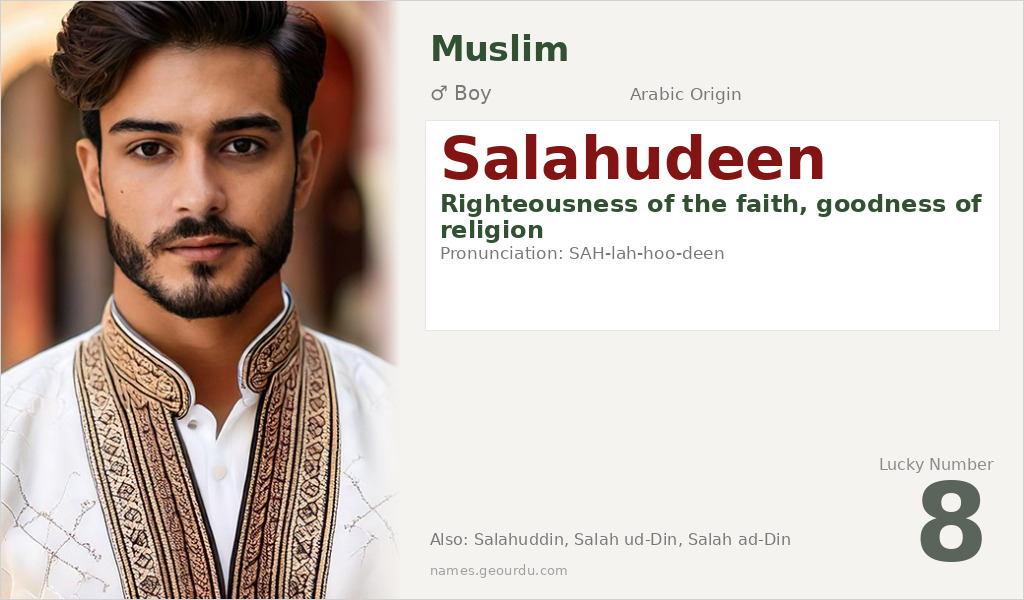
Salahudeen is a powerful Arabic name with deep historical and religious significance. Meaning ‘righteousness of the faith’, this name carries the legacy of one of Islam’s most celebrated figures. Popular across Muslim communities worldwide, Salahudeen represents devotion, integrity, and spiritual leadership. Its enduring appeal stems from both its beautiful meaning and association with noble historical figures.
Meaning of Salahudeen
Salahudeen is a compound Arabic name formed from two distinct elements with profound religious connotations. The first component, ‘Salah’ (صَلاح), derives from the root ṣ-l-ḥ, which conveys concepts of righteousness, goodness, integrity, reform, and making things right. The second component, ‘Deen’ (دِين), comes from the root d-y-n and means religion, faith, creed, or way of life in Arabic. When combined, the name literally translates to ‘righteousness of the faith’ or ‘goodness of religion’. This construction follows a common Arabic naming pattern where virtuous qualities are paired with ‘al-Din’ (of the faith). The name exemplifies the Islamic tradition of choosing names that reflect positive attributes and spiritual values, serving as both an aspiration and a reminder of religious commitment.
| 📛 Name | Salahudeen |
| 💎 Meaning | Righteousness of the faith, goodness of religion |
| 👤 Gender | Boy |
| 🕌 Religion | Muslim |
| 🌍 Origin | Arabic |
| 🗣 Pronunciation | SAH-lah-hoo-deen |
| ✍️ Urdu | صلاح الدین |
| ✍️ Arabic | صلاح الدين |
| 🔢 Numerology | 8 |
| ✨ Spellings | Salahuddin, Salah ud-Din, Salah ad-Din, Salahudeen, Salahudin, Salauddin |
Origin & Cultural Significance
Salahudeen originates from classical Arabic and has been used across the Muslim world for centuries. The name gained particular prominence in the 12th century through Salah ad-Din Yusuf ibn Ayyub, known in the West as Saladin, the founder of the Ayyubid dynasty. Saladin’s leadership during the Crusades, his recapture of Jerusalem in 1187, and his reputation for chivalry made his name legendary. This historical association cemented Salahudeen as a name representing military prowess, political acumen, and religious devotion. While most common in Arabic-speaking regions, the name has spread throughout Muslim communities globally, including South Asia, Southeast Asia, Africa, and diaspora communities. Various transliterations exist across different languages and scripts, reflecting its widespread adoption.
Personality Traits
Those named Salahudeen are often associated with qualities of leadership, principle, and spiritual depth. The name’s meaning suggests someone who values integrity, justice, and religious commitment. Many bearers of this name are perceived as disciplined individuals with strong moral compasses, capable of inspiring others through their actions. The historical connection to Saladin adds connotations of strategic thinking, resilience, and noble character to the name’s personality associations.
Similar Names
If you like Salahudeen, consider: Salah, Yusuf, Ayyub, Nasir, Zayn al-Din, Shams al-Din, Nur al-Din, Fakhr al-Din, Jamal al-Din, Badr al-Din
Famous People Named Salahudeen
- Salah ad-Din Yusuf ibn Ayyub (Saladin) — 12th-century Muslim military leader and founder of the Ayyubid dynasty, known for recapturing Jerusalem and his chivalry during the Crusades
- Salahuddin of Selangor — Current Sultan of Selangor, Malaysia, installed in 2016
Frequently Asked Questions About Salahudeen
What does Salahudeen mean?
Salahudeen means 'righteousness of the faith' or 'goodness of religion' in Arabic. It is a compound name combining 'Salah' (righteousness) and 'Deen' (religion/faith).
Is Salahudeen a boy or girl name?
Salahudeen is exclusively a boy's name in Muslim naming traditions. It follows masculine Arabic grammatical structure and has historically been given only to males.
What is the origin of Salahudeen?
Salahudeen originates from classical Arabic and has been used across the Muslim world for centuries. It gained particular fame through the 12th-century leader Salah ad-Din (Saladin), founder of the Ayyubid dynasty.





