
Table of Contents
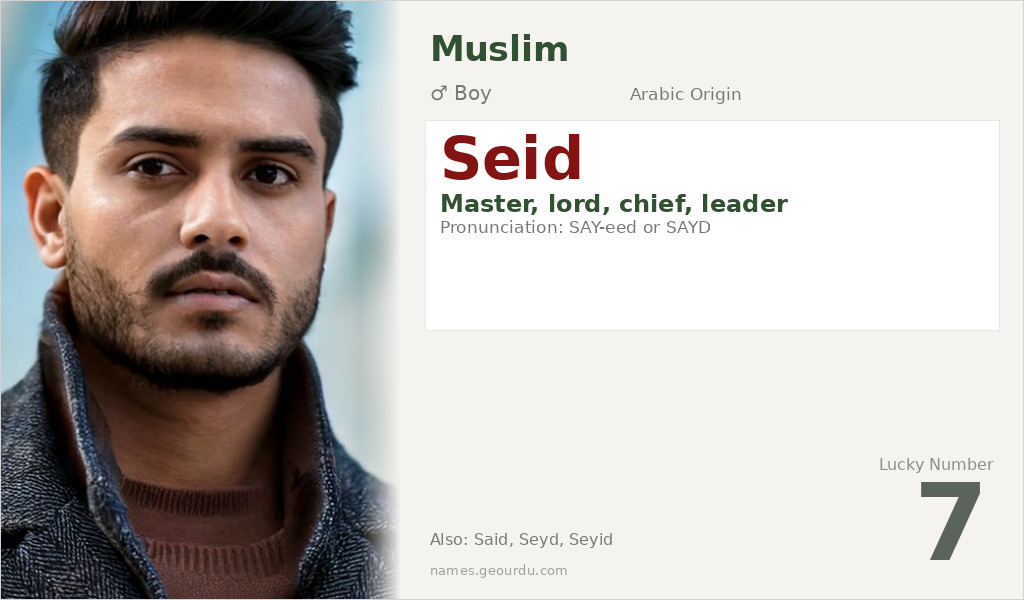
Seid is a distinguished name with deep roots in Islamic culture and history. Often associated with leadership and nobility, it carries a legacy of respect and spiritual significance. This name has traversed centuries and regions, from the Arab world to South Asia and beyond. Understanding its true meaning and origin reveals why it remains a popular choice for boys in Muslim families.
Meaning of Seid
The name Seid derives from the Arabic word ‘سَيِّد’ (sayyid), which translates to ‘master,’ ‘lord,’ ‘chief,’ or ‘leader.’ This term is not merely a name but an honorific title in Islam, traditionally used for descendants of the Prophet Muhammad through his daughter Fatimah and her husband Ali. Linguistically, it comes from the Arabic root س-ي-د (s-y-d), related to mastery and authority. Over time, ‘Seid’ has been adapted into various languages like Persian, Urdu, and Turkish, often spelled as Said, Syed, or Seyid, while retaining its core meaning. In some cultures, such as among Pashtuns and Baloch, it specifically signifies a lineage claiming prophetic descent, adding a layer of social and religious prestige.
| 📛 Name | Seid |
| 💎 Meaning | Master, lord, chief, leader |
| 👤 Gender | Boy |
| 🕌 Religion | Muslim |
| 🌍 Origin | Arabic |
| 🗣 Pronunciation | SAY-eed or SAYD |
| ✍️ Urdu | سید |
| ✍️ Arabic | سَيِّد |
| 🔢 Numerology | 7 |
| ✨ Spellings | Said, Seyd, Seyid, Syed, Sayyid, Saeed |
Origin & Cultural Significance
Seid originates from Arabic and has been integral to Islamic tradition since the early centuries of Islam. It spread across the Muslim world through Arabic influence, becoming common in regions like the Middle East, South Asia, and Central Asia. In historical context, the title ‘Sayyid’ was used to denote respected religious and community leaders, often those with genealogical ties to the Prophet Muhammad. This cultural adoption led to variations in spelling and pronunciation, such as ‘Syed’ in Urdu-speaking areas or ‘Seyid’ in Turkish contexts. Today, it remains a popular name in Muslim-majority countries, symbolizing heritage, faith, and leadership.
Personality Traits
People named Seid are often seen as authoritative, wise, and spiritually grounded. They may naturally take on leadership roles, guided by a sense of duty and respect for tradition. Their personality might reflect the name’s meaning, with traits like protectiveness, dignity, and a calm, commanding presence. This can make them influential figures in their communities or families.
Similar Names
If you like Seid, consider: Sharif, Mir, Malik, Amir, Rashid
Famous People Named Seid
- Said Nursi — influential Kurdish-Islamic scholar and writer from Turkey
- Syed Ahmed Khan — 19th-century Indian Muslim reformer and educator
Frequently Asked Questions About Seid
What does Seid mean?
Seid means 'master,' 'lord,' 'chief,' or 'leader.' It comes from the Arabic word 'سَيِّد' (sayyid), an honorific title in Islam.
Is Seid a boy or girl name?
Seid is traditionally a boy's name in Islamic cultures, though variations like 'Saidah' exist for girls. It is predominantly masculine due to its meaning and historical usage.
What is the origin of Seid?
Seid originates from Arabic and is deeply rooted in Islamic tradition. It has spread to languages like Persian, Urdu, Turkish, Pashto, and others, often associated with noble or religious descent.





