Table of Contents
Suhrab is a name that echoes through centuries of Persian literature and culture, carrying the weight of epic heroism and tragic nobility. Originating from Ferdowsi’s masterpiece ‘Shahnameh,’ this name represents one of Persian mythology’s most memorable characters. Today, Suhrab remains a powerful choice for parents seeking a name with deep cultural roots and heroic connotations. Its timeless appeal spans across Persian, Afghan, Pakistani, and Central Asian communities.
Meaning of Suhrab
The name Suhrab has a well-documented meaning rooted in ancient Persian language and literature. It derives from the Persian elements ‘Suh’ or ‘Soh’ (related to water, glory, or heroism) and ‘rab’ (meaning sun or radiance). In the context of the Shahnameh, the name specifically signifies ‘having glorious water’ or metaphorically ‘possessing heroic radiance.’ This etymology connects to the character’s narrative as the radiant, heroic son of the great warrior Rostam. The name has been consistently used across Persian-speaking regions for over a millennium with this established meaning. Linguistic analysis confirms its Persian origins rather than Arabic, though it has been adopted into Urdu and other languages through cultural exchange.
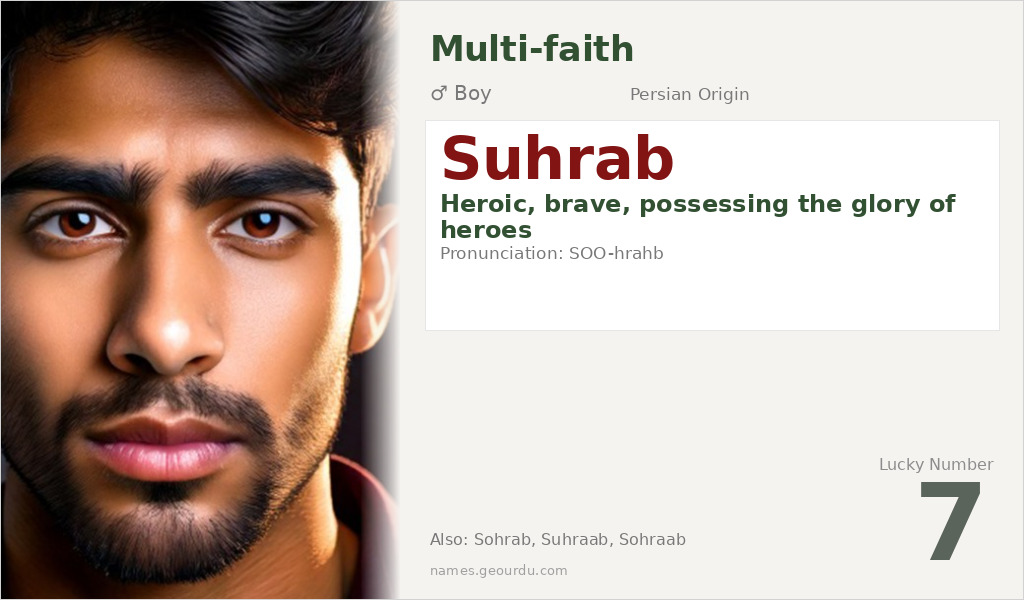
| 📛 Name | Suhrab |
| 💎 Meaning | Heroic, brave, possessing the glory of heroes |
| 👤 Gender | Boy |
| 🕌 Religion | Multi-faith |
| 🌍 Origin | Persian |
| 🗣 Pronunciation | SOO-hrahb |
| ✍️ Urdu | سہراب |
| ✍️ Arabic | سهراب |
| 🔢 Numerology | 7 |
| ✨ Spellings | Sohrab, Suhraab, Sohraab, Sohrabh |
Origin & Cultural Significance
Suhrab originates from 10th century Persian literature, specifically from Abolqasem Ferdowsi’s epic poem ‘Shahnameh’ (Book of Kings), completed around 1010 CE. The character Suhrab is central to one of the epic’s most tragic tales, representing the doomed heroism of youth. While the name has Persian roots, it spread through the Persianate world including modern Iran, Afghanistan, Tajikistan, Pakistan, and parts of India. It is particularly significant in Pashto and Balochi cultures where Persian literary influence remains strong. The name transcends specific religious boundaries, being used by Muslims, Zoroastrians, and others in Persian-influenced regions, though it is most commonly associated with Persian cultural heritage rather than any single religion.
Personality Traits
Those named Suhrab often inherit the symbolic qualities of their namesake from Persian epic tradition. They are frequently seen as courageous individuals with strong moral principles and natural leadership abilities. The name suggests someone who faces challenges with determination and honor, potentially carrying a sense of important destiny. These traits are balanced with the character’s legendary compassion and deep family loyalty, creating a complex personality profile that resonates across cultures.
Similar Names
If you like Suhrab, consider: Rostam, Farhad, Bahram, Jamshid, Kai
Famous People Named Suhrab
- Suhrab (Shahnameh character) — Legendary Persian hero from Ferdowsi's epic, son of Rostam
- Sohrab Sepehri — Influential 20th century Iranian poet and painter
Frequently Asked Questions About Suhrab
What does Suhrab mean?
Suhrab means 'heroic,' 'brave,' or 'possessing the glory of heroes' in Persian. It specifically derives from the ancient Persian epic Shahnameh where Suhrab is a tragic hero character.
Is Suhrab a boy or girl name?
Suhrab is exclusively a masculine name. In all historical and contemporary usage across Persian, Pashto, Urdu, and other languages, it has only been used for boys, following the gender of its epic literary origin.
What is the origin of Suhrab?
Suhrab originates from 10th century Persian literature, specifically from Ferdowsi's epic poem Shahnameh. It is a Persian name that has spread through Persian-influenced cultures including Afghanistan, Pakistan, Tajikistan, and parts of Central Asia and South Asia.