
Table of Contents
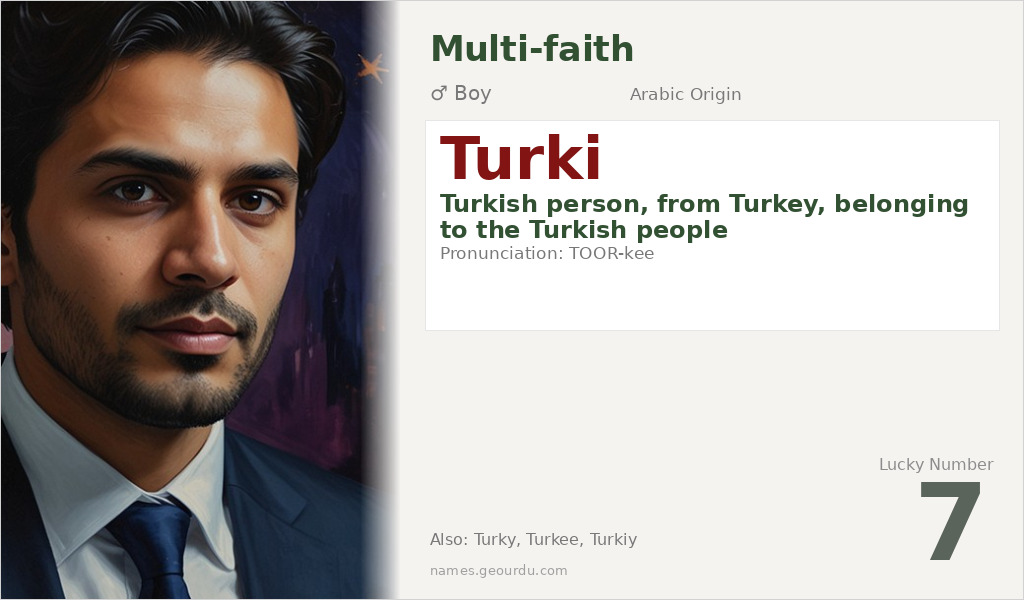
Turki is a distinctive Arabic name with deep cultural significance, directly connecting the bearer to Turkish heritage and identity. Used primarily for boys, this name carries historical weight as it references one of the world’s major ethnic groups and civilizations. In this comprehensive guide, we explore the true meaning, origin, and cultural context of the name Turki, correcting common misconceptions about its significance.
Meaning of Turki
The name Turki has a clear and well-documented meaning: it signifies ‘Turkish person’, ‘from Turkey’, or ‘belonging to the Turkish people’. Derived from the Arabic word ‘Turkī’ (تُرْكِيّ), it functions as an ethnonym—a name that identifies someone with a particular ethnic group. The Arabic term itself originates from the Old Turkic word ‘Türk’, which scholars believe meant ‘strong’, ‘powerful’, or ‘mature’. This linguistic connection reflects the historical interactions between Arabic and Turkic-speaking peoples, particularly during the expansion of Turkic empires and the Ottoman period. Unlike some names with abstract meanings, Turki has a concrete, geographical, and ethnic reference point that has remained consistent across centuries of usage.
| 📛 Name | Turki |
| 💎 Meaning | Turkish person, from Turkey, belonging to the Turkish people |
| 👤 Gender | Boy |
| 🕌 Religion | Multi-faith |
| 🌍 Origin | Arabic |
| 🗣 Pronunciation | TOOR-kee |
| ✍️ Urdu | ترکی |
| ✍️ Arabic | تُرْكِيّ |
| 🔢 Numerology | 7 |
| ✨ Spellings | Turky, Turkee, Turkiy, Türki |
Origin & Cultural Significance
Turki originates from Arabic language and culture, specifically as an ethnonym adopted into personal naming traditions. The name emerged during periods of significant cultural exchange between Arab and Turkic peoples, particularly following the spread of Islam among Turkic tribes and the establishment of Turkic-ruled states in the Middle East. It gained popularity in Arab regions that had historical connections with Turkish populations, including during the Ottoman Empire’s influence across the Arab world. Today, the name remains common in Arabic-speaking countries and among Muslim communities worldwide, serving as a marker of Turkish heritage or admiration for Turkish culture. While primarily used by Muslims, the name’s ethnic rather than religious meaning makes it appropriate for people of various faiths with Turkish connections.
Personality Traits
Those named Turki often embody characteristics associated with Turkish cultural values—strength, resilience, and hospitality. The name’s connection to a proud historical civilization tends to instill a sense of cultural identity and confidence in bearers. Many people with this name demonstrate adaptability and cross-cultural understanding, reflecting the historical bridges between Arab and Turkish worlds. While personality traits vary by individual, the name Turki frequently carries expectations of leadership and cultural pride.
Similar Names
If you like Turki, consider: Turk, Türker, Turkay, Turhan, Turgut
Famous People Named Turki
- Turki bin Abdulaziz Al Saud — Saudi royal and former deputy defense minister
- Turki Al-Sheikh — Saudi Arabian sports executive and chairman of the General Entertainment Authority
Frequently Asked Questions About Turki
What does Turki mean?
Turki means 'Turkish person', 'from Turkey', or 'belonging to the Turkish people'. It comes from the Arabic word 'Turkī' (تُرْكِيّ), which is derived from the Old Turkic ethnonym 'Türk'.
Is Turki a boy or girl name?
Turki is exclusively a boy's name in all cultures where it is used. There is no documented usage as a girl's name in any language or cultural tradition.
What is the origin of Turki?
Turki originates from Arabic language and culture, specifically as an ethnonym meaning 'Turkish'. The Arabic term comes from the Old Turkic word 'Türk', and the name reflects historical connections between Arab and Turkic peoples.





