
Table of Contents
Sohrab is a name steeped in Persian epic poetry and heroic tradition. Originating from Ferdowsi’s masterpiece Shahnameh, this name carries centuries of cultural weight and linguistic beauty. While often associated with tragic nobility, Sohrab remains a popular choice for boys in Persian-speaking communities and beyond. Discover the rich history and meaning behind this timeless name.
Meaning of Sohrab
Sohrab derives from Persian linguistic roots, combining ‘sohr’ (glory, splendor) with ‘āb’ (water, radiance, brilliance) to create a meaning of ‘having glorious splendor’ or ‘radiant hero.’ This etymology reflects the name’s heroic connotations in Persian literature. The name gained its most famous representation through the character Sohrab in the 10th-century epic Shahnameh, where he is the valiant but doomed son of the legendary warrior Rostam. Beyond its literal meaning, Sohrab symbolizes youthful courage, tragic destiny, and paternal conflict in Persian cultural consciousness. The name has maintained its linguistic integrity across centuries of Persian literary tradition.
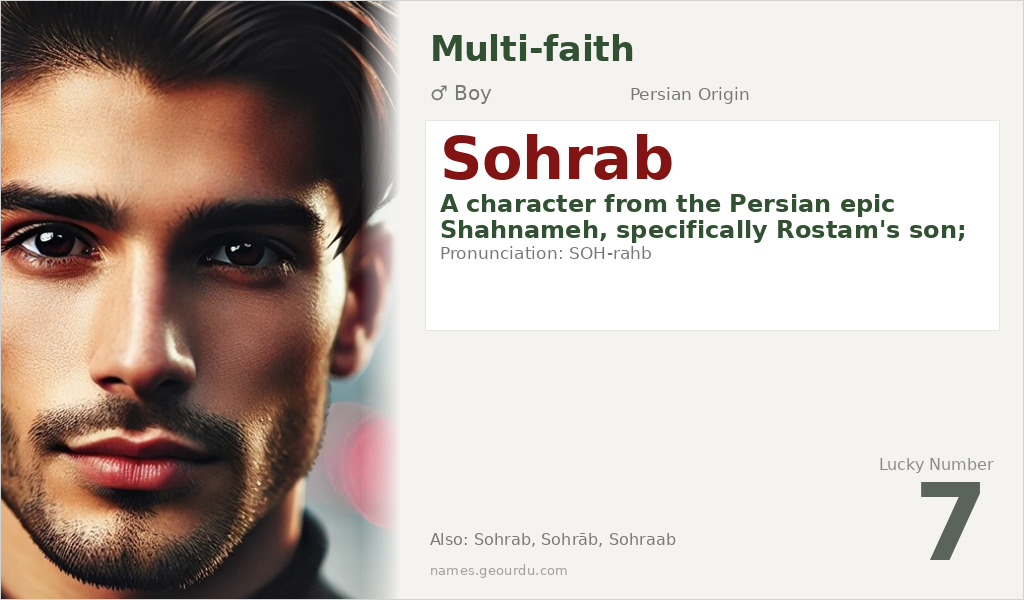
| 📛 Name | Sohrab |
| 💎 Meaning | A character from the Persian epic Shahnameh, specifically Rostam's son; the name itself means 'having glorious splendor' or 'radiant hero' in Persian |
| 👤 Gender | Boy |
| 🕌 Religion | Multi-faith |
| 🌍 Origin | Persian |
| 🗣 Pronunciation | SOH-rahb |
| ✍️ Urdu | سہراب |
| ✍️ Arabic | سهراب |
| 🔢 Numerology | 7 |
| ✨ Spellings | Sohrab, Sohrāb, Sohraab, Sohrabh |
Origin & Cultural Significance
Sohrab originates from Persian culture and literature, specifically from Ferdowsi’s Shahnameh (Book of Kings), completed around 1010 CE. This epic poem, which preserves pre-Islamic Persian mythology and history, features Sohrab as a central tragic figure—the son of Rostam who unknowingly battles his father to his death. The name has been used historically across Persian-influenced regions including Iran, Afghanistan, Tajikistan, and parts of South Asia. While commonly used by Muslims in these regions, Sohrab is also found among Zoroastrians, Bahá’ís, and secular families, making it a multi-faith name with deep cultural rather than exclusively religious significance.
Personality Traits
Those named Sohrab are often associated with traits of bravery, honor, and a strong sense of destiny, reflecting their namesake’s epic legacy. They may exhibit natural leadership abilities and a charismatic presence, coupled with a deep appreciation for tradition and heritage. However, like the literary Sohrab, they might also face challenges involving idealism, confronting difficult truths, or navigating complex familial relationships.
Similar Names
If you like Sohrab, consider: Rostam, Kai, Darius, Cyrus, Farhad
Famous People Named Sohrab
- Sohrab Sepehri — influential 20th-century Iranian poet and painter
- Sohrab Modi — pioneering Indian film director and actor in Hindi and Urdu cinema
Frequently Asked Questions About Sohrab
What does Sohrab mean?
Sohrab means 'having glorious splendor' or 'radiant hero' in Persian, derived from the elements 'sohr' (glory) and 'āb' (radiance).
Is Sohrab a boy or girl name?
Sohrab is exclusively a boy's name, originating from the male character in the Persian epic Shahnameh.
What is the origin of Sohrab?
Sohrab originates from Persian language and literature, specifically from Ferdowsi's 10th-century epic Shahnameh where Sohrab is the tragic son of the hero Rostam.





