Table of Contents
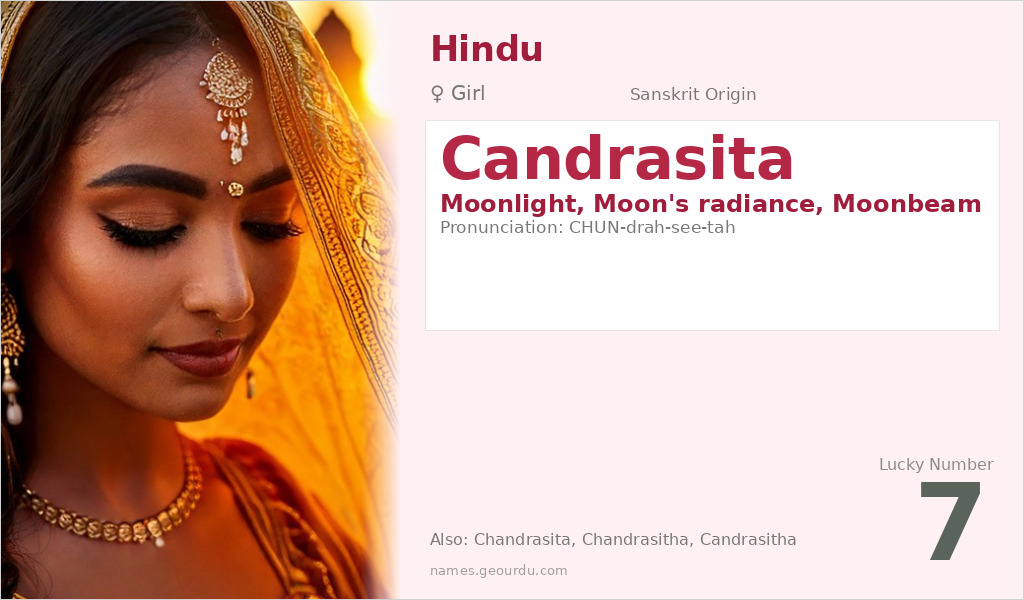
Candrasita is a beautiful and poetic Sanskrit name that evokes images of celestial illumination and gentle beauty. Meaning ‘moonlight’ or ‘moon’s radiance’, this name combines two ancient Sanskrit elements to create a name that shines with cultural and linguistic richness. Primarily used within Hindu communities, Candrasita represents the serene, reflective qualities associated with the moon. This name carries both aesthetic appeal and deep symbolic meaning for parents seeking a name with traditional roots and natural imagery.
Meaning of Candrasita
Candrasita derives from classical Sanskrit, where ‘Candra’ (चन्द्र) means ‘moon’ and refers specifically to the moon deity in Hindu mythology, symbolizing beauty, calmness, and cyclical renewal. The second element ‘sita’ (सीता) has multiple meanings in Sanskrit, most famously as ‘furrow’ in reference to the goddess Sita from the Ramayana, but in this context it carries the sense of ‘white, bright, or radiant’. When combined, these elements create the literal meaning ‘moonlight’ or ‘moon’s radiance’, describing the soft illumination that comes from the moon. This type of compound name follows traditional Sanskrit naming conventions where two meaningful words combine to create poetic imagery. The name embodies the concept of gentle illumination, beauty that doesn’t overwhelm, and the reflective quality of moonlight.
| 📛 Name | Candrasita |
| 💎 Meaning | Moonlight, Moon's radiance, Moonbeam |
| 👤 Gender | Girl |
| 🕌 Religion | Hindu |
| 🌍 Origin | Sanskrit |
| 🗣 Pronunciation | CHUN-drah-see-tah |
| ✍️ Urdu | چندراسیتا |
| ✍️ Arabic | تشاندراسيتا |
| 🔢 Numerology | 7 |
| ✨ Spellings | Chandrasita, Chandrasitha, Candrasitha |
Origin & Cultural Significance
Candrasita originates from Sanskrit, the ancient liturgical language of Hinduism that has influenced numerous South Asian languages and naming traditions. As a Sanskrit compound name, it reflects the classical Indian practice of creating meaningful names through word combinations, particularly those referencing natural phenomena and celestial bodies. Within Hindu culture, moon-related names like Candrasita carry special significance as the moon (Chandra) is both a celestial body and a deity in Hindu mythology, associated with emotions, beauty, and the mind. While not among the most common Sanskrit names, Candrasita represents a traditional naming pattern that has persisted through centuries of Indian cultural history. The name is primarily found in Hindu communities across India and the diaspora, though its usage remains relatively uncommon compared to simpler moon-related names like Chandra or Chandrika.
Personality Traits
Those named Candrasita are often associated with the qualities of the moon they’re named after—calm, reflective, and emotionally intuitive. They tend to approach life with a gentle demeanor and artistic sensitivity, often excelling in creative pursuits or fields requiring empathy and understanding. Like moonlight that illuminates without overwhelming, individuals with this name often possess a quiet strength and the ability to guide others through emotional landscapes with subtle influence. Their reflective nature makes them thoughtful decision-makers who consider multiple perspectives before acting.
Similar Names
If you like Candrasita, consider: Chandrika, Chandramukhi, Sitara, Indumati, Tarini
Famous People Named Candrasita
- No widely known public figures with this exact name were found in historical or contemporary records
Frequently Asked Questions About Candrasita
What does Candrasita mean?
Candrasita means 'moonlight' or 'moon's radiance' in Sanskrit, combining 'Candra' (moon) and 'sita' (bright/radiant).
Is Candrasita a boy or girl name?
Candrasita is exclusively a feminine name in Hindu naming traditions, following the grammatical gender patterns of Sanskrit where such compound names typically take feminine endings.
What is the origin of Candrasita?
Candrasita originates from Sanskrit, the ancient language of Hinduism, and represents a traditional compound naming pattern combining two meaningful elements to create poetic imagery.