Table of Contents
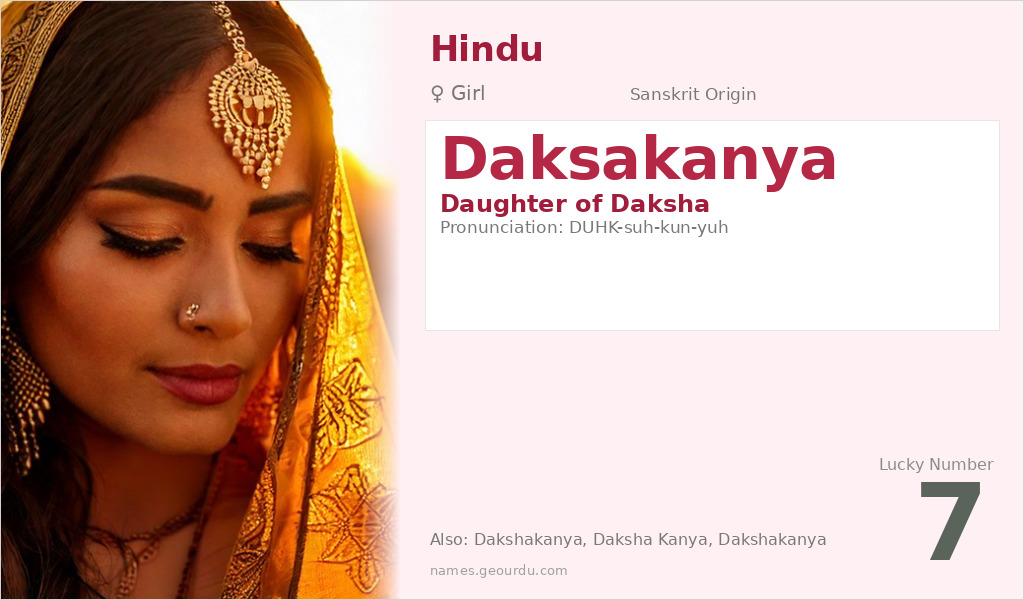
Daksakanya is a beautiful and meaningful Sanskrit name for girls with deep roots in Hindu mythology. Literally translating to ‘Daughter of Daksha,’ this name carries significant cultural and religious weight. It refers specifically to Sati, the first wife of Lord Shiva and an incarnation of the goddess Parvati/Durga. Exploring this name reveals fascinating connections to ancient Indian traditions and divine narratives.
Meaning of Daksakanya
Daksakanya is a compound Sanskrit name with precise etymological components. The first element ‘Daksa’ (दक्ष) comes from the Sanskrit root ‘daṅś’ meaning ‘to be able, competent, or skilled,’ often translated as ‘intelligent’ or ‘capable.’ The second element ‘kanya’ (कन्या) simply means ‘daughter’ or ‘maiden.’ When combined, the name specifically denotes ‘daughter of Daksha,’ referring to the mythological figure Daksha Prajapati, a creator deity. In Hindu scriptures, Daksha’s most famous daughter is Sati (also called Dakshayani), who married Shiva against her father’s wishes. The name is therefore not a general term for any capable daughter but specifically identifies divine lineage and mythological significance.
| 📛 Name | Daksakanya |
| 💎 Meaning | Daughter of Daksha |
| 👤 Gender | Girl |
| 🕌 Religion | Hindu |
| 🌍 Origin | Sanskrit |
| 🗣 Pronunciation | DUHK-suh-kun-yuh |
| ✍️ Urdu | ڈکشکنیا |
| ✍️ Arabic | داكشاكانيا |
| 🔢 Numerology | 7 |
| ✨ Spellings | Dakshakanya, Daksha Kanya, Dakshakanya |
Origin & Cultural Significance
Daksakanya originates from classical Sanskrit, the ancient liturgical language of Hinduism. It appears in various Hindu texts including the Puranas and epics where Daksha’s daughters play significant roles. The name is particularly associated with the story of Sati and Shiva, one of Hinduism’s most important mythological narratives. While used historically in religious contexts, it remains a rare but meaningful choice for Hindu families today, especially those with devotion to Shiva or the goddess tradition. The name reflects the rich tradition of compound names in Sanskrit that convey specific familial and divine relationships.
Personality Traits
Those named Daksakanya are often perceived as intelligent, determined, and spiritually inclined, mirroring the name’s etymological roots in competence and divine connection. They may demonstrate strong willpower and a deep sense of tradition, potentially excelling in fields requiring analytical thinking or creative expression. The mythological association with Sati/Durga suggests qualities of devotion, strength, and transformative power.
Similar Names
If you like Daksakanya, consider: Daksha, Kanya, Dakshayani, Sati, Parvati, Durga, Lakshmi, Saraswati, Gauri, Uma
Famous People Named Daksakanya
- No contemporary famous people found with this name
- In Hindu mythology: Sati (also known as Dakshayani) — daughter of Daksha and wife of Shiva, whose self-immolation led to the creation of Shakti Peethas
Frequently Asked Questions About Daksakanya
What does Daksakanya mean?
Daksakanya means 'Daughter of Daksha' in Sanskrit. It specifically refers to the goddess Sati (an incarnation of Parvati/Durga) in Hindu mythology, not a general term for any capable daughter.
Is Daksakanya a boy or girl name?
Daksakanya is exclusively a girl's name. The 'kanya' component means 'daughter' or 'maiden' in Sanskrit, making it feminine by construction.
What is the origin of Daksakanya?
Daksakanya originates from Sanskrit, the ancient language of Hindu scriptures. It is a compound name combining 'Daksa' (a Prajapati or creator deity) and 'kanya' (daughter), with specific mythological significance in Hinduism.