
Table of Contents
Chitrarathi is a distinguished Sanskrit name that carries the weight of ancient Indian epics and warrior traditions. Meaning ‘one who possesses a bright or splendid chariot,’ this name evokes images of noble warriors and legendary battles from Hindu mythology. With roots in classical Sanskrit literature, Chitrarathi represents more than just a name—it embodies a cultural legacy of valor and distinction. Discover the rich linguistic and historical context behind this timeless appellation.
Meaning of Chitrarathi
Chitrarathi derives from two Sanskrit words: ‘Chitra’ (चित्र) and ‘Rathi’ (रथी). ‘Chitra’ carries multiple nuanced meanings including bright, splendid, variegated, wonderful, and extraordinary—often describing something that stands out visually or qualitatively. ‘Rathi’ specifically means ‘charioteer’ or ‘one who possesses/rides a chariot,’ from the root ‘ratha’ (chariot). In ancient Indian context, chariots were symbols of status, military power, and mobility in battle. Thus, Chitrarathi literally translates to ‘one with a bright/splendid chariot,’ but metaphorically suggests someone distinguished, noble, and exceptional. The name appears in texts like the Mahabharata, where it describes warriors known for their magnificent chariots and battlefield prowess.
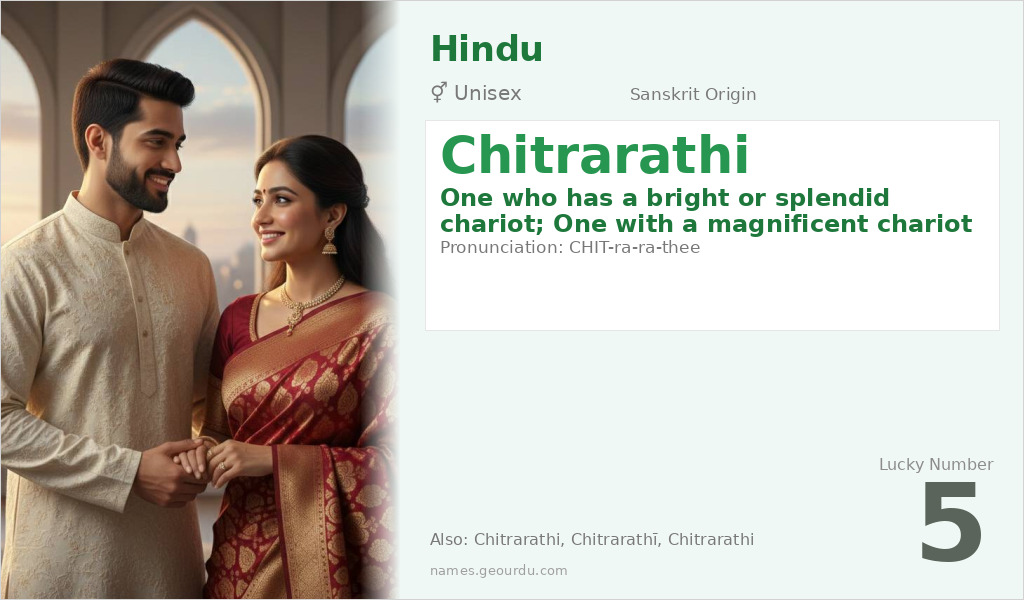
| 📛 Name | Chitrarathi |
| 💎 Meaning | One who has a bright or splendid chariot; One with a magnificent chariot |
| 👤 Gender | Unisex |
| 🕌 Religion | Hindu |
| 🌍 Origin | Sanskrit |
| 🗣 Pronunciation | CHIT-ra-ra-thee |
| ✍️ Urdu | چتررتھی |
| ✍️ Arabic | تشيتراراتي |
| 🔢 Numerology | 5 |
| ✨ Spellings | Chitrarathi, Chitrarathī, Chitrarathi |
Origin & Cultural Significance
Chitrarathi originates from classical Sanskrit, the ancient liturgical language of Hinduism, Buddhism, and Jainism. The name finds its earliest references in Indian epics and Puranic literature, where it was used for both mythological and historical figures. In the cultural context of ancient India, chariots (ratha) were central to warfare, royalty, and religious processions, making chariot-related names particularly significant. While primarily associated with Hindu tradition due to its Sanskrit origins and appearance in Hindu texts, the name reflects broader Indian cultural heritage. Unlike many modern names, Chitrarathi maintains its original Sanskrit form without significant regional variations across Indian languages.
Personality Traits
The name Chitrarathi suggests personality traits associated with leadership, strategic ability, and dignified presence. Like a warrior commanding a splendid chariot, individuals with this name may exhibit natural authority and the capacity to navigate life’s challenges with purpose. The ‘bright chariot’ metaphor implies someone who moves through life with distinction, possibly excelling in competitive environments or leadership roles. While these associations are traditional and symbolic rather than predictive, they reflect the cultural values embedded in this ancient name.
Similar Names
If you like Chitrarathi, consider: Chitragupta, Chitrasena, Rathik, Rathin, Chitrangada
Famous People Named Chitrarathi
- Chitrarathi — A king mentioned in the Mahabharata who fought in the Kurukshetra War
- Chitrarathi — A historical figure referenced in ancient Sanskrit texts as a warrior with a splendid chariot
Frequently Asked Questions About Chitrarathi
What does Chitrarathi mean?
Chitrarathi means 'one who has a bright or splendid chariot' in Sanskrit, combining 'chitra' (bright/splendid) and 'rathi' (charioteer/chariot-owner).
Is Chitrarathi a boy or girl name?
Chitrarathi is historically a unisex name in Sanskrit tradition, though in modern usage it may be more commonly given to boys due to its warrior associations in ancient texts.
What is the origin of Chitrarathi?
Chitrarathi originates from classical Sanskrit, the ancient language of India, and appears in Hindu epics like the Mahabharata as a name for warriors and nobles.