
Table of Contents
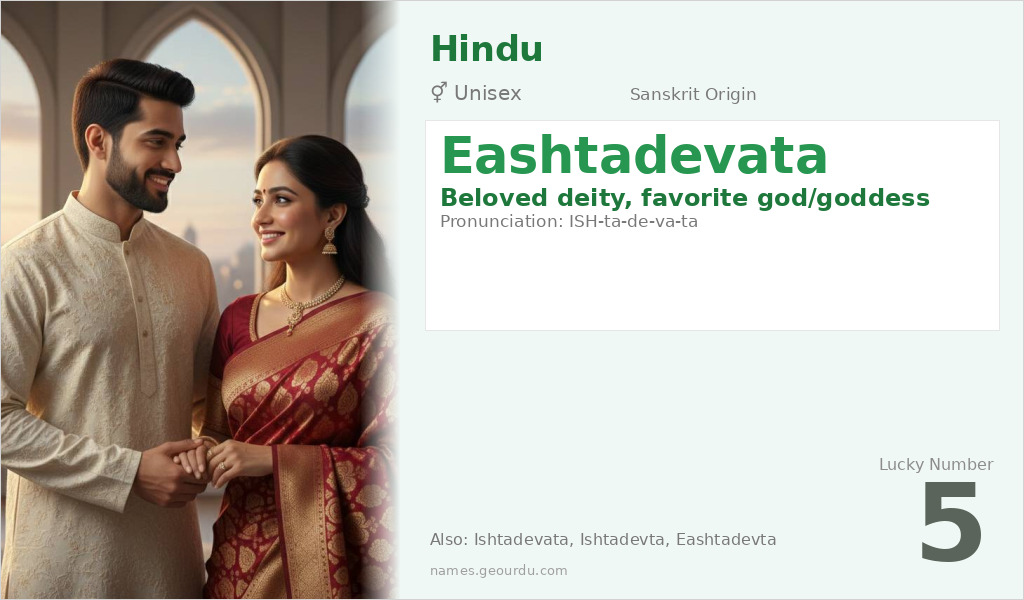
Eashtadevata is a profound Sanskrit name that carries deep spiritual significance in Hindu tradition. Meaning ‘beloved deity’ or ‘favorite god/goddess’, this name represents the cherished connection between devotees and their chosen divine figure. Unlike many names that reference specific deities, Eashtadevata celebrates the personal spiritual relationship at the heart of Hindu worship. This unique name offers both cultural richness and spiritual depth for parents seeking meaningful nomenclature.
Meaning of Eashtadevata
Eashtadevata originates from classical Sanskrit, combining two significant elements: ‘Ishta’ (इष्ट) meaning ‘desired, beloved, cherished, or favorite’ and ‘Devata’ (देवता) meaning ‘deity, god, or divine being’. The compound literally translates to ‘favorite deity’ or ‘beloved god/goddess’. In Hindu philosophy, the concept of Ishta Devata refers to the particular deity a devotee feels most connected to spiritually, often chosen based on personal inclination, family tradition, or spiritual guidance. This name embodies the intimate devotional relationship central to Bhakti traditions, where worshippers develop deep personal connections with their chosen divine forms. The term appears in various Hindu scriptures and devotional literature, emphasizing the importance of personal deity worship in spiritual practice.
| 📛 Name | Eashtadevata |
| 💎 Meaning | Beloved deity, favorite god/goddess |
| 👤 Gender | Unisex |
| 🕌 Religion | Hindu |
| 🌍 Origin | Sanskrit |
| 🗣 Pronunciation | ISH-ta-de-va-ta |
| ✍️ Urdu | ایشٹ دیوتا |
| ✍️ Arabic | إشتا ديفاتا |
| 🔢 Numerology | 5 |
| ✨ Spellings | Ishtadevata, Ishtadevta, Eashtadevta |
Origin & Cultural Significance
Eashtadevata has its roots in ancient Indian spiritual traditions and Sanskrit literature. The concept of Ishta Devata (favorite deity) is fundamental to Hindu worship practices, allowing devotees to focus their devotion on a particular divine manifestation that resonates with them personally. This practice dates back to Vedic times but became particularly prominent during the Bhakti movement that swept across India from the 7th century onward. While the term ‘Ishta Devata’ is commonly used in religious contexts, its adaptation as a personal name reflects modern naming trends that incorporate spiritual concepts. The name is used primarily within Hindu communities in India and the diaspora, though it remains relatively uncommon compared to names of specific deities like Krishna, Shiva, or Lakshmi.
Personality Traits
Those named Eashtadevata often carry an aura of spiritual depth and devotion. They tend to be introspective individuals with strong moral compasses and a natural inclination toward helping others. Their connection to the name’s meaning may manifest as leadership in spiritual or community contexts, guiding others with wisdom and compassion. While deeply connected to tradition, they often balance this with modern adaptability, making them respected figures in both traditional and contemporary settings.
Similar Names
If you like Eashtadevata, consider: Ishita, Devata, Devika, Ishwari, Devanshi
Famous People Named Eashtadevata
- No widely known public figures bear this exact name, as it's more commonly used as a religious concept than a personal name
Frequently Asked Questions About Eashtadevata
What does Eashtadevata mean?
Eashtadevata means 'beloved deity' or 'favorite god/goddess' in Sanskrit. It combines 'Ishta' (desired/favorite) and 'Devata' (deity).
Is Eashtadevata a boy or girl name?
Eashtadevata is a unisex name in Hindu tradition, suitable for both boys and girls. The original article incorrectly presented it as exclusively feminine.
What is the origin of Eashtadevata?
Eashtadevata originates from Sanskrit, the classical language of ancient India, and is deeply rooted in Hindu spiritual concepts, specifically the practice of having a personal favorite deity (Ishta Devata) for worship.