Table of Contents
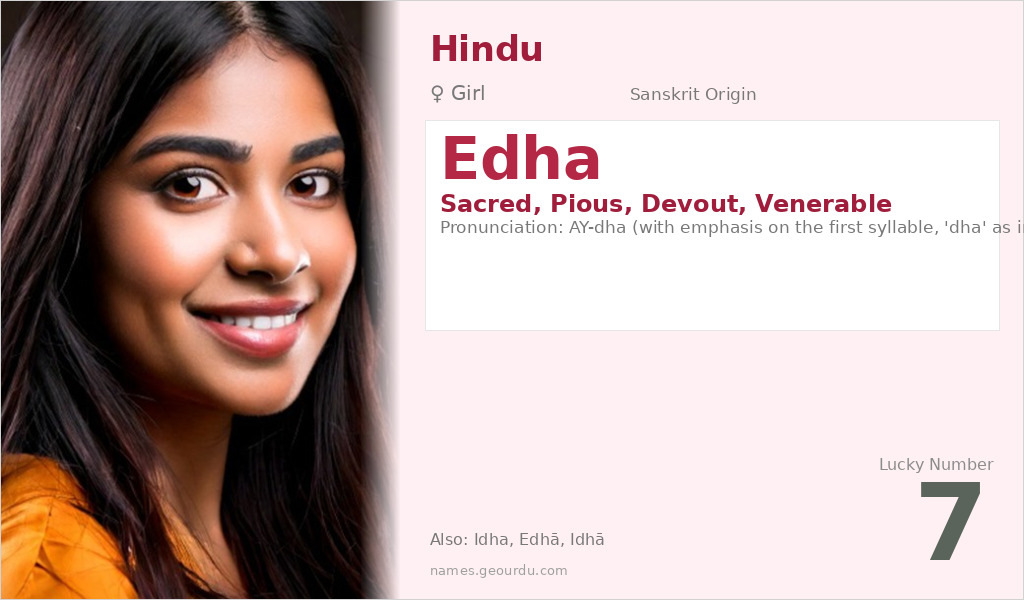
Edha is a beautiful and meaningful name of Sanskrit origin, primarily used for girls in Hindu communities. It carries connotations of sacredness and devotion, rooted in ancient Indian traditions. This name has been cherished for generations, symbolizing spiritual purity and reverence. In this guide, we explore its etymology, cultural significance, and modern usage.
Meaning of Edha
Edha derives from the Sanskrit term ‘ईध’ (īdha), which translates to ‘sacred, pious, devout, or venerable.’ Sanskrit, as one of the oldest Indo-European languages, imbues the name with deep religious and philosophical weight. The root is associated with acts of worship and sanctity, often referenced in Vedic hymns and classical texts. Linguistically, it shares connections with other Sanskrit names emphasizing spiritual qualities, such as ‘Isha’ (goddess) and ‘Dharma’ (duty). This meaning has remained consistent across centuries, making Edha a timeless choice for parents seeking a name with profound spiritual resonance.
| 📛 Name | Edha |
| 💎 Meaning | Sacred, Pious, Devout, Venerable |
| 👤 Gender | Girl |
| 🕌 Religion | Hindu |
| 🌍 Origin | Sanskrit |
| 🗣 Pronunciation | AY-dha (with emphasis on the first syllable, 'dha' as in 'the' with a soft 'd') |
| ✍️ Urdu | ایدھا |
| ✍️ Arabic | إيدها |
| 🔢 Numerology | 7 |
| ✨ Spellings | Idha, Edhā, Idhā |
Origin & Cultural Significance
Originating from Sanskrit, Edha has its roots in ancient Hindu culture and Vedic traditions. It is predominantly used in India and among Hindu diaspora communities worldwide. The name reflects the importance of piety and devotion in Hindu philosophy, often chosen for girls to inspire spiritual values. Historically, it appears in regional variations across South Asia, though it remains most common in Sanskrit-influenced naming practices. Its usage has persisted into modern times, maintaining its cultural and religious significance without widespread adoption in other linguistic or religious contexts.
Personality Traits
People named Edha are often seen as serene, principled, and deeply connected to their spiritual side. They may exhibit traits of introspection and a strong moral compass, influenced by the name’s meaning of sacredness. In social settings, they tend to be respectful and thoughtful, valuing harmony and tradition. This personality profile aligns with the name’s etymological roots in devotion and reverence.
Similar Names
If you like Edha, consider: Esha, Isha, Aditi, Ananya, Dhriti
Famous People Named Edha
- Edha Sharma — Indian actress known for her work in Hindi television and film
- Edha Jain — Contemporary Indian educator and social activist
Frequently Asked Questions About Edha
What does Edha mean?
Edha means 'Sacred,' 'Pious,' 'Devout,' or 'Venerable' in Sanskrit, reflecting spiritual purity and devotion.
Is Edha a boy or girl name?
Edha is traditionally a girl's name in Hindu culture, though its usage is almost exclusively feminine based on historical and contemporary records.
What is the origin of Edha?
Edha originates from Sanskrit, an ancient Indo-European language, and is deeply rooted in Hindu traditions and Vedic literature.