Table of Contents
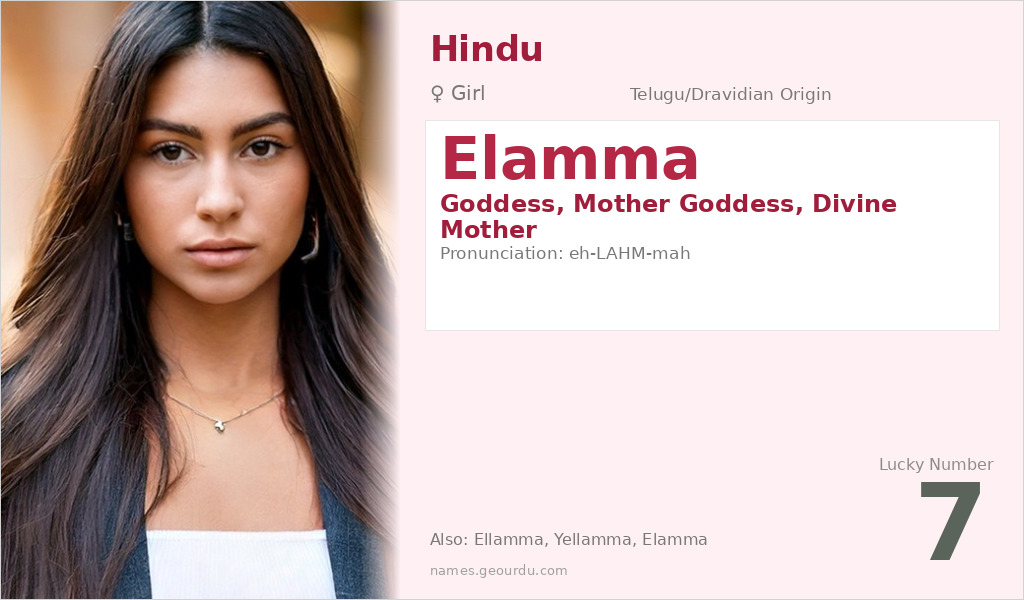
Elamma is a beautiful and powerful name with deep roots in South Indian Hindu tradition. Meaning ‘Goddess’ or ‘Mother of All,’ this name carries the spiritual weight of divine femininity and protection. Primarily used in Telugu and Kannada-speaking regions, Elamma represents the village goddesses worshipped as guardians of communities. This name connects the bearer to ancient Dravidian cultural heritage and folk religious practices.
Meaning of Elamma
Elamma derives from Dravidian linguistic roots, specifically from Telugu where ‘Ella’ means ‘all’ or ‘everyone’ and ‘Amma’ means ‘mother.’ The compound thus translates to ‘Mother of All’ or ‘Universal Mother,’ embodying the concept of a protective, all-encompassing feminine divine. In linguistic context, this follows the common Dravidian pattern of creating goddess names through the ‘Amma’ suffix, similar to names like Yellamma and Mariamma. The name specifically refers to gramadevata (village goddess) figures in South Indian folk Hinduism, who are worshipped for protection, fertility, and community wellbeing. Unlike mainstream Hindu goddesses with pan-Indian recognition, Elamma represents localized, earth-based divinity deeply connected to agricultural communities and regional traditions.
| 📛 Name | Elamma |
| 💎 Meaning | Goddess, Mother Goddess, Divine Mother |
| 👤 Gender | Girl |
| 🕌 Religion | Hindu |
| 🌍 Origin | Telugu/Dravidian |
| 🗣 Pronunciation | eh-LAHM-mah |
| ✍️ Urdu | ایلاما |
| ✍️ Arabic | إيلاما |
| 🔢 Numerology | 7 |
| ✨ Spellings | Ellamma, Yellamma, Elamma, Ellama |
Origin & Cultural Significance
Elamma originates from Dravidian cultures of South India, particularly among Telugu and Kannada-speaking communities in Andhra Pradesh, Telangana, and Karnataka. Historically, the name is associated with village goddess cults that predate classical Hinduism and represent indigenous religious traditions. These goddesses were typically worshipped as protectors of specific villages, with rituals involving folk dances, animal sacrifices (in traditional practice), and community festivals. The Elamma/Yellamma tradition is especially prominent in the Deccan region, with major temples in Saundatti (Karnataka) and various villages across Telangana. This name reflects the syncretism between ancient Dravidian earth goddess worship and later Hindu traditions, maintaining its significance in rural Hindu practice to this day.
Personality Traits
Those named Elamma often embody qualities associated with the goddess archetype—nurturing yet powerful, protective yet independent. They tend to be deeply connected to family and community, with strong maternal instincts and a natural inclination toward caregiving roles. Their personality often combines traditional values with inner strength, making them pillars in their social circles. The spiritual connotations of the name may influence them to seek meaning beyond material concerns, often displaying wisdom beyond their years.
Similar Names
If you like Elamma, consider: Yellamma, Ellamma, Amma, Devi, Parvati, Durga, Lakshmi, Saraswati, Kali, Chamunda
Famous People Named Elamma
- Elamma (folk deity) — A village goddess worshipped in South India, particularly in Andhra Pradesh and Telangana, as a protector of communities and granter of fertility
- Yellamma — Another name for the same goddess figure, often associated with the Renuka Yellamma temple in Saundatti, Karnataka
Frequently Asked Questions About Elamma
What does Elamma mean?
Elamma means 'Goddess' or 'Mother Goddess' in Dravidian languages, specifically Telugu. It combines 'Ella' (all/everyone) with 'Amma' (mother) to mean 'Mother of All' or 'Universal Mother.'
Is Elamma a boy or girl name?
Elamma is exclusively a girl's name, as it refers to feminine divine figures (goddesses) in South Indian Hindu tradition. The 'Amma' suffix specifically denotes motherhood and femininity.
What is the origin of Elamma?
Elamma originates from Dravidian languages and cultures of South India, particularly Telugu and Kannada-speaking regions. It is associated with village goddess (gramadevata) worship in Hindu folk traditions of Andhra Pradesh, Telangana, and Karnataka.